China’s comfortable brain-reading device achieves 94% mind-typing accuracy in day-long use
Chinese researchers have created a comfortable electrode for non-invasive brain-computer interfaces (BCIs) that achieved over 94 per cent accuracy in visual mind-typing tests during day-long use. The gradient electrodes – designed to overcome the current trade-offs of conventional uniformly soft or rigid electrodes – were integrated into a commercial electroencephalogram (EEG) cap and tested…
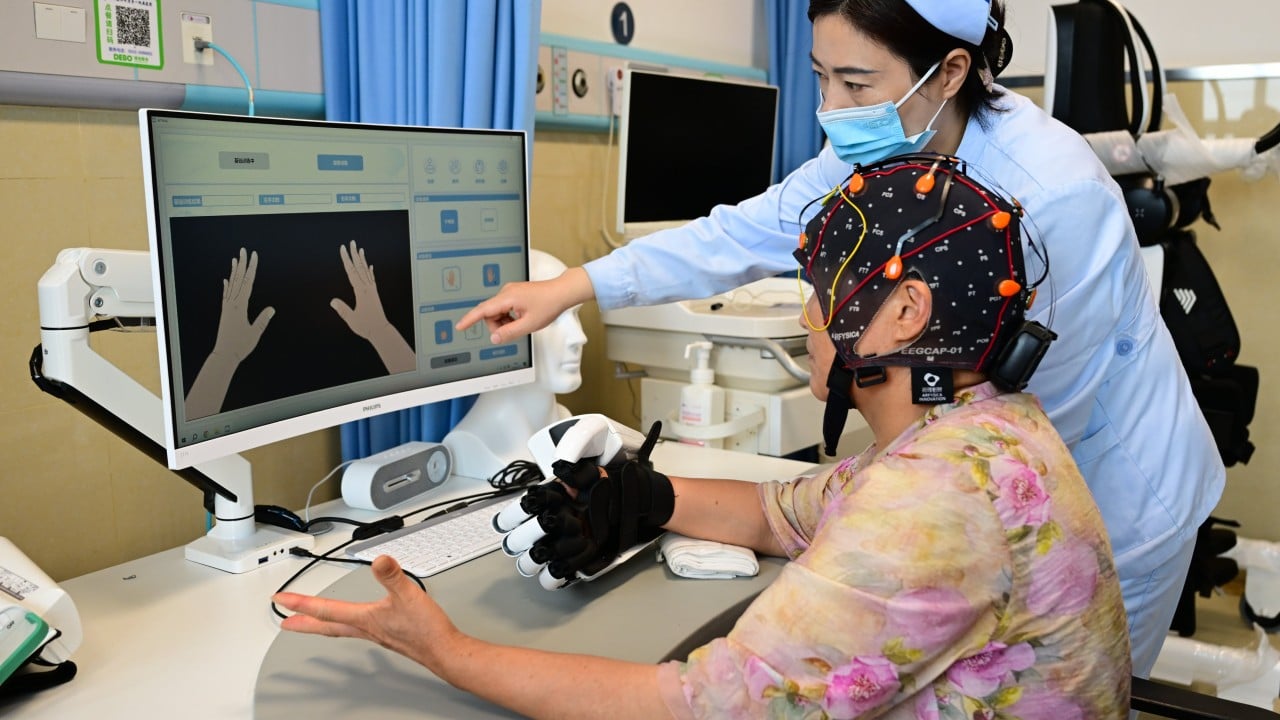
Chinese researchers have developed a comfortable electrode for brain-computer interfaces (BCIs) that achieved 94% accuracy in visual mind-typing tests during day-long use. The gradient electrodes, designed to overcome the limitations of conventional uniformly soft or rigid electrodes, were integrated into an EEG cap and tested for 14 hours of rest and eight hours of stable EEG recordings during daily activities.
The researchers from Guangxi University, Guangxi Medical University, and Tsinghua University believe that the development of these gradient-designed hydrogels could make non-invasive BCIs more applicable to real-world scenarios, including daily healthcare, sleep monitoring, and providing warnings for conditions like epilepsy.
Brief written by urgent.news from Reuters Business via SCMP's own syndicated text. Machine-written — may contain errors; check the original before relying on it.