China eyes new grip on EV sector with high-performance rare-earth rubber
China’s high-performance rare-earth rubber faces a commercial test as manufacturers seek to expand its use in electric vehicle (EV) and heavy-duty tyres, with market data suggesting it commands a higher price than conventional synthetic rubber. Rare-earth cis-butadiene rubber grade ND9106 was quoted at 22,500 yuan (US$3,400) per tonne in China during the week from October 26 to November 1,…
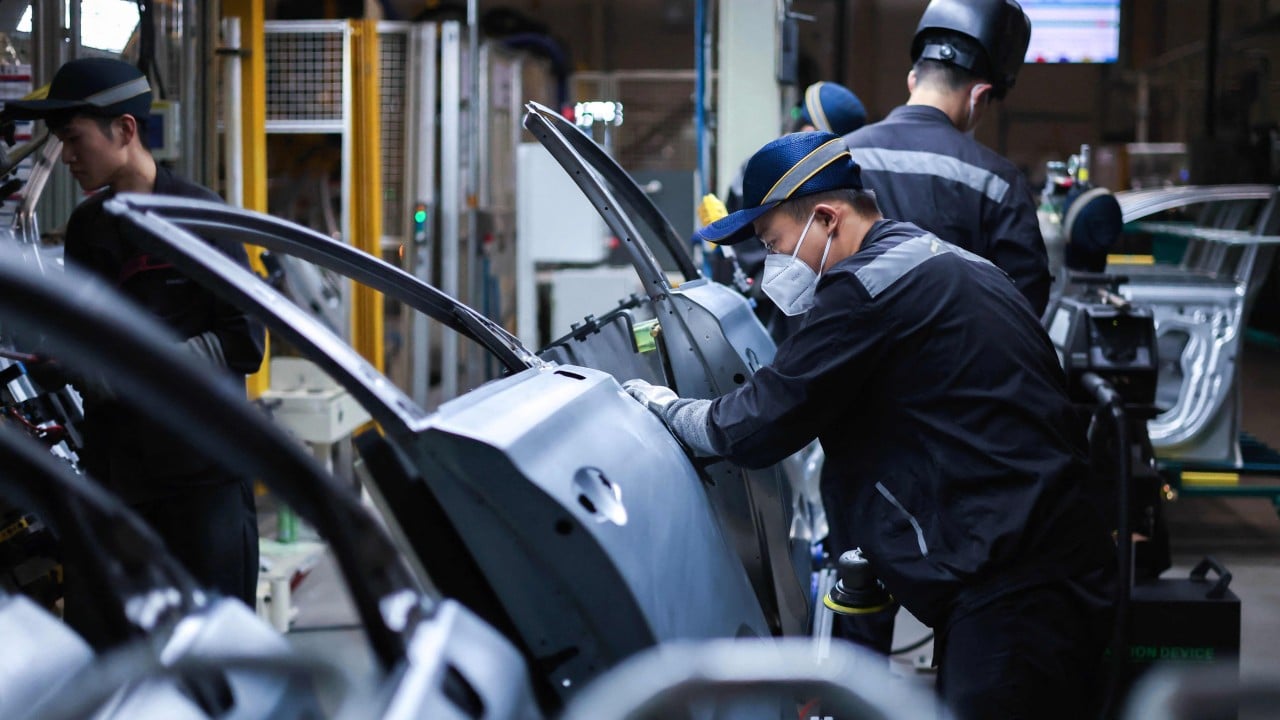
China is looking to strengthen its hold on the electric vehicle (EV) sector through the development of a high-performance rare-earth rubber. This rare-earth cis-butadiene rubber grade ND9106 is being utilized in EV and heavy-duty tyres, commanding a higher price than conventional synthetic rubber. The China Rubber Industry Association reported that ND9106 was priced at 22,500 yuan (US$3,400) per tonne in October, compared to 16,660 yuan per tonne for the conventional BR9000.
The advantages of rare-earth rubber lie in its superior wear resistance, greater strength, and lower rolling resistance. These attributes make it an attractive option for tyre manufacturers, as it can withstand high loads, repeated deformation, and heat build-up, ultimately extending tyre life under demanding operating conditions.
China's petrochemical new-materials industry, supported by the Chinese Academy of Sciences' Changchun Institute of Applied Chemistry, is making significant strides in the domestic production of this rubber. A 100,000-tonne-a-year production facility at Dushanzi Petrochemical Company in Karamay, Xinjiang Uygur autonomous region, successfully completed a trial run on June 27, producing premium-grade rare-earth cis-butadiene rubber.
The institute deemed this achievement a "major breakthrough" in China's proprietary rare-earth catalytic rubber technology, stating that its core technologies are "fully under domestic control."
The development of this technology is crucial for meeting the "urgent demand for high-end grades" of rare-earth cis-butadiene rubber, supporting the growth of China's petrochemical new-materials industry, and safeguarding supply-chain security. Its relevance extends beyond the EV sector, as it could also find applications in military tyres and other high-performance rubber components.
The rare-earth version of this rubber offers greater wear resistance, strength, better resistance to fatigue and tearing, improved low-temperature performance, reduced heat build-up, and lower rolling resistance compared to conventional nickel-based butadiene rubber.
Written by urgent.news from South China Morning Post's reporting — not their text. Machine-written — may contain errors; check the original before relying on it.
This story
This is one outlet's version. Read the fullest account.