Bundespräsidentenwahl: Kandidatin mit besten Chancen: CDU will Aigner nominieren
Der Kanzler hat sich lange Zeit genommen, jetzt macht er ganz offiziell seinen Vorschlag für die Bundespräsidentenwahl. Erstmals soll es eine Frau und CSU-Politikerin werden.
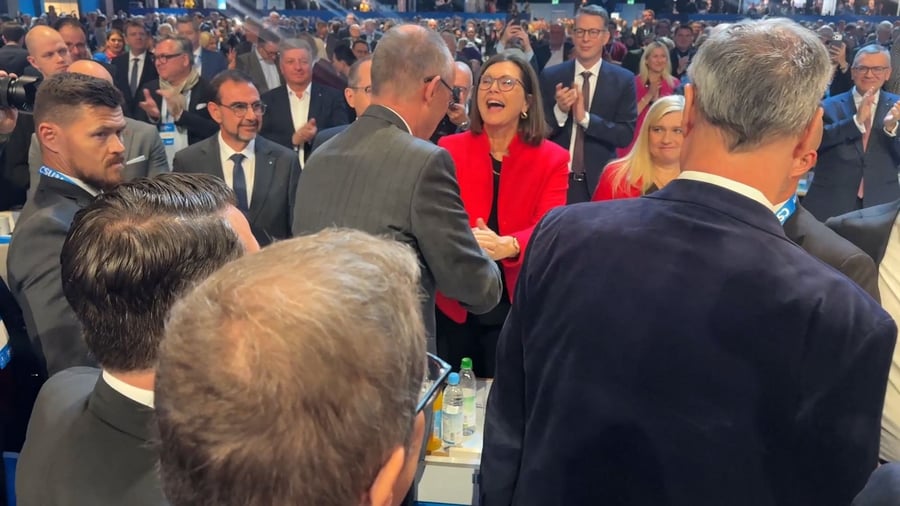
Since April, Ilse Aigner has been rumored to be the next Bundespräsidentin. The CDU leadership officials are officially making her the candidate on the recommendation of Federal Chancellor and party leader Friedrich Merz. Aigner has the best chances to be elected as the first woman and first CSU politician to the helm of state on January 30th.
Merz announced at a Sunday dinner that he would propose Aigner to the party presidency today. The 61-year-old will attend the sessions of the governing bodies. The coalition parties CDU, CSU and SPD have a majority of about 50 votes in the Bundesversammlung, which consists of 630 Bundestag members and an equal number of state electors.
The CSU has long stood behind Aigner, while the SPD has expressed its support. The Greens have also shown sympathy. With Aigner's nomination in the first round of voting, it is very likely. Merz and Aigner will appear together in the press after the nomination. They will then fly to Munich together, where they will participate in a commemorative event for the 20th anniversary of the main synagogue in the Bavarian capital.
After that, the campaign for Aigner will begin. She may already present herself to the factions in the Bundestag as early as Tuesday, which will then regularly meet. It is unclear if she will also go to the AfD and the Left. Weidel expects Aigner to be looked at by the deputies of the "second largest party in the German Bundestag, the largest opposition party and the strongest political force in the state" according to current polls.
"This is a question of democratic culture and manners, as well as respect for the millions of voters we represent," Weidel emphasized. The AfD, however, wants to set up a candidate of its own, a man "from the middle of society", as the party calls it. But due to the clear majority, he is considered unlikely. The Left has not yet decided for or against a separate candidate.
Party chair Ines Schwerdtner criticized the fact that the coalition parties would choose among themselves who will become the Bundespräsidentin. "I would have liked the Union and SPD to look beyond their own ranks and search for a candidate that brings the state together," she said. Greens chief Franziska Brantner expects Aigner to bridge divides in society.
"I hope that she will also serve as President to build bridges and unite our country," she said to Funke Media. The Greens have not yet decided definitively whether Aigner will join them. Merz spoke with Aigner about the candidate question as early as August, but only then decided in favor of a woman without naming her. Merz and Aigner have been friends for 25 years, both privately and professionally, and have regular get-togethers.
They even share a common friend circle. Merz first met Aigner in August to discuss the candidate question, but had not yet decided on her. Aigner is unlike many of her successful male colleagues, who are seen as power-politicians who fight with elbows extended. Because of this calmness, she is respected and valued across party lines.
Despite being an Oberbayern from Bavaria, she has been an agriculture minister in federal politics from 2008 to 2013 before being appointed state minister for economic affairs and transport in Bavaria. She has been the largest district association of Oberbayern in the CSU for 15 years without anyone challenging her. In the CDU, she leads a district association in Oberbayern for 12 years without anyone being dangerous to her.
Being the first woman among twelve state heads in the 77-year history of the Federal Republic of Germany is a novelty. In the country's 77-year history, all twelve heads of state were men. There has never been a Bundespräsident from the CSU. Six were from the CDU, three from the SPD, two from the FDP, and one was non-party-affiliated.
If Aigner is elected on January 30th, she will have to wait just under seven weeks to take office. The term of Frank-Walter Steinmeier ends on March 18th.
Written by urgent.news from Handelsblatt's reporting — not their text. Machine-written — may contain errors; check the original before relying on it.
This story
This is one outlet's version. Read the fullest account.
- Federal Presidential Election: What the decision for Aigner means handelsblatt.com
- The appointment of Ilse Aigner politico.eu