Build the bridge for peatland restoration
Greater international cooperation is essential to mobilize financial resources, technical expertise and institutional support to ensure that burned landscapes are restored effectively.
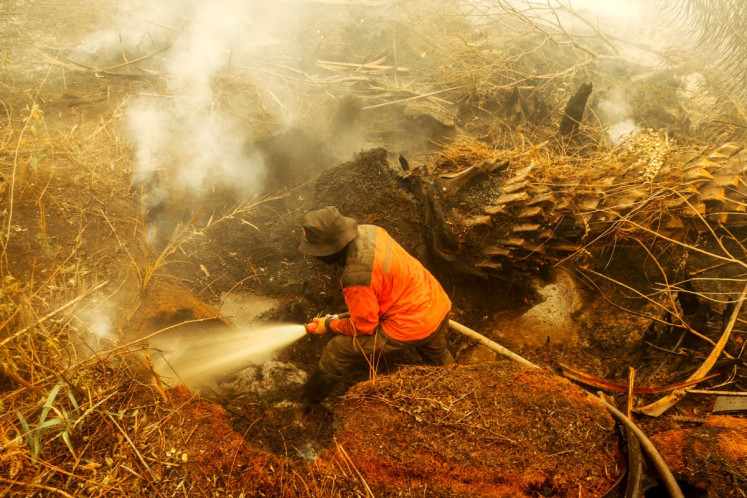
Indonesia faces a critical need to rebuild its capacity for peatland restoration following devastating fires that have damaged vast areas. International cooperation is vital to secure financial resources, technical knowledge and institutional backing for effective restoration. The Nusantara Atlas detected over 827,000 hotspots by October 1, a sharp increase from around 616,000 a year earlier.
Peat, a deep, wet soil composed of ancient plant material, becomes highly flammable when drained, often burning underground for weeks. Experts warn that once ignited, such fires are exceptionally challenging to extinguish, emphasizing the importance of preventing them in the first place.
The Indonesian government is attempting to bolster its restoration efforts. In September, President Prabowo Subianto convened 22 specialists, and the forestry minister subsequently unveiled the National Peatland and Mangrove Management Agency (BPGMN), replacing the former restoration agency. However, financing remains a significant barrier to large-scale restoration.
Economic losses from forest and peatland fires, estimated at Rp 565 trillion (US$31.2 billion) by October 2026, far exceed the previous year's Rp 123.1 trillion. Clearly, relying solely on the national budget is insufficient to cover recovery costs.
A promising solution is the Climate Implementation Bridge (BRIDGE), introduced by the COP31 Presidency in collaboration with the United Nations Development Programme (UNDP). Indonesia has been selected as one of the first five pilot countries, providing a platform to enhance international collaboration and hasten climate action.
Through BRIDGE, Indonesia aims to secure support for peatland restoration, bolster implementation capabilities and ensure that climate finance reaches the affected regions and local communities. This initiative must translate climate commitments into real restoration actions, such as rewetting efforts. A 2026 study in the iScience journal examined peat fires in West and Central Kalimantan from 2017 to 2022 and found that canal blocks, small dams holding water in drained canals, proved most effective where rewetted areas overlapped.
If all canal blocks functioned as intended, rewetting could prevent up to 6.4 percent of the burned area, offering a modest but valuable reduction in fire damage. While effects varied by location, this represents a meaningful contribution to mitigating fires that originate in drained peatlands.
Written by urgent.news from The Jakarta Post's reporting — not their text. Machine-written — may contain errors; check the original before relying on it.
This story
This is one outlet's version. Read the fullest account.
- Build the bridge for peatland restoration thejakartapost.com