Andy Warhol's Habibi Phase in Kuwait
Raed Yassin's exhibition “Warhol of Arabia” reimagines the pop artist's 1977 visit to the Gulf country and a bygone era in the Middle East.
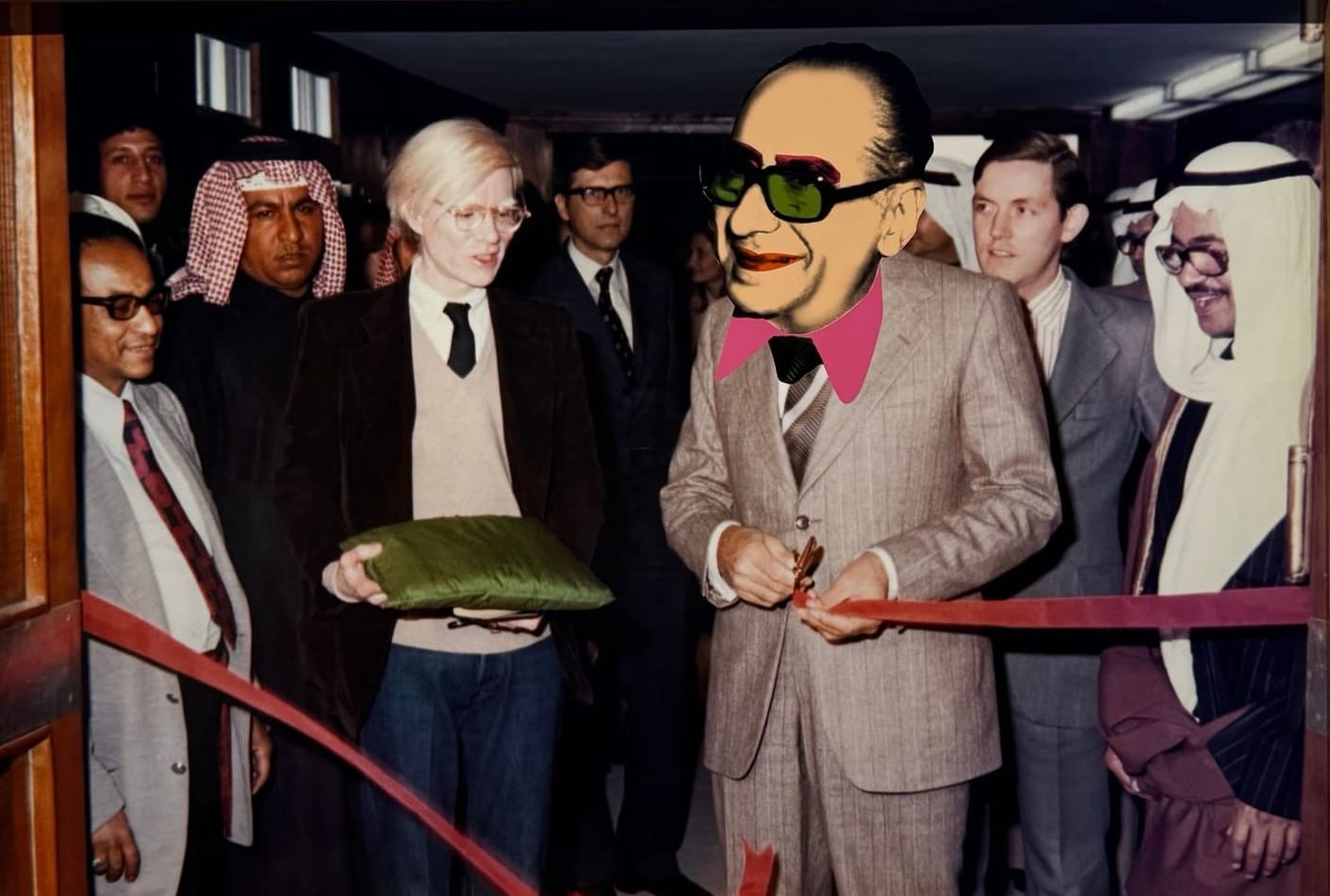
In January 1977, Andy Warhol skipped President Jimmy Carter's inauguration to spend a week in Kuwait attending tea parties and dinners. Invited by the country's national arts council, Warhol held a solo exhibition at the Salat Al Funoon gallery, showcasing portraits of Mao Zedong and Marilyn Monroe, as well as flower prints. Domestically, Warhol's star was fading, with fewer patrons willing to meet his high asking prices, prompting him to seek new markets.
The recent oil boom in Kuwait had brought an influx of cash and a connection to the West and its cultural exports, making him an attractive figure in the region.
Nearly 50 years later, contemporary artist Raed Yassin has created a selection of photographic mixed-media works for the 61st Venice Biennale's main exhibition, In Minor Keys. In this installation, Yassin invents scenes from Warhol's Kuwait trip from the perspective of a fly on the wall, titled "Warhol of Arabia" (all works 2016-2018).
This series uses real events as its anchor, painting a rich fiction using Pop aesthetics. In "The Party XII," Yassin depicts Warhol on the floor between a sheikh and a stylish kaftanned woman, painting only Warhol in color with a pink hair and yellow glasses, emphasizing his outsider status.
In "The Exhibition XIII," Yassin stamps four primary-colored headscarves onto a photo of Warhol with his Campbell's soup can multiples, modifying the typically super-Western imagery the artist favored. Yassin explained to Hyperallergic, "The Gulf region in the 70s was kind of a black hole. No one knew what was going on, especially culturally.
You hear about oil and that kind of industry, but I was interested in what was beyond, what was happening in society. This is my imagination of it, which creates a different world entirely."
Written by urgent.news from Hyperallergic's reporting — not their text. Machine-written — may contain errors; check the original before relying on it.