A single AI model simulates the behavior of many substances, from sliding sand to folding proteins
By learning how matter moves, the WorldParticle system could assist with developing soft robots, medicines, and more.
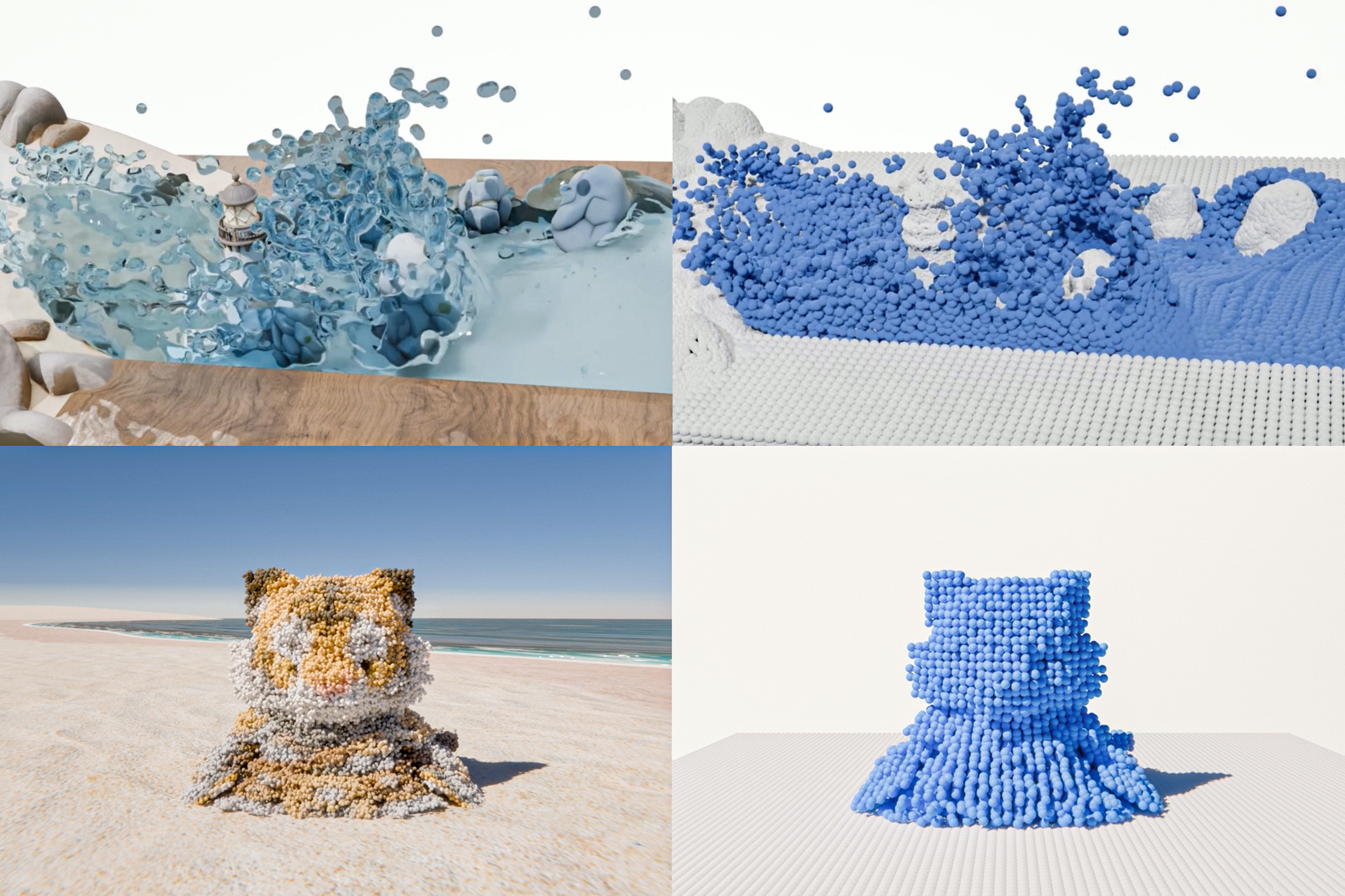
Researchers at MIT and the University of British Columbia have created a deep-learning system called WorldParticle that can simulate various physical processes with a single artificial intelligence architecture. Traditionally, each physical phenomenon required a separate simulator built from hand-coded equations. WorldParticle unifies these simulators by representing materials as tiny particles and predicting their movements step by step.
This approach could enable faster and more accurate simulations of diverse phenomena, such as sand dunes, folding proteins, and sloshing oil in storage tanks. The system learns the underlying dynamics of materials, forces, and environments it encounters during training, allowing it to adapt to new scenarios it was not specifically trained for.
The researchers hope that this work will help scientists discover new materials and explore physical processes that would be difficult to study with existing simulation methods.
Written by urgent.news from MIT News Research's reporting — not their text. Machine-written — may contain errors; check the original before relying on it.