Tiny galaxies lose most of their oxygen. No one knows where it goes.
NASA's Hubble Space Telescope finds dwarf galaxies keep just 11 percent of their oxygen on average. Where the rest went is unknown.
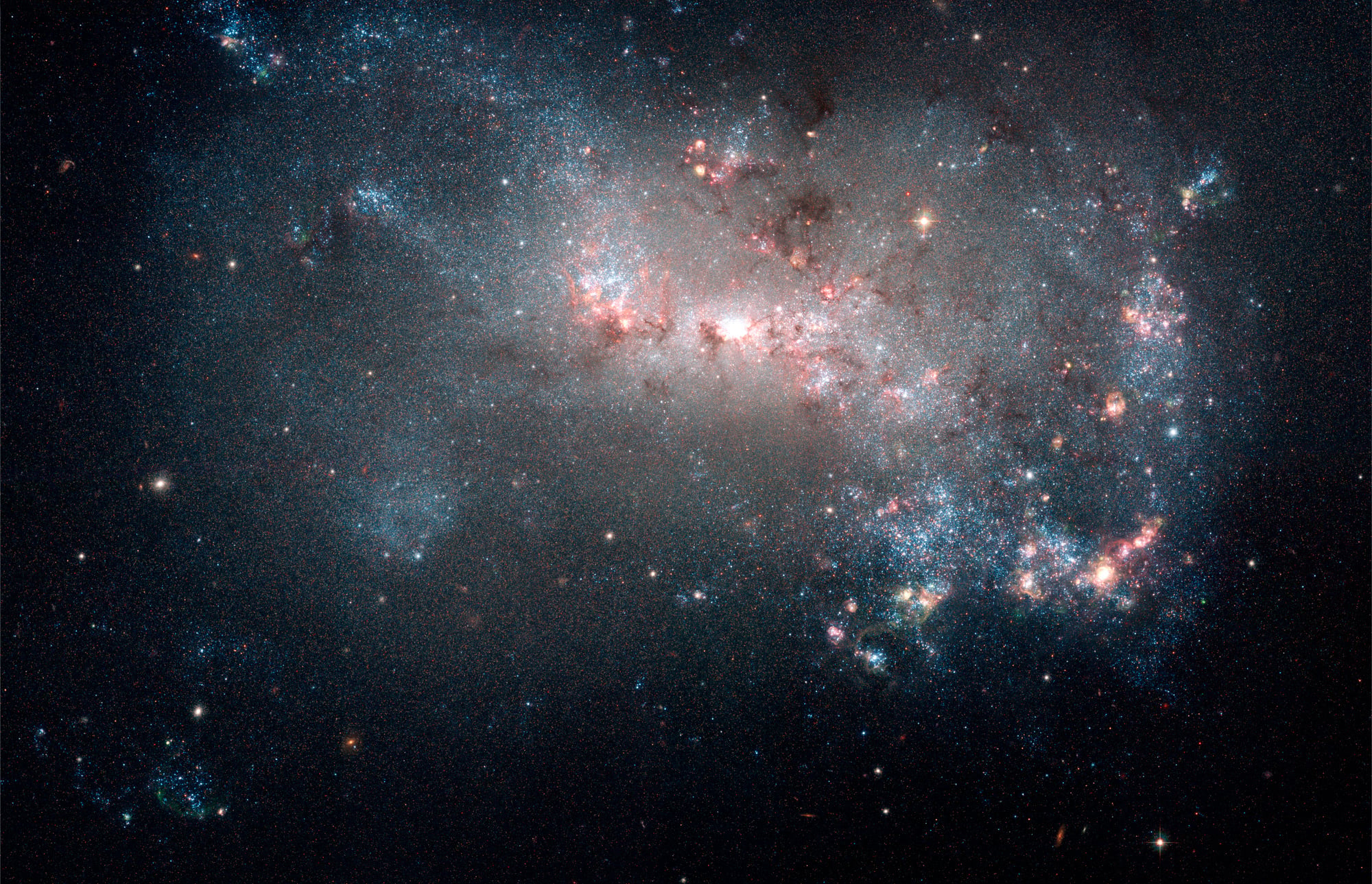
Oxygen, essential for life, is formed within stars. However, research conducted using NASA's Hubble Space Telescope reveals that small galaxies often lose the majority of the oxygen produced by their stars. By examining 37 nearby dwarf galaxies, astronomers discovered that these galaxies retain only about 11% of the oxygen their stars generate over time.
The most efficient galaxies managed to keep around a quarter, while the least efficient only retained 4%. Larger galaxies, on average, hold three to four times more oxygen than their smaller counterparts.
The lost oxygen is primarily expelled from the galaxies through the powerful winds generated during supernova explosions, where massive stars die. Due to their weak gravity, dwarf galaxies struggle to retain this material. To investigate where the oxygen goes, astronomers use the Galaxies Losing Oxygen via Winds (GLOW) project to track oxygen within stars, the gas surrounding them, and the space between galaxies.
Oxygen, the most abundant element after hydrogen and helium, serves as an excellent tracer of how galaxies recycle matter broadly.
The study, published in The Astrophysical Journal, utilized Hubble's high-resolution images to determine each galaxy's history of star formation and the amount of oxygen it should have produced. By combining this with data from radio and infrared telescopes, researchers found that most of the oxygen is present in the gas of each galaxy, not in its stars.
Furthermore, galaxies located in crowded areas or within about 3 million light-years of a large galaxy tend to retain more oxygen. Scientists believe that surrounding gas may push the lost oxygen back into the galaxy, or the galaxy might absorb oxygen blasted away by its neighbors.
While the pattern observed in this study is based on a limited number of galaxies, the ultimate fate of the oxygen remains a mystery. Previous studies indicate that only a small fraction of the oxygen produced by stars, between 1% and 7%, is found in the hot gas halo surrounding a galaxy. Even counting cooler gas, these halos likely contain at most one-third of the oxygen originally produced by the galaxy's stars.
The remaining oxygen is believed to have escaped into intergalactic space, but scientists cannot confirm this conclusively.
Kristen Wingfield McQuinn, the principal investigator of the GLOW project at the Space Telescope Science Institute in Baltimore, plans to use NASA's upcoming Nancy Grace Roman Space Telescope to search for even smaller, fainter galaxies. She intends to study their stars with Hubble and the James Webb Space Telescope. Grace Telford, an astronomer from the University of Utah and a member of the team, is using Hubble to focus on massive stars responsible for producing oxygen and ejecting it into space.
If the majority of the missing oxygen truly escapes, small galaxies may play a significant role in spreading this element throughout the universe, potentially contributing to the oxygen we breathe.
Written by urgent.news from Mashable's reporting — not their text. Machine-written — may contain errors; check the original before relying on it.