Rare fifth-century burials of Germanic chieftains with dazzling weapons and warhorses discovered in France
Archaeologists found a small cemetery full of high-status burials, two of which may be the graves of Germanic chieftains.
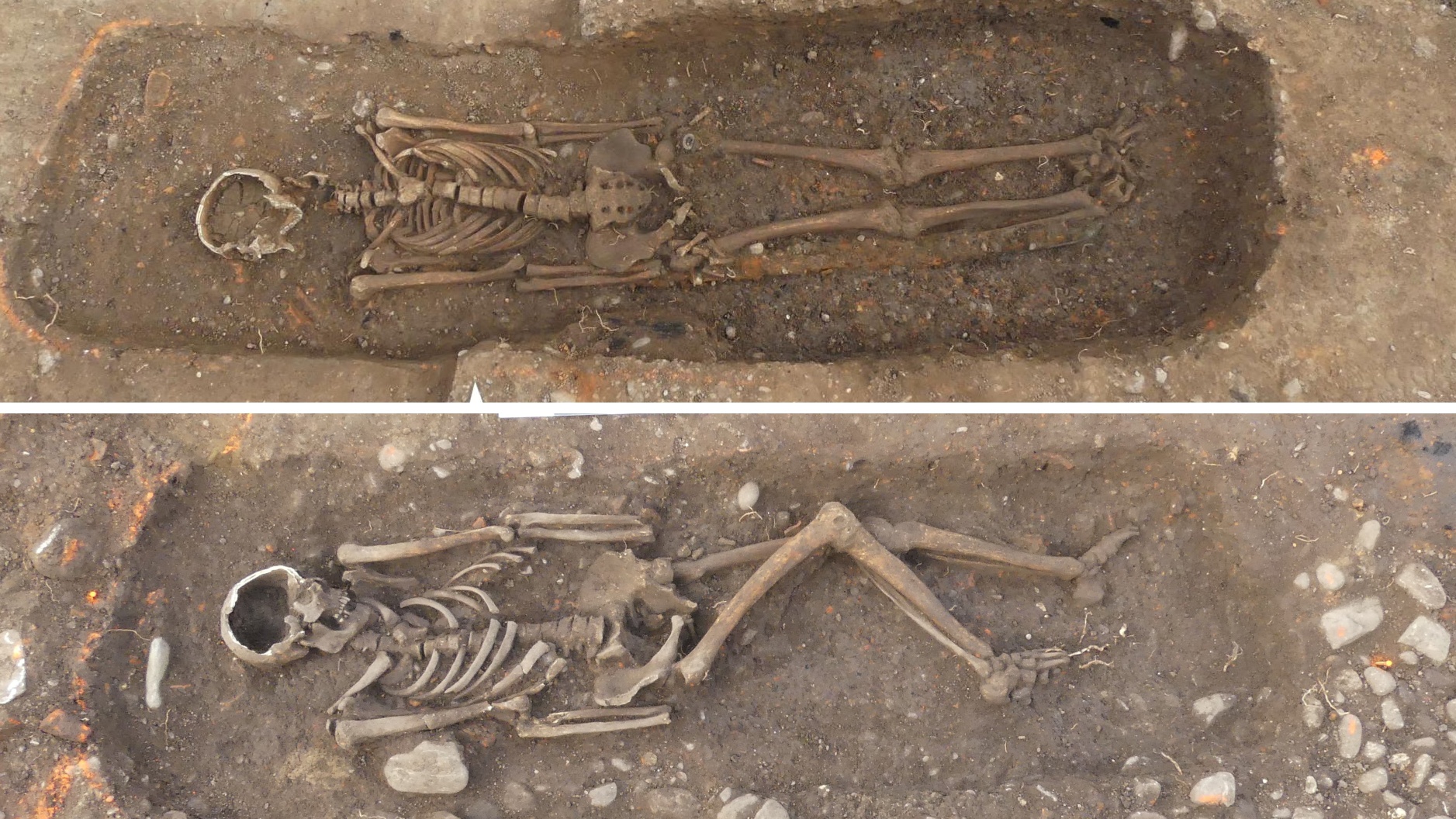
In northeastern France, archaeologists have discovered a rare fifth-century cemetery containing the graves of two Germanic chieftains and two warhorses. The burial ground, located near Colmar and the Rhine River border, sheds light on the transitional period following the fall of the Roman Empire.
This burial complex was found near a Gallo-Roman village that existed from the first to the third centuries. The site includes ancient houses, hearths, wells, and craft areas. The cemetery was in use from approximately A.D. 450 to 500, a critical time period marked by the collapse of the Roman Empire and the occupation of Rome by Germanic tribes like the Goths and Vandals.
The cemetery contains 11 adult graves, three child burials, and two horse burials. Two female burials featured silver bird-shaped brooches, glass bead necklaces, and a bone comb, suggesting they were high-status women. Two male burials, however, were more remarkable due to their high-quality grave goods. These included a partially preserved sword scabbard, a shield, a javelin, and a gold-and-garnet-adorned scramasax, a type of Germanic short sword.
The weapons are consistent with the burials of Germanic chieftains or mercenaries, and two horses were buried nearby with their harnesses.
Additionally, the men's bones show evidence of likely warrior status. Two individuals had stab wounds with no signs of healing, indicating a violent, quick death. Another man's right knee bones had fused together, most likely due to an improperly healed injury. The archaeologists believe the grave goods were not merely decorative but were meant to be used in battle. Further study of the skeletons will confirm whether these injuries could have been sustained in combat.
The discovery of few Germanic settlements and cemeteries from the fifth century makes this newly excavated site particularly valuable. It will provide crucial information about the political upheavals linked to the fall of the Western Roman Empire and the impact of this collapse on communities near the empire's borders.
Written by urgent.news from Live Science's reporting — not their text. Machine-written — may contain errors; check the original before relying on it.