Netanjahu vor dem Aus?: Ex-Militärchef Eisenkot will Israel aus der Krise führen
Ex-Militärchef Eisenkot will eine Regierung bilden, obwohl seine Partei bei der Wahl nur zweitstärkste Kraft wurde. Nun muss er zwischen tiefen politischen Gräben einen Weg zur Mehrheit finden.
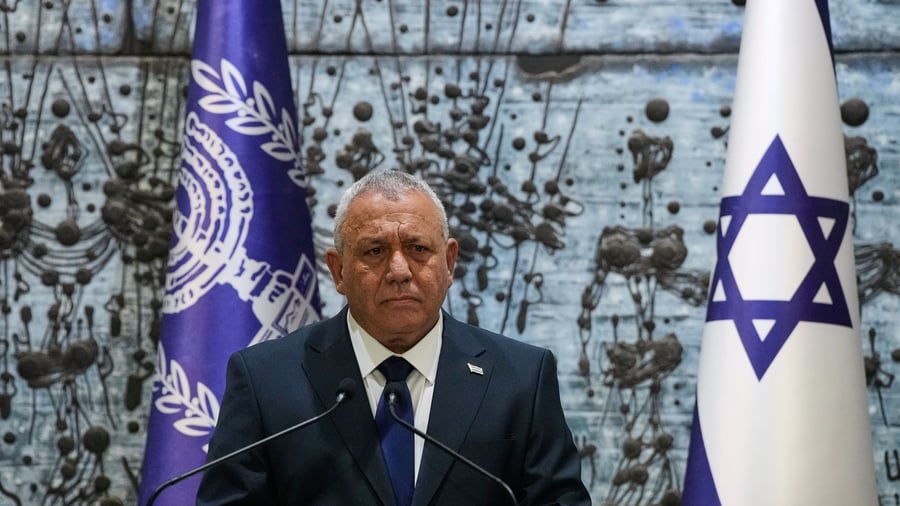
Jaschar's Gadi Eisenkot pledges to lead Israel out of its deep crisis, promising a new leadership that will represent all sectors of society. Following President Izchak Herzog's request, Eisenkot, a former military chief, was given the most recommendations for forming a government. Despite trailing behind the right-wing Likud party led by Prime Minister Benjamin Netanyahu, Eisenkot received the most recommendations.
He called for a state of emergency and the formation of a crisis government, urging creative and unconventional political steps. Eisenkot extends his hand to all parties and their representatives, offering his hand: "My door is open." Three years after the Hamas massacre in October 2023 and the subsequent Gaza war, Israel is increasingly isolated internationally and internally divided.
President Herzog, speaking at the ceremony in Jerusalem, emphasized the immense challenges Israel faces, particularly the threat from Iran. Eisenkot's principles for his government include Israel being a Jewish and democratic state, respecting the values of the declaration of independence, and implementing a general service duty for all citizens, including the Arab minority.
He also calls for Hamas to be classified as a terrorist organization and for the destruction of its ruling structures in the Gaza Strip. If Eisenkot fails to form a coalition, Netanyahu will be considered again. He has 28 days to form a coalition, with an additional 14 days allowed. If unsuccessful, Herzog can appoint another candidate, who would have another 28 days.
Netanyahu, with 27 mandates from the October 27 parliamentary election, is the strongest force, followed by Eisenkot's newly established Jaschar party with 21 seats. However, 13 votes are missing for a majority. These could come from opposition parties, which have 48 of the 120 seats. The main obstacle is the reluctance of Arab parties to cooperate and the possibility of tolerating a minority government led by them.
Ultra-Orthodox parties, United Torah Judaism (UTJ) and Shas, could play a crucial role, with 13 seats between them. While UTJ suggested Netanyahu for the government, Shas declined and reportedly showed no interest in a potential collaboration with Eisenkot. Former Foreign and Defense Minister Avigdor Lieberman, who has been a staunch opponent of cooperation with ultra-Orthodox parties, is reportedly open to an alliance with them.
The central hurdle remains the issue of military service, as Shas and UTJ demand extensive exemptions for ultra-Orthodox Jews, while Eisenkot calls for a universal service duty. This directly conflicts with the interests of the ultra-Orthodox parties. Another possibility is a Likud-led coalition without Netanyahu, but a leadership change and a shared government program remain uncertain.
Written by urgent.news from Handelsblatt's reporting — not their text. Machine-written — may contain errors; check the original before relying on it.
This story
This is one outlet's version. Read the fullest account.
- Possible change of power?: Israel under Eisenkot: What could change handelsblatt.com