Najib house arrest: Questions over interpretation, constitutional authority, legal ambiguity
LETTER: THE reported royal pardon order concerning Datuk Seri Najib Razak raises questions about constitutional authority, legal interpretation and administrative accountability.
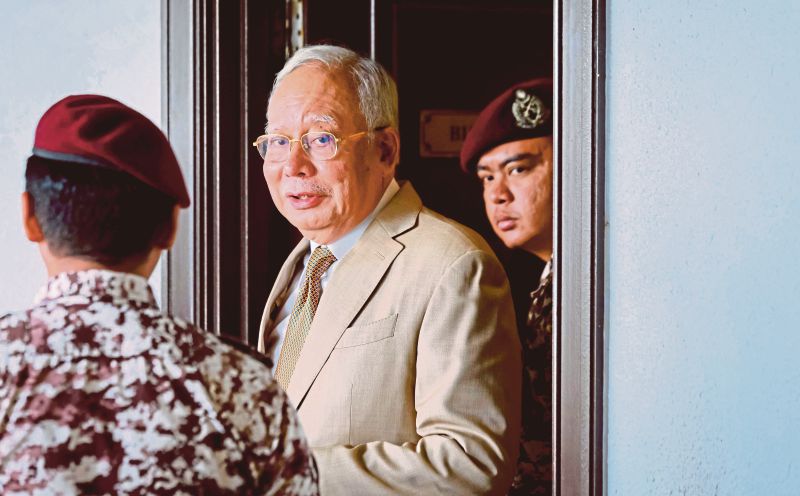
The ongoing dispute over former Malaysian Prime Minister Najib Razak's transfer from prison to house arrest extends beyond his individual case, raising broader questions about the interaction of royal pardons, court orders, and criminal sentences when laws are ambiguous. The Attorney-General's Chambers, the prisons department, Najib's legal team, and Istana Negara find themselves on different sides of a debate over implementation, rather than principle.
Both sides claim to uphold the law, but the core disagreement revolves around the practical application of these legal instruments. While public discourse has largely focused on Najib's immediate release, the more pressing issue may lie in whether Malaysia's legal framework adequately addresses the scenario where a prisoner receives a conditional royal pardon while simultaneously serving another custodial sentence.
The King's stance seems clear: Najib was granted a conditional pardon allowing him to serve his SRC sentence under house arrest, provided he paid a RM50 million fine. This condition has now been met. However, the High Court document issued following the fine payment introduces uncertainty regarding the legal implications of Najib's discharge and whether the SRC sentence continues until 2028 or is considered completed.
The "Order of Discharge on Payment of Fine" directs immediate discharge, yet also states that the remainder of the sentence must be served under house arrest until August 2028. The question remains: does "discharged" mean he should leave prison and serve the remainder of his sentence at home, or does it signify that the SRC sentence is legally complete?
The Attorney-General's Chambers seeks clarification on the order's effect, emphasizing the need for clarity before any transfer takes place. Critics may view this as unnecessary, given Istana Negara's assertion that all pardon conditions have been fulfilled. Supporters argue that resolving ambiguity now is preferable to risking further legal challenges later.
This situation has exposed a potential gap in Malaysia's legal architecture, as there is currently no comprehensive statutory framework governing house arrest, its monitoring, or its interaction with other criminal sentences. This gap creates room for differing interpretations, with potential implications beyond Najib himself. Establishing clear legal principles in such cases could shape how future pardons are implemented and how exceptional forms of custody are administered.
The public's confidence is at stake, as Najib's status as a former prime minister invites scrutiny under the lens of equality before the law. Malaysians will likely demand a clear legal basis for the outcome, ensuring it is not driven by political considerations or institutional pressures. Transparency is crucial in this regard.
The eventual interpretation of Malaysia's legal system in this case could have broader implications, extending beyond Najib Razak.
Written by urgent.news from Free Malaysia Today's reporting — not their text. Machine-written — may contain errors; check the original before relying on it.
Also reported by 1 other outlet
- Najib’s house arrest delay is about more than one man freemalaysiatoday.com