Klimawandel: Forscher beerdigen letzten Gletscher in den Allgäuer Alpen
Der Schwarzmilzferner auf Tiroler Boden hat diesen Sommer so viel Masse verloren, dass ihn Experten nicht mehr als Gletscher bezeichnen. Die Prognosen für andere Gletscher sind ebenfalls düster.
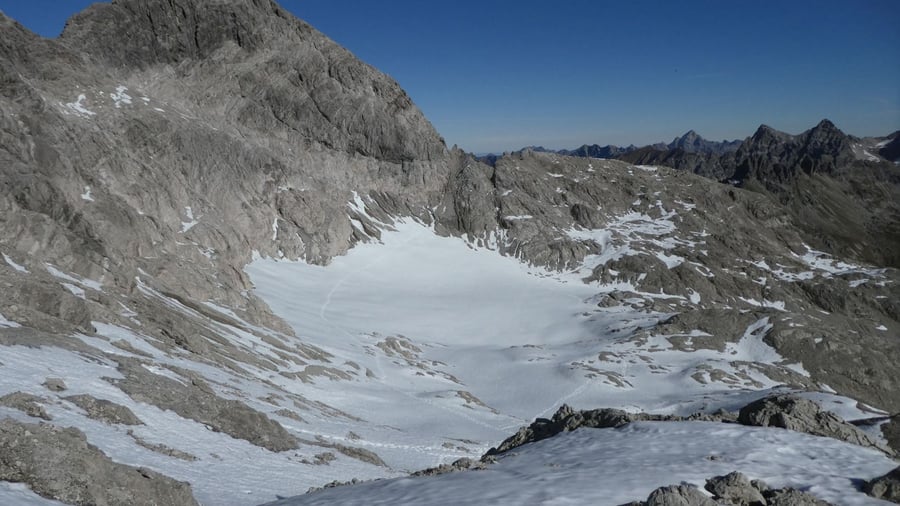
In the Allgäuer Alps of southern Germany, the last glacier, known as the Schwarzmilzferner, has melted away following an unusually hot summer. The glacier, which measured over four meters thick and comprised roughly half its original volume, is now expected to be completely gone by next summer. Christoph Mayer, a glaciologist at the Bayerischen Akademie der Wissenschaften, predicts that the majority of the eastern Alps will be ice-free between 2060 and 2070.
He and his colleagues have been closely monitoring the glacier, which used to be the last one in the Allgäuer Alps, for 26 years and documented significant ice loss since 2016. This decline has accelerated since 2022, making it clear that the glacier's demise is imminent. The Schwarzmilzferner's demise is not an isolated incident; multiple smaller glaciers in the Alps are disappearing each year.
Mayer believes that this trend will continue, and even with significant snowfall in winter, alpine ice masses will rapidly deteriorate due to the increasingly hot summers. According to Mayer's predictions, all of the eastern Alps will lose their glaciers between 2060 and 2070, with the four remaining German glaciers losing over a quarter of their area within just two years.
The Blaueisgletscher and Watzmann-gletscher in the Berchtesgadener Alps are also at risk, potentially following the same fate as the Schwarzmilzferner in the Allgäuer Alps. By the end of the decade, the Nordliche Schneeferner in the Zugspitzgebiet could join them, with a maximum lifespan of only ten years. The Südliche Schneeferner had already lost its glacier status in 2022.
Written by urgent.news from Handelsblatt's reporting — not their text. Machine-written — may contain errors; check the original before relying on it.