Is China getting faster at integrating new nuclear missiles into its forces?
China’s newest land-based intercontinental ballistic missile, the DF-61, has made its way into routine military training much faster than earlier ICBMs, according to state broadcaster CCTV. That raises the question of whether the People’s Liberation Army is becoming more efficient at integrating new strategic missiles into its nuclear forces. Shao Yongling, who has worked as a researcher with the…
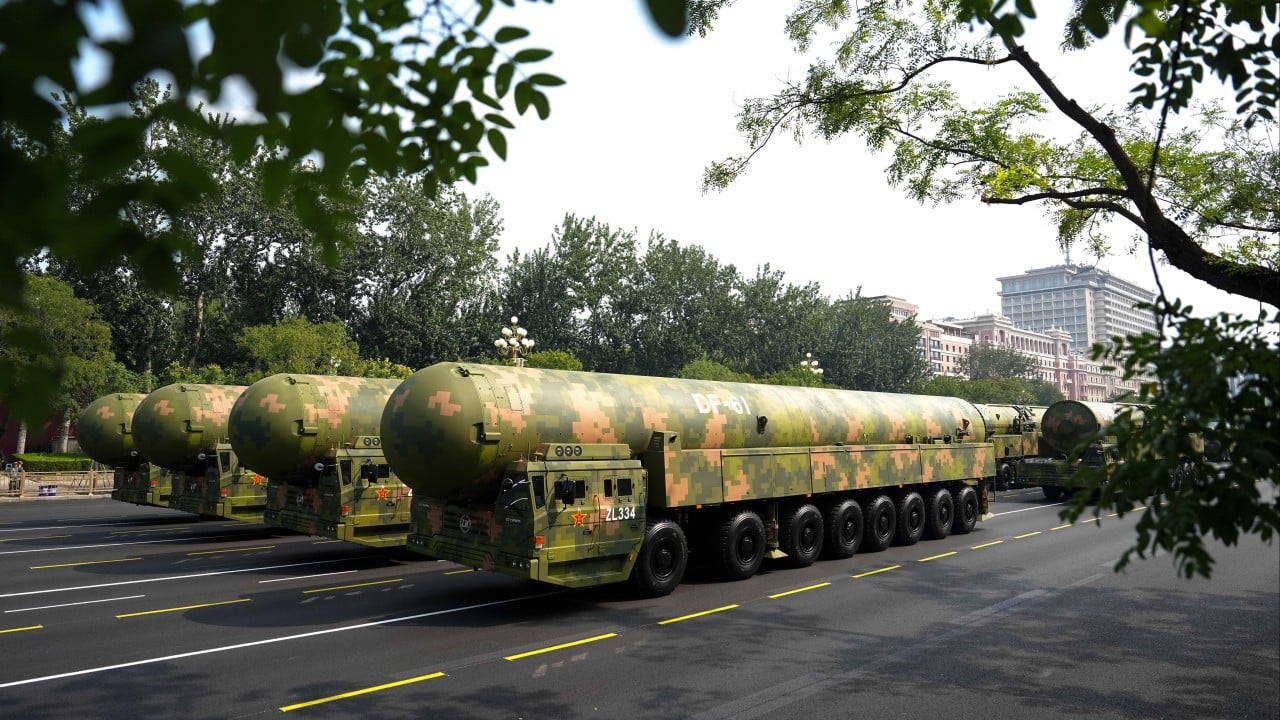
China’s newest intercontinental ballistic missile, the DF-61, has reportedly been integrated into routine military training at an unprecedented pace, according to a state broadcaster. This has sparked questions about whether the People’s Liberation Army (PLA) is becoming more efficient at incorporating new strategic missiles into its nuclear forces.
The DF-61, which first appeared at a military parade in September 2025, was described by a PLA Rocket Force researcher as having progressed from its debut to routine training "far faster than the combat capability generation cycle of traditional intercontinental missiles." However, analysts note that the rapid integration may be due to similarities between the DF-61 and the older DF-41 ICBM, despite limited publicly available information about the new missile.
China has not disclosed technical specifications for the DF-61, including its range or warhead capacity. Estimates suggest a possible range of 12,000km to 15,000km and the ability to carry up to 12 nuclear warheads. The DF-61 is part of China's arsenal of nuclear-capable ICBMs, which includes the DF-5, DF-31, and DF-41. The Pentagon believes the older DF-31A can reach most of the continental United States, while the DF-41 is estimated to have a range of up to 15,000km.
While the DF-61’s integration into training programs appears faster than that of previous missiles, analysts caution that this could be due to its similarity to the DF-41 or other factors. The missile's operational readiness, which requires trained personnel, launch vehicles, and infrastructure, remains unclear due to a lack of satellite imagery.
Regardless, the DF-61's quick integration and potential enhanced survivability could have significant strategic implications for China, potentially emboldening it to use military force while reducing vulnerability to a US nuclear first strike.
Written by urgent.news from Reuters Business via SCMP's reporting — not their text. Machine-written — may contain errors; check the original before relying on it.
This story
This is one outlet's version. Read the fullest account.