Is China getting faster at integrating new nuclear missiles into its forces?
China’s newest land-based intercontinental ballistic missile, the DF-61, has made its way into routine military training much faster than earlier ICBMs, according to state broadcaster CCTV. That raises the question of whether the People’s Liberation Army is becoming more efficient at integrating new strategic missiles into its nuclear forces. Shao Yongling, who has worked as a researcher with the…
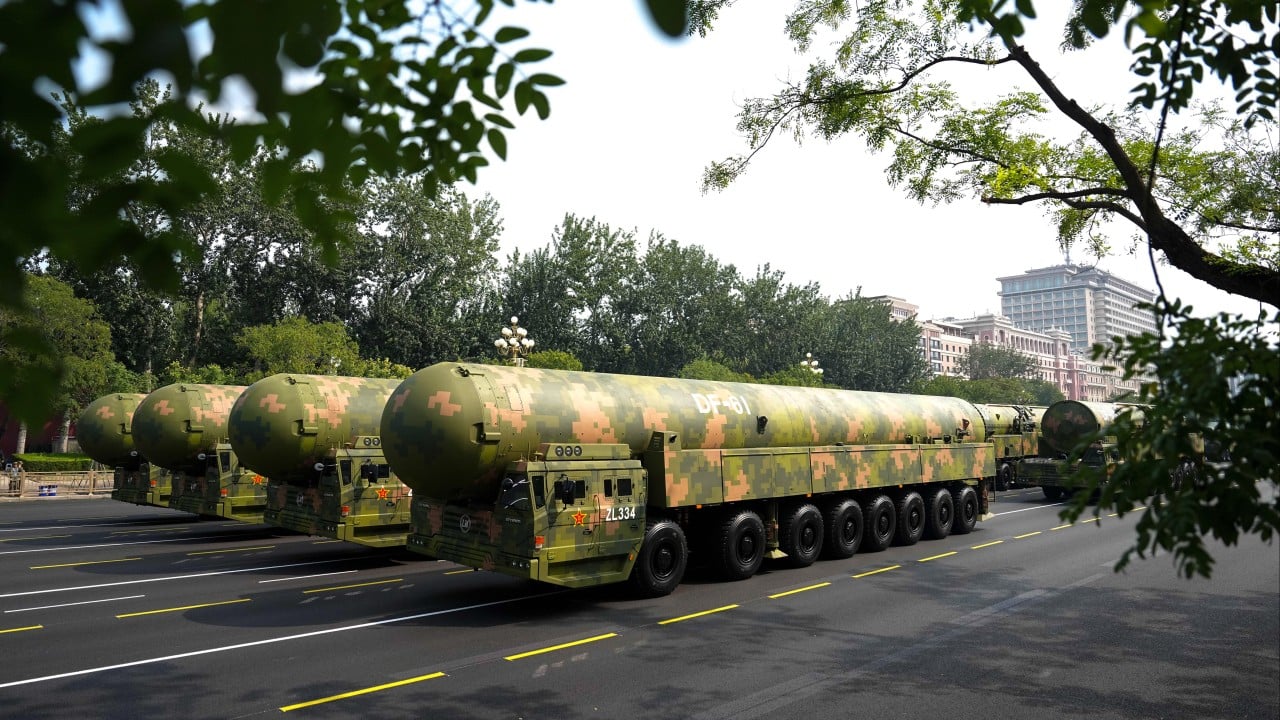
China's newest land-based intercontinental ballistic missile, the DF-61, has been incorporated into routine military training at a faster pace than earlier ICBMs, according to state broadcaster CCTV. This rapid integration raises questions about the People's Liberation Army's efficiency in integrating new strategic missiles into its nuclear forces.
Shao Yongling, a former PLA Rocket Force researcher, noted that the DF-61's transition from its debut at a September 2025 military parade to regular training was "far faster than the combat capability generation cycle of traditional intercontinental missiles". However, analysts suggest that the quick progress could be due to similarities between the DF-61 and the older DF-41 ICBM, despite limited publicly available information.
The DF-61's development timeline and operational readiness remain unclear, as China has not disclosed technical specifications such as its range or nuclear warhead capacity. The missile's compatibility with the rocket force's command, communications, and support networks, along with the service's experience training ICBM crews, has contributed to its swift integration.
While the DF-61's progress may seem unusually fast if it were an entirely new design, it could also be an upgraded version of the DF-41 with improvements to its launch procedures, survivability, or ability to evade missile defenses. The faster integration of new missile systems could have strategic implications, potentially emboldening China to use its military force more flexibly while reducing the risk of unintentional escalation.
Written by urgent.news from South China Morning Post's reporting — not their text. Machine-written — may contain errors; check the original before relying on it.