Cop31, focus sull’elettrificazione ma l’Italia è indietro
Ad Antalya la presidenza turca della Cop31 chiederà ai governi di aderire a un impegno comune per portare l’elettricità da poco più del 20% dei consumi finali di energia nel...
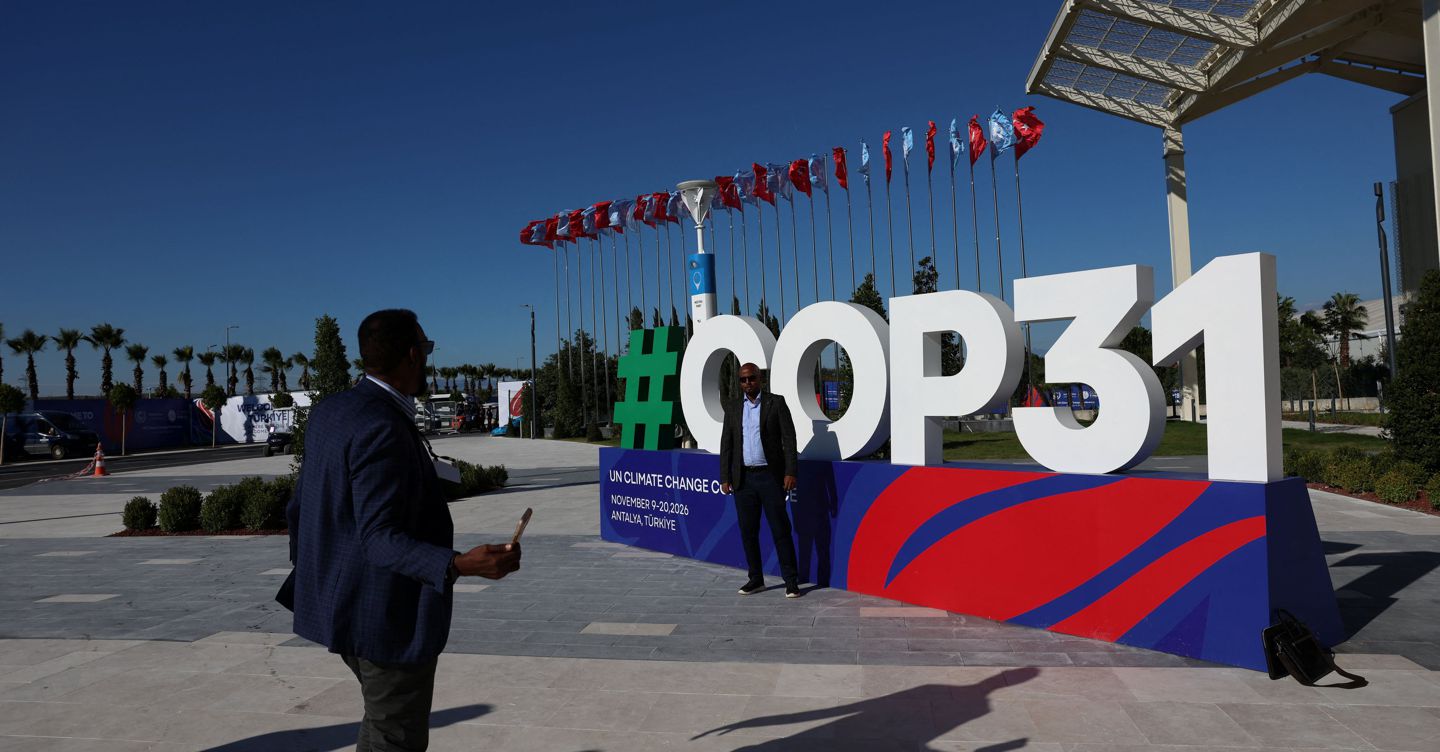
During the Cop31 conference in Antalya, the Turkish presidency called for world governments to join a common commitment to increase electricity usage from less than 20% of global final energy consumption to 35% by 2035. This target was declared by Turkey's Environment Minister Murat Kurum at the world's most important climate conference, which began on November 9th.
The European Union also arrived at the summit with a negotiation mandate to accelerate electricity adoption, which it reiterated in the conclusions of the EU Environment Council, approved on October 12th. Italy had strongly supported the proposal put forward by Poland at the EU environment meeting, which presented electricity as a tool to accelerate the transition and bring commitments to phase out fossil fuels, triple renewables, and double energy efficiency into the GST1 framework.
This framework was part of the global balance sheet of progress towards Paris agreement goals concluded at Cop28 in Dubai in 2023. Alongside Poland, Bulgaria and Hungary, Italy pushed for avoiding the introduction of new and more ambitious targets in the European proposal. In Italy, solar photovoltaics produced 45 billion kilowatt-hours in 2025, a 25% increase from the previous year, surpassing hydroelectric power for the first time and becoming the second largest source of generation after gas.
That same year, electricity demand remained almost static and electricity accounted for 22.7% of final energy consumption. "Renewables have grown a lot in the last fifteen years, but electricity demand has remained static," said Andrea Barbabella, Italy for Climate's scientific director. The main challenges to shifting demand from fossil fuels to electricity are the auto sector, building heating and industrial processes.
The electric sector's weight can be seen in the emissions balance. According to a calculation by Italy for Climate using data from Ispra and Mase, Italian emissions dropped from 521 to 364 million tonnes of CO2 equivalent between 1990 and 2025. The study attributes 109 of the 157 million tonnes of reduction to the electrification of the Italian economy.
Moving forward with the conversion to electricity now means focusing on the most critical sectors. In transport Italy is lagging behind with only 2% of consumption being electric. Battery car registrations have increased by 67% in the first nine months of 2026, but they still account for only 8% of the Italian market compared to 22.7% in the European Union.
In buildings the situation is better but Italy is still behind the European average: electricity covered 32% of consumption in 2024, compared to 35% in the EU. "Industry is much more electrified," Barbabella said, with the share already at 40% in 2024, seven points above the European average. Electrification is a topic that has been postponed for a long time: last year at Cop30 in Belém, it was replaced by the debate on biofuels.
Italy had promoted the commitment to quadruple biofuel use worldwide by 2035 together with Brazil, which hosted the conference, and Japan. Biofuels are fuels derived from biomass that can replace conventional fossil fuels. For example, biomethane can replace natural gas and be used in industrial processes that are difficult to electrify.
However, there are limits to production capacities: for Italy, a Guidehouse study for Gas for Climate estimates a potential production of 5.5 billion cubic meters per year. With broader projections, Snam and the Italian Biogas Consortium estimated a capacity of 7.9 billion cubic meters, but this is still far below the 63.4 billion cubic meters of gas required in 2025.
The Cop31 conference again focuses on electrification, with the clear objective of taking home the "35 by 35" agreement.
Written by urgent.news from Il Sole 24 Ore's reporting — not their text. Machine-written — may contain errors; check the original before relying on it.