Why are people sticking aluminum foil on their walls in winter? I asked the experts to explain exactly why this clever moisture trick works
Spotted moisture on your walls? The aluminum foil trick could get to the heart of the problem.
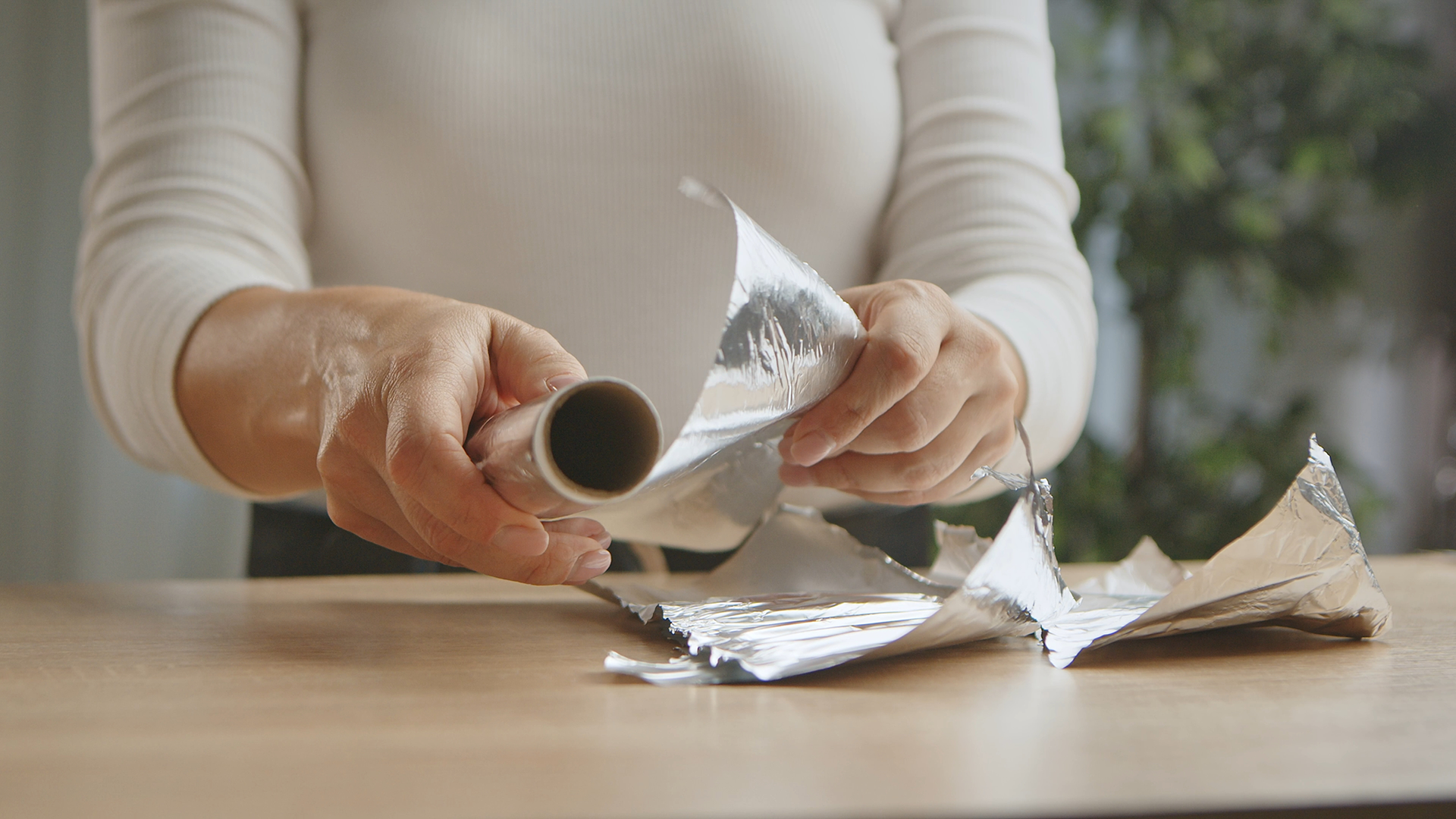
People have been using aluminum foil taped to their walls during winter to detect excess moisture. This method involves placing a piece of foil on a wall and waiting for 48 hours to see if it collects water droplets. To understand why this works, we spoke to experts in mold and air quality, as well as toxicology and environmental science.
Michael Rubino, a mold and air quality expert, explains that aluminum foil doesn't allow water vapor to pass through easily due to its non-porous surface. When taped to a wall, it prevents moisture from moving between that area and the room's air. If the indoor air is humid and the foil becomes cool enough, condensation can form on the side facing the room, signaling moisture issues on that side.
However, Rubino cautions that this method isn't foolproof. If moisture already exists in the wall, covering it with foil will trap it there rather than revealing its source. The wet side of the foil indicates which wall area has moisture issues, but not the origin of the water. Moisture can enter through leaks, poor insulation, heavy rainfall, or even internal condensation due to high humidity.
Dr. Alex Le Beau, a toxicologist and environmental scientist, advises looking for wet building materials, such as drywall, as a visual clue. He notes that wet walls, ceilings, or floors are uncommon and should be examined for patterns, such as bubbling paint or deformation. The location and pattern of moisture can help determine if it's an exterior or interior issue.
While the foil test can provide some insight, it has limitations. It can't detect mold growth, nor can it determine the extent of the moisture problem or whether it has spread. Additionally, if the wall material has dried out since the initial water issue, mold may still be present. Experts recommend investigating further if you notice discoloration, persistent musty smells, or areas that never seem to dry completely.
In summary, the aluminum foil moisture hack is a simple way to identify potential problems, but it should be used in conjunction with a thorough visual inspection and professional assessment to accurately diagnose and address the underlying moisture issues in your home.
Written by urgent.news from Tom's Guide's reporting — not their text. Machine-written — may contain errors; check the original before relying on it.