Vietnam’s growth continues but will depend on stronger domestic economy’s integration: QNB
<p>Doha, Qatar: Vietnam's growth is set to continue, but its quality will depend on the domestic economy, Qatar National Bank (QNB) said in its weekly economic commentary.</p> <p>The export boom remains largely captured by foreign firms, while the new wave of technology investment and stronger domestic demand offer an opportunity to deepen local linkages. Seizing it will require investment in…
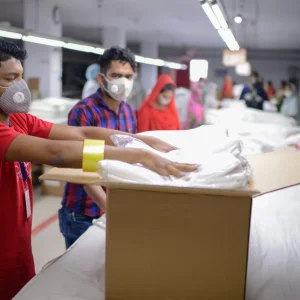
Qatar's Qatar National Bank (QNB) reports that Vietnam's economic growth is expected to persist, but its long-term quality will hinge on strengthening the domestic economy. The central bank notes that foreign-owned export-oriented manufacturing firms dominate Vietnam's high-tech exports, while domestic enterprises primarily engage in low-value-added assembly, processing and supply activities.
Despite this, Vietnam has attracted substantial foreign direct investment (FDI), with commitments rising 76.4% to USD 50.4 billion in the first nine months of the year. Disbursements reached their highest nine-month level in five years. The World Bank has classified Vietnam as an upper-middle-income economy, and the nation is emerging as Asia's next "tiger" economy, following the success of Korea and Taiwan.
However, growth in Vietnam is uneven, with foreign-owned firms driving most high-tech exports and importing the necessary components and machinery. Domestic firms remain largely confined to low-value-added sectors. This disparity in economic contribution leaves Vietnam vulnerable to external shocks, including US trade measures and ongoing Section 301 investigations.
The bank highlights three factors that will determine whether the benefits of foreign investment permeate the broader economy: the structure of the FDI-led export sector, the nature of new technology investment, and the strength of domestic demand. The foreign investment sector's weak connections to the rest of the economy, particularly in terms of local supplier linkages, suggests that most inputs are sourced abroad and then exported by foreign firms.
Domestic firms are largely absent from this supply chain, resulting in limited domestic value creation and minimal spillover effects.
A new wave of foreign investment is increasingly targeting higher value-added activities, such as semiconductors, artificial intelligence, data centers and research and development. These initiatives, including a USD 1 billion advanced chip-packaging plant and a USD 2.1 billion AI data centre in Ho Chi Minh City, offer greater potential for spillovers by requiring skilled engineers, specialized services and local research capacity.
However, absorption capacity remains a constraint due to shortages of skilled workers, regulatory bottlenecks and limited land and specialized infrastructure. The bank anticipates that registered FDI will rise 76.4% in the year, while disbursements will only increase by 12.1%, indicating that a significant portion of the FDI pipeline remains unrealized.
Written by urgent.news from The Peninsula Qatar Business's reporting — not their text. Machine-written — may contain errors; check the original before relying on it.
This story
This is one outlet's version. Read the fullest account.