T.N. may be heading towards a water crisis, unless northeast monsoon comes to the rescue
As of now, the aggregate storage in the major 15 irrigation reservoirs is about a third of the combined capacity of the reservoirs. In the corresponding period last year, the combined storage was around 92%
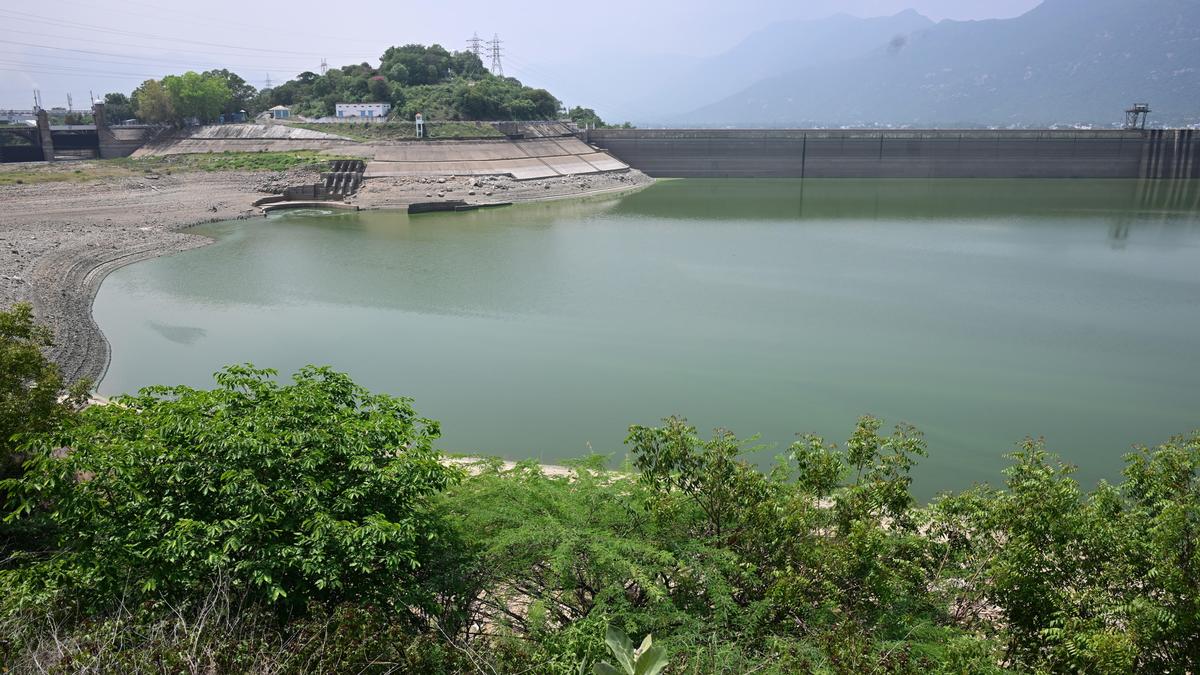
Tamil Nadu may be on the brink of a water crisis unless the northeast monsoon provides relief. As of now, the aggregate storage in the major 15 irrigation reservoirs amounts to approximately one-third of their total capacity. This is a stark contrast to the same period last year, when the combined storage was around 92%. The state's largest dam, Mettur, currently holds about 23 thousand million cubic feet (tmcft), which is insufficient to sustain water release to farmers beyond a week in the Cauvery delta.
The moderate rainfall during the northeast monsoon—around 240 mm against the anticipated 236 mm—falls short of the needed 260 mm, with the bulk expected to fall in November. Typically, December accounts for only about 20% of the monsoon's total rainfall. The existing rainfall pattern aligns closely with the forecast from the Tamil Nadu Agricultural University (TNAU), which predicted a rainfall of 438 mm for the entire monsoon season, only a one percent deviation from the normal 434 mm.
The Meteorological Department, however, forecasted normal rainfall (normal rainfall is expected to range from 88-112% of the Long Period Average (LPA)). Despite the current water situation and the expected subdued rainfall, farmers have opted for paddy cultivation in the samba-thaladi season, covering around 3.62 lakh hectares, with nearly 50% of this under direct sowing—indicating a shift towards water-conserving methods.
However, water availability challenges persist in other parts of the state, reflected in the reduced paddy coverage compared to last year. As of rice production in the State in 2025-26, the yield is 77.5 lakh tonnes, one lakh tonnes less than the previous high of 79.07 lakh tonnes during 2021-22. At the meetings of the Cauvery Water Regulation Committee (CWRC) and the Cauvery Water Management Authority (CWMA) on Friday, the state government requested Karnataka to release an additional 20.7 tmcft, including a backlog of 16.9 tmcft.
The CWMA approved this demand, recommending Karnataka release 3.88 tmcft through 3000 cubic feet per second (cusecs) per day for 15 days starting from November 7, 2026.
Written by urgent.news from The Hindu's reporting — not their text. Machine-written — may contain errors; check the original before relying on it.