Send your name to Saturn's moon Titan with NASA's upcoming Dragonfly mission
NASA is asking the public to send their names to Titan for an ambitious mission that will see a flying craft explore the Saturn moon in 2034, if all goes according to plan.
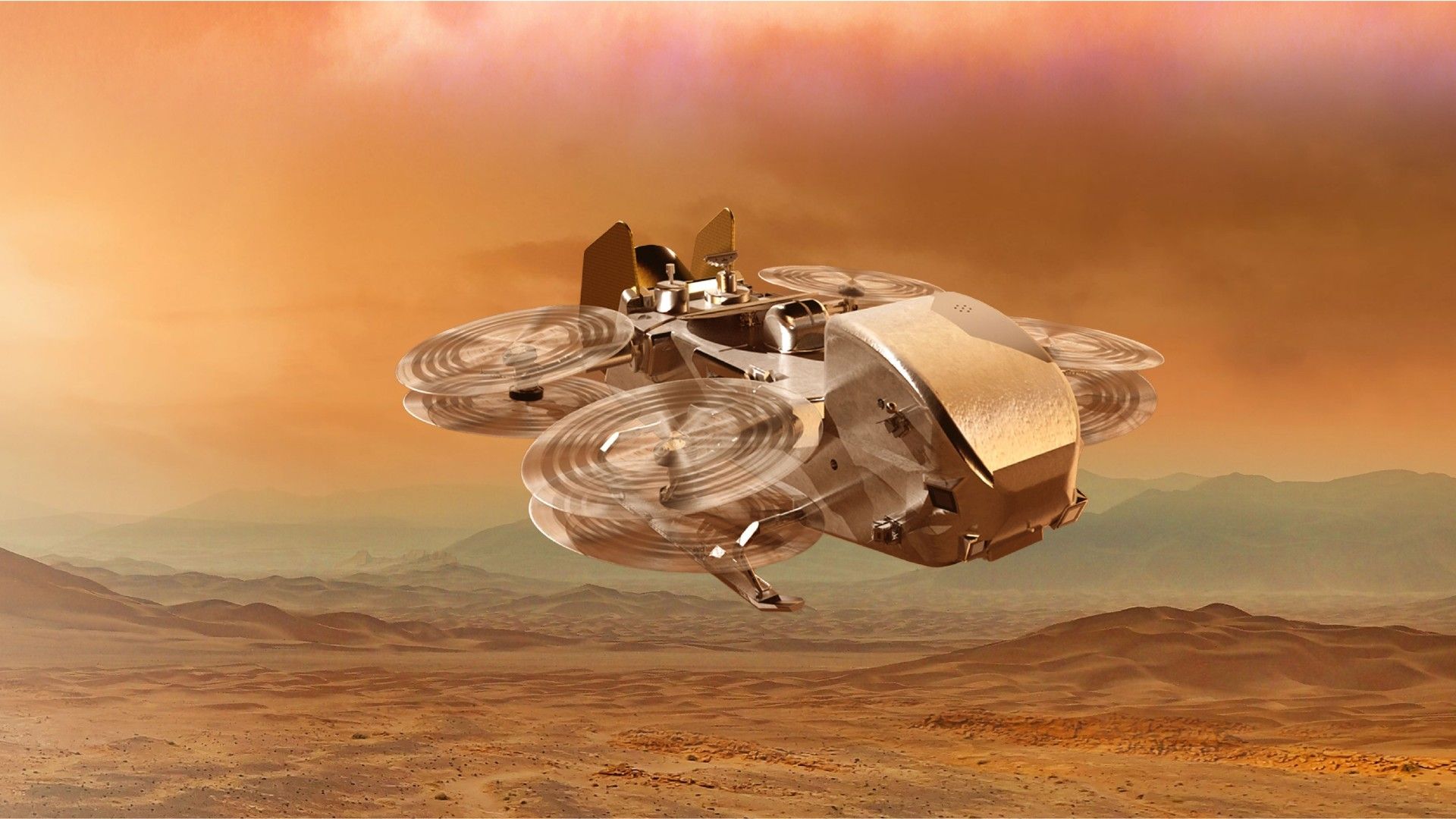
NASA's upcoming Dragonfly mission offers an opportunity for the public to send their names to Saturn's moon Titan, a celestial body teeming with conditions that could potentially support life. Dragonfly is an SUV-sized nuclear-powered rotorcraft set to launch towards Titan in 2028. The agency opened a dedicated webpage in late October for individuals to have their names etched onto a chip aboard the spacecraft during its construction. These names must be submitted by January 15, 2027.
Dragonfly's itinerary is anything but ordinary, as it plans to traverse vast distances of up to miles (or kilometers) between landing sites after its arrival in 2034. Nearly a billion miles away, Titan boasts an atmosphere, rivers and lakes, seasonal changes, expansive dunes, and a landscape rich in organic material. NASA describes this moon as an extraordinary destination, with Dragonfly set to explore it for approximately 3.3 Earth years, making one flight every one to two Titan days, or Tsol, which lasts about 16 Earth days.
Upon reaching Titan, Dragonfly will conduct a series of scientific investigations, including studying prebiotic chemistry, assessing past habitable conditions, and searching for chemical indicators of life based on water or hydrocarbons. The rotorcraft will explore various geologic sites, collecting samples of surface material for analysis using its suite of scientific instruments.
Dragonfly will stop at a diverse range of locations, including dunes and a young impact crater named Selk, according to NASA. This mission will provide a closer look at Titan than ever before, promising invaluable insights into this intriguing world and the potential for life beyond Earth.
Written by urgent.news from Space.com's reporting — not their text. Machine-written — may contain errors; check the original before relying on it.