No Cash, No UPI, Just Grain! Villagers Keep Centuries-Old Barter System Alive In MP’s Bhikangaon
Bhikangaon (Madhya Pradesh): In an era dominated by cash transactions and digital payments, an unusual economic practice continues to thrive in parts of the Nimar region, where agricultural produce still serves as currency. For generations, villagers have exchanged grain for earthen lamps, festival offerings and even services, preserving a traditional system built on mutual trust rather than…
In the Nimar region of Madhya Pradesh, an ancient economic custom persists, where agricultural products serve as the currency. For centuries, villagers have practiced bartering grain for various items, including earthen lamps, festival offerings, and services. This practice, known as the Bhata and Adav traditions, relies on trust rather than monetary value or formal agreements.
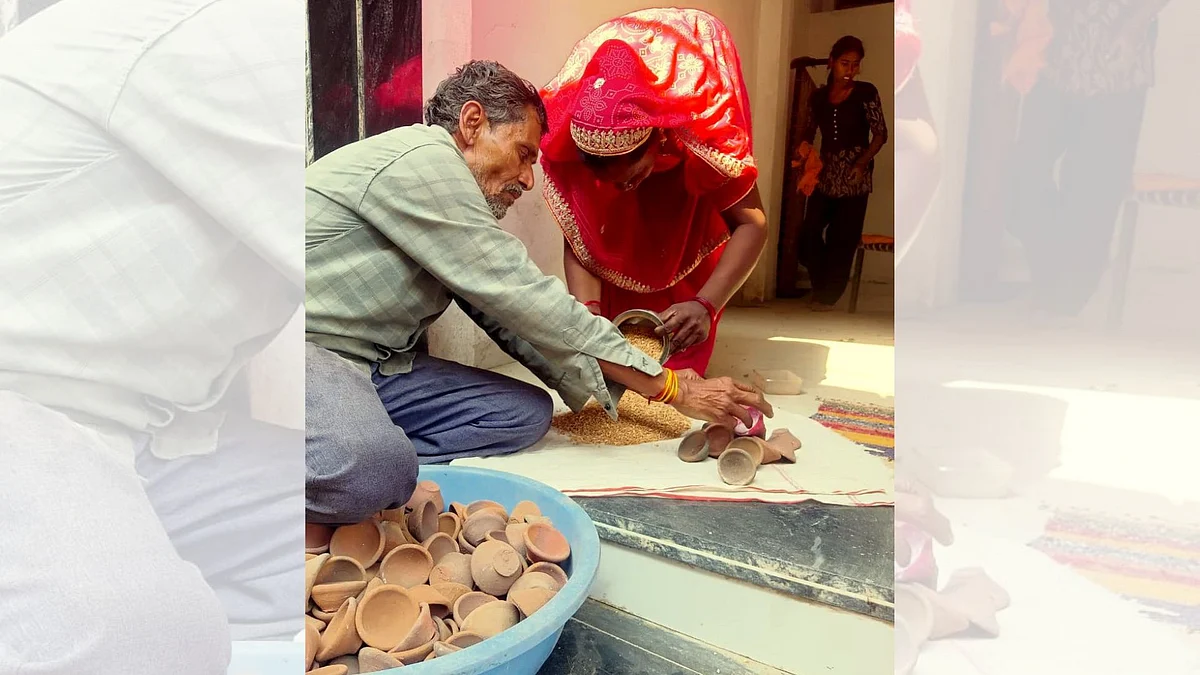
During Diwali, potters deliver earthen lamps to households, receiving grain from farmers in return. Meanwhile, members of the Kahar community distribute traditional puffed grain, known as Dhani, and receive agricultural produce during the Gangaur festival. The Adav system operates similarly, with the barber community receiving grain for services rendered throughout the year.
In Kedwa village, a 60-year-old potter, Tulsiram Prajapat and his wife Asha Bai, continue to uphold the ancestral pottery business. This year, they provided approximately 20,000 earthen lamps to nearby villages, with the quantity varying based on individual farming capacity and yield. Sardar More and Ramchandra Arne, local farmers, noted that the exchange depends on the farmer's ability and crop output.
Champalal Verma explained that the Kahar community maintains these traditional exchanges with farming families during the Gangaur festival. Similarly, Chandu Sen described how barbers offer haircutting and shaving services and receive grain after the harvest on Akhateej, a day dedicated to the barber community.
While modern markets and cash transactions have gradually diminished these practices, their continuance highlights a unique rural economic system. This system is rooted in trust, agricultural produce, and strong social bonds, which remain essential to everyday transactions in these villages.
Written by urgent.news from Free Press Journal's reporting — not their text. Machine-written — may contain errors; check the original before relying on it.