Stories hidden in every stitch: Discovering the art of Bengal’s nakshi kantha
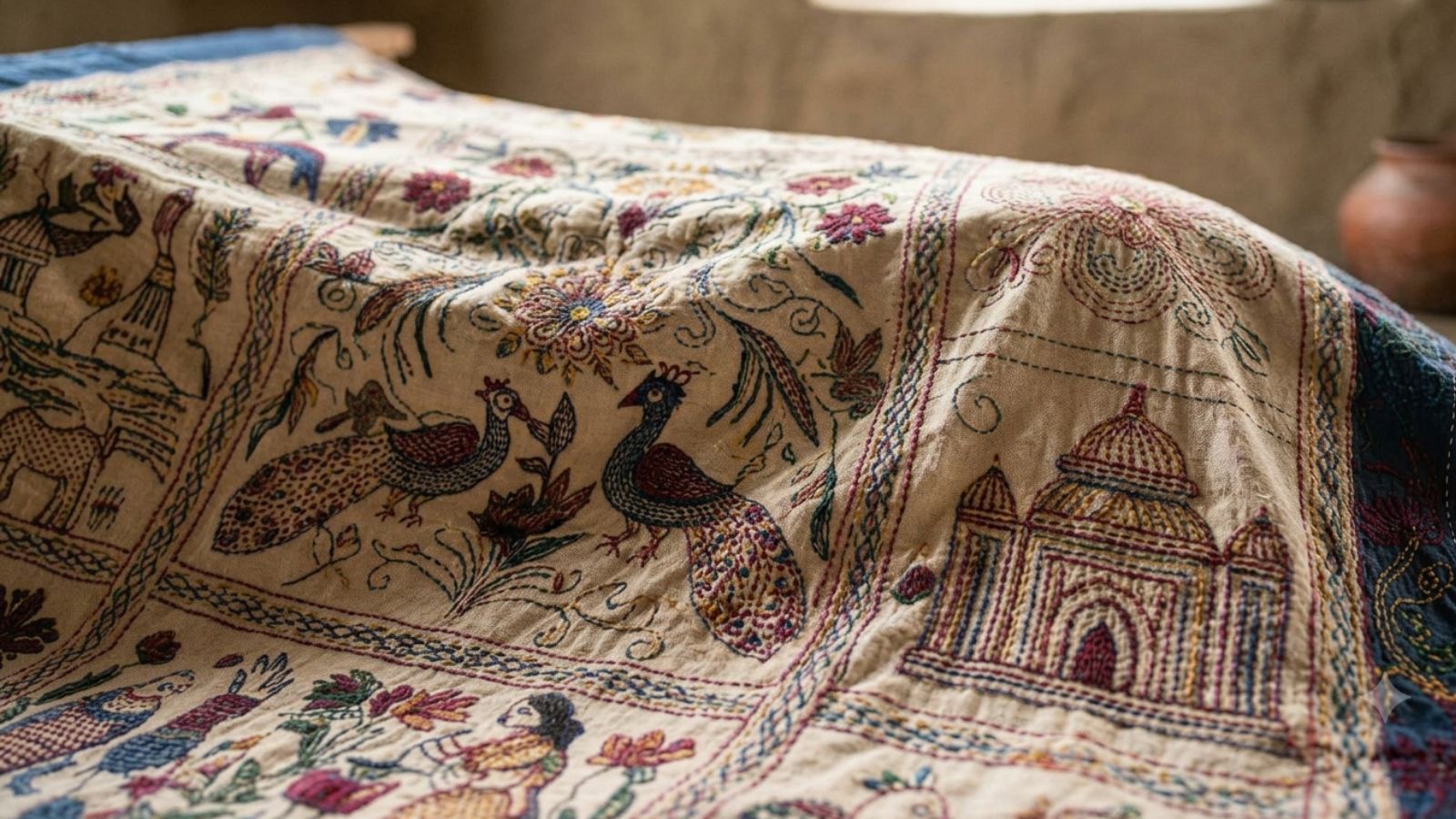
Nakshi kantha is an ancient art form of embroidered textiles originating from the Bengal region, which now encompasses West Bengal in India and Bangladesh. Its beginnings can be traced back to the domestic lives of rural Bengali women who reused old, worn-out cotton garments by layering them and stitching them into quilts and other household items. Initially developed for practicality, these textiles eventually became expressions of creativity and personal experiences.
Malika Varma, Director of SHE Kantha, explains that women used simple running stitches to hold the fabric layers together and decorated them with intricate designs inspired by nature, folklore, religious beliefs, and everyday life. The term "nakshi kantha" comes from the Bengali words "nakshi," meaning artistic designs or patterns, and "kantha," referring to the stitched textile.
Over generations, these humble household objects evolved into remarkable examples of folk art, showcasing the skill and individuality of their creators. Today, Nakshi Kantha is recognized as a vital part of Bengal's textile heritage, demonstrating how an everyday craft developed into a distinct art form.
Traditional Nakshi Kantha is characterized by its resourcefulness, delicate stitching, layered construction, and imaginative compositions. It was made primarily from recycled cotton fabrics such as old saris and dhotis, which were layered together to create a soft, durable textile. Women used cotton threads drawn from the borders of old garments or other available materials, often in natural or traditional colors.
The labor-intensive process required patience, precision, and considerable skill. Some of the most common stitches and techniques employed include running stitches, darning stitches, and the use of circular patterns to convey ideas of continuity and wholeness. The motifs and patterns stitched into Nakshi Kantha often held significant cultural, emotional, and symbolic meanings, reflecting the lives, beliefs, and social realities of Bengali women.
Written by urgent.news from The Indian Express's reporting — not their text. Machine-written — may contain errors; check the original before relying on it.