Napoli, nuova Darsena da 277 milioni bloccata: il terminal gas va trasferito
Dell’ampliamento del porto di Napoli, con la realizzazione della Darsena di Levante, si discute ormai da molti decenni: se ne discuteva già da tempo quando, nel dicembre 2000, si arrivò...
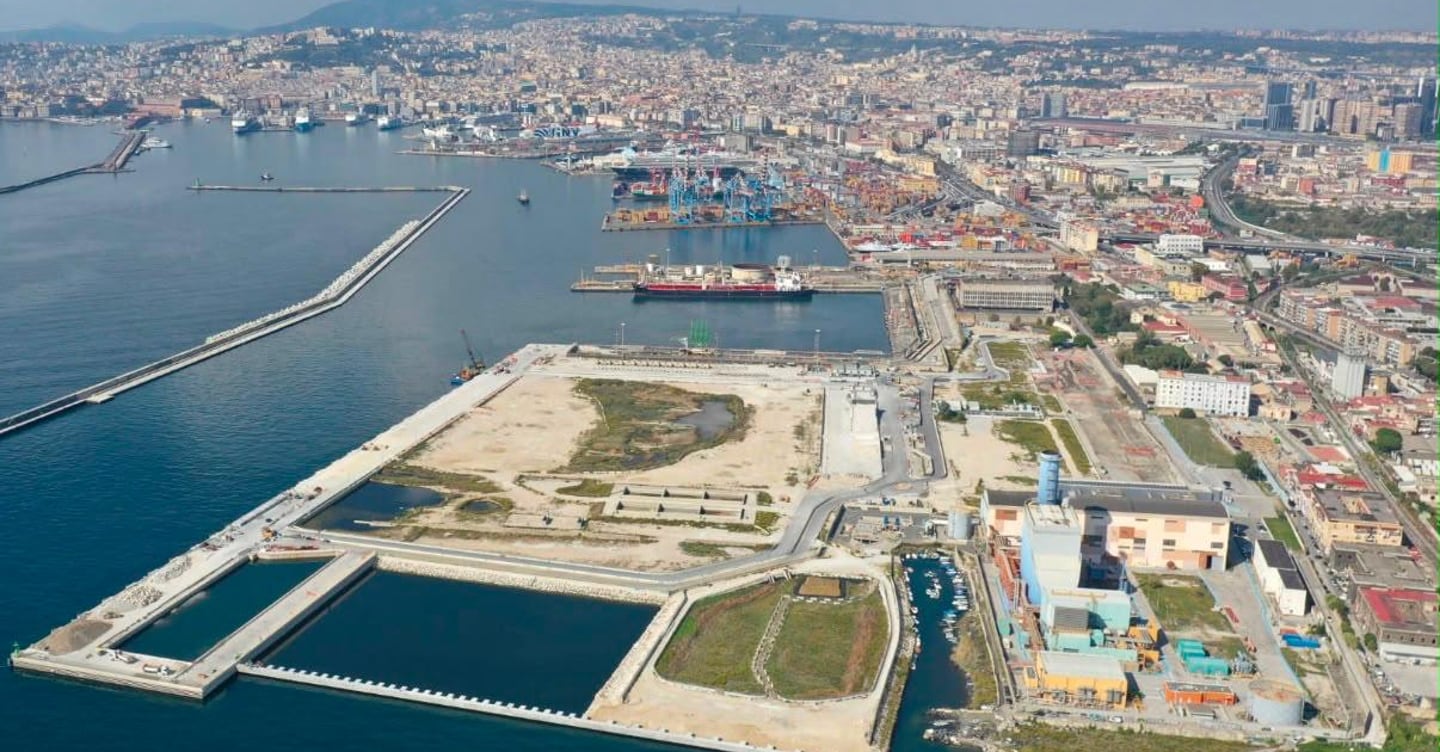
The expansion of the port of Naples, aimed at creating the Levante Basin, has been a topic of discussion for many decades. In December 2000, an agreement was signed by the Ministry of Transport and Public Works, the Port Authority, the Naval Command, the Campania Region, the City of Naples, and the University of Federico II. This agreement designated the Levante Basin area for a container terminal.
However, progress halted once again, leaving the project dormant for years. In fact, based on the same agreement, the University of Federico II began constructing the San Giovanni educational campus in Teduccio, which celebrates its tenth anniversary this year. Now, 26 years later, with an investment exceeding 277 million euros, part of which comes from the Pnrr, the Levante Basin exists: the terminal covers 248,000 square meters and is protected by a floating dike that has been extended by 270 meters and reinforced.
The works are complete and tested, with only a residual portion of the dike reinforcement funded by Feasr funds still ongoing. However, the new basin, if not connected to the highway bypass with adequate accessibility and if ferry crossings and railway connections (funded by the Pnrr) are not completed, will remain an isolated island or, to use another term, a cathedral in the desert.
In either case, it will be unusable to effectively enhance the port and accommodate increasing traffic. The obstacle? To build road links, all pipelines serving the Naples East oil depots must be relocated to a different location, and the gas terminal, according to the 2004 Prg variant, should already be elsewhere. But they remain in place.
The Levante Basin, if activated, will generate a flow of at least 7,000 trucks per day, requiring at least five inbound and three outbound lanes with a width of approximately 61.2 meters, including emergency lanes. Moreover, it is believed that the associated flows are incompatible with the presence of gas tankers moored right next to this same road.
"After such significant public investments, the work must be completed," says Vittorio Genna, president of Unione industriali Napoli and of Confindustria Campania. "This major port expansion benefits everyone: operators, the production network, the city. It's an opportunity we cannot afford to miss." However, a turning point now seems possible.
The president of the Central Tyrrhenian Authority Port, Eliseo Cuccaro, has shown his strength by activating, together with secretary general Giuseppe Grimaldi, an action plan and laying out the timeline for implementation. "We no longer have margins to delay the activation of the Levante Basin," he says. "We have committed considerable public resources that must now be transformed into the greatest opportunity for the port of Naples.
Ten months ago, we proposed a solution to coexist networks for gas transportation, large oil tanker berths, and access roads. We have received proposals for improvements from concessionaires, which we will evaluate. The berths for gas tanker and oil tanker vessels will be moved to adjacent quays to the current ones." "We will propose a 'procedural agreement'," Cuccaro adds.
"This must be resolved by the end of the year. Then, a European invitation to tender will be issued to verify any additional private operator interests." An opportunity not to be missed. The port of Naples is the main enterprise of Campania, generating a turnover of 700 million euros, not considering the revenue generated by shipping companies.
With the activation of the new basin, the number of containers moved and transported outside the port by truck would increase from 750,000 to 1 million. An additional million containers would arrive from the transshipment traffic and then leave by ship. All other port activities, from cruising to ferries, would benefit from the creation of new spaces. Above all, the city would benefit from reduced pollution.
Written by urgent.news from Il Sole 24 Ore's reporting — not their text. Machine-written — may contain errors; check the original before relying on it.