How to predict the behavior of molecules from scant data
A machine-learning approach called CheMeleon provides a practical way to develop new drugs or other molecules with much less detailed, expensive experimentation.
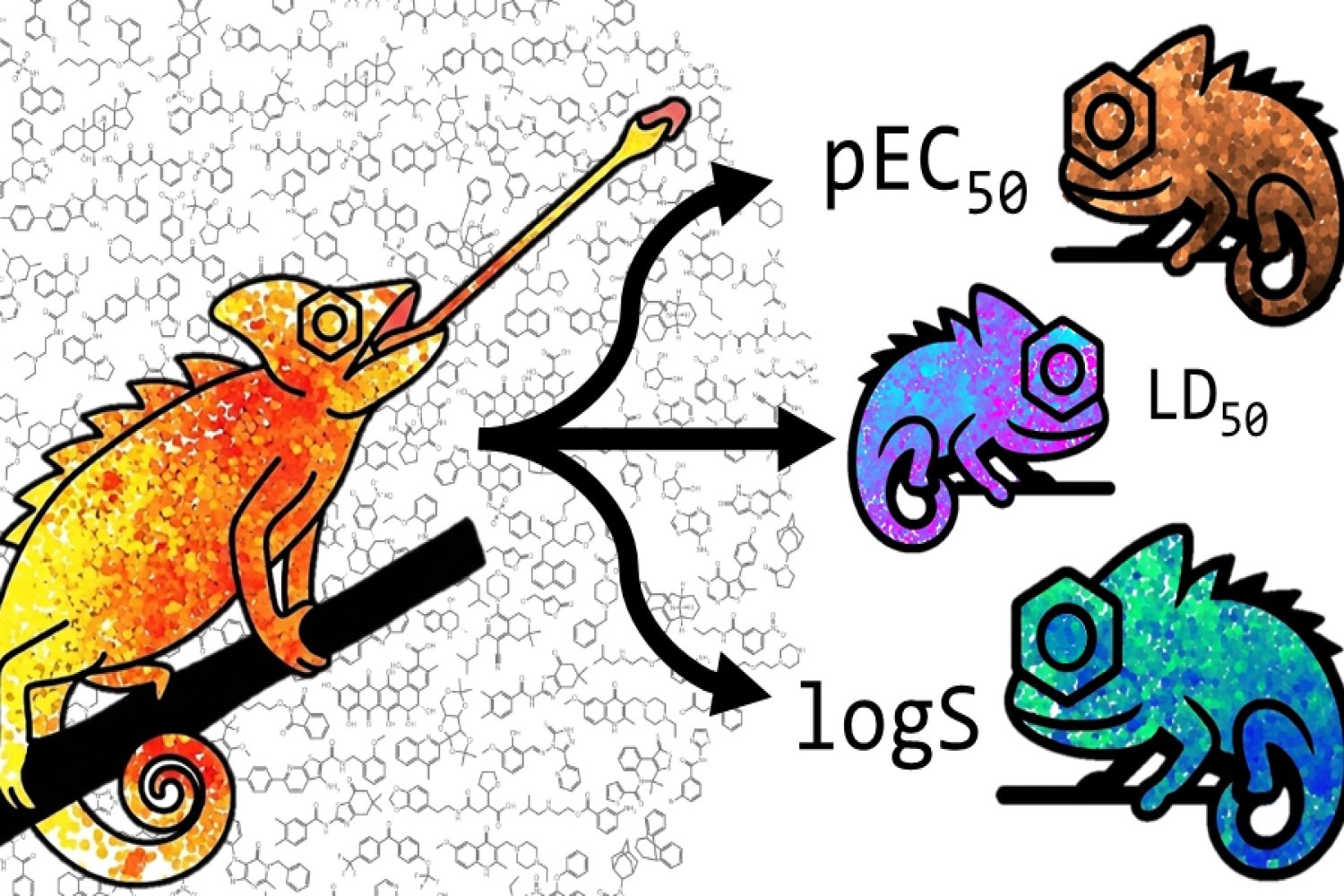
Predicting the behavior of molecules using limited data is crucial for industries such as pharmaceuticals, electronics, and energy. Traditional methods of predicting molecular properties often rely on laborious calculations based on physical principles, which can be time-consuming and costly. Recently, researchers at MIT developed a new method called CheMeleon that outperforms existing techniques in predicting the behavior of molecules with sparse data.
CheMeleon was created using ChemProp, an open-source machine-learning package developed at MIT, and has already gained traction among pharmaceutical companies, with nine of the top 20 winners in a recent contest utilizing the model. The foundation of CheMeleon lies in pre-training a machine-learning model with detailed data on a million different molecules, allowing it to learn correlations between molecular structure and various properties represented by about 1,600 descriptors.
Once pre-trained, the model can then be fine-tuned to predict properties like solubility, viscosity, bioactivity, and reactivity.
The key to CheMeleon's success is that it does not require extensive data from the published chemical literature; instead, it relies on calculating molecular descriptors such as molecular weight and the number of oxygen atoms. By building upon a pre-trained foundation model, CheMeleon is able to leverage underlying principles of chemistry without having to learn everything from scratch.
This approach enables the model to achieve strong performance even when fine-tuned with a limited number of data points for the specific property being predicted. Consequently, CheMeleon significantly reduces the number of molecules that need to be synthesized and tested experimentally, thereby saving time and resources.
Written by urgent.news from MIT News AI's reporting — not their text. Machine-written — may contain errors; check the original before relying on it.