Have astronomers spotted Planet Nine?
Archived observations appear to show a moving object in the far-distant outer solar system, but its reality is unclear
In 2025, an international team of astronomers published a paper suggesting evidence of a new celestial body in the outer solar system, dubbed Planet Nine. Despite previous predictions based on orbital mechanics, the researchers employed an old but valid method developed by Clyde Tombaugh, who discovered Pluto in 1930. Tombaugh's technique involved photographing a large area of the sky over time and comparing images to spot any moving blip of light, indicative of a distant planet.
The challenge lies in the vastness of space, making it difficult to detect even large objects. A planet that far out emits very little reflected light, causing its brightness to drop exponentially as the fourth power of its distance from Earth. To overcome this, the team leveraged infrared light detection, as the hypothetical Planet Nine would still emit this type of light, making it more visible.
They analyzed data from the Infrared Astronomical Satellite (IRAS) and the Japanese AKARI observatory, both of which conducted sky surveys in the 1980s and early 2000s, respectively.
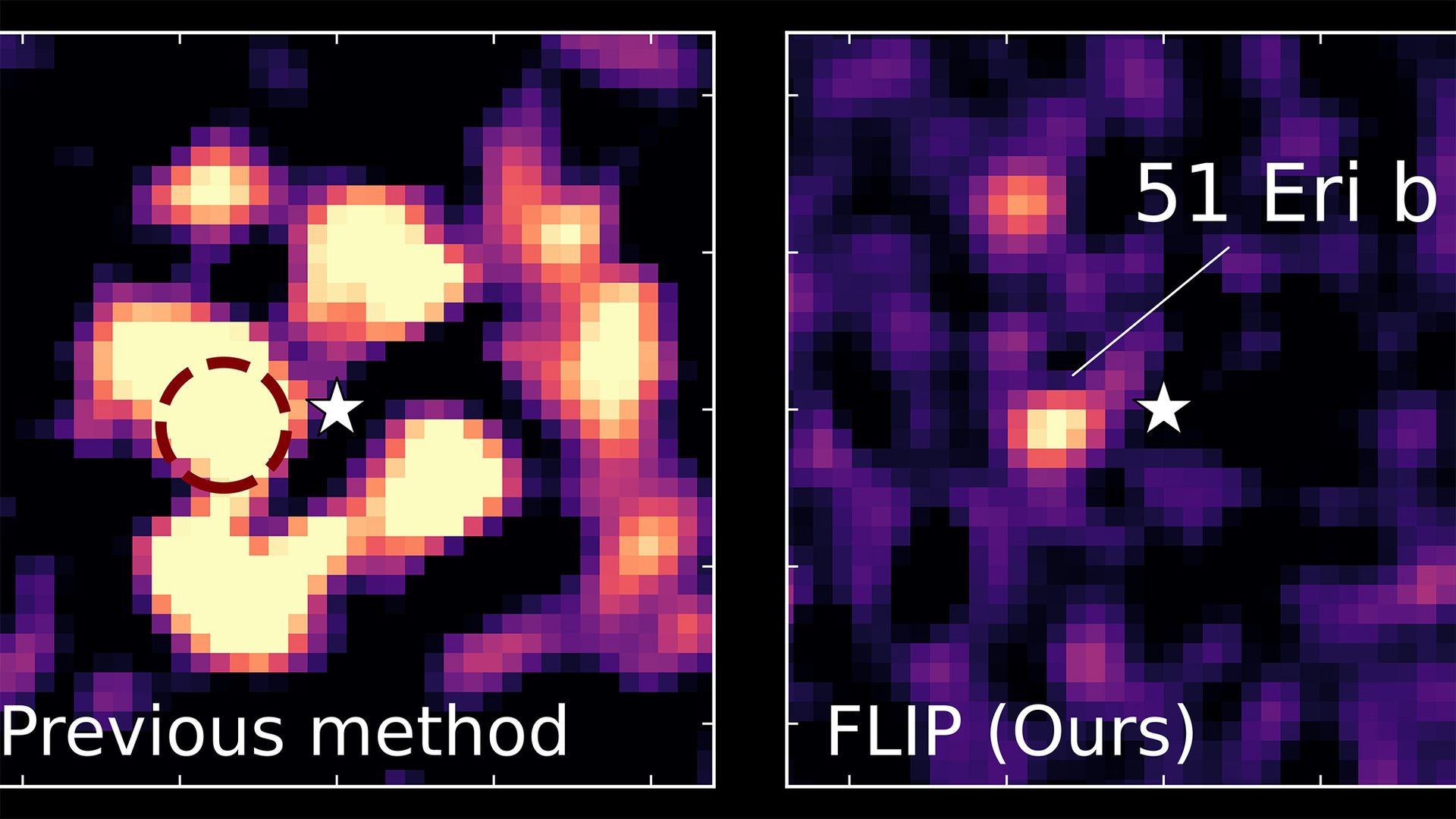
After scrutinizing hundreds of thousands of potential objects in the infrared images, the team identified a single candidate that exhibited the right brightness and orbital motion consistent with a planet orbiting the Sun at several hundred times the distance of Earth. However, with only two spatially separate points of light as evidence, it remains uncertain whether these detections correspond to the same moving object or are mere false positives.
False positives could include faint variable stars or supermassive black holes in distant galaxies. Additionally, the implied orbit's shape remains unknown, and the orientation in space can only be estimated from the two points. Despite these uncertainties, the researchers believe this candidate could be the elusive Planet Nine, whose predicted gravitational effects on the outer solar system could explain certain orbital anomalies.
Written by urgent.news from Scientific American's reporting — not their text. Machine-written — may contain errors; check the original before relying on it.