Folge des KI-Booms: Studie warnt vor Wasserstress durch neue Mega-Rechenzentren
Der Wasserbedarf deutscher Rechenzentren könnte sich bis 2030 mehr als verdoppeln. Eine Studie des Öko-Instituts bringt Alternativen zum hohen Wasserverbrauch ins Gespräch.
A recent study warns that the expansion of computer server farms, driven by the AI boom, could severely strain Germany's regional water supply. According to the Öko-Institut, a research institute commissioned by Greenpeace, data centers in Germany consumed around 13 billion liters of water for cooling in 2025. This demand could rise to 27 billion liters per year by 2030 with the construction of new mega data centers, equivalent to the water consumption of a large city with roughly 580,000 residents.
The study starkly contrasts with the Digital industry's claim that water demand is largely unproblematic. Almost two-thirds of German data centers consume no more than 0.1 liters of water per kilowatt-hour of IT power consumption, largely limited to evaporation cooling. However, after correcting erroneous data from the government's data center registry, the Öko-Institute calculates an average water consumption of 0.67 liters per kilowatt-hour.
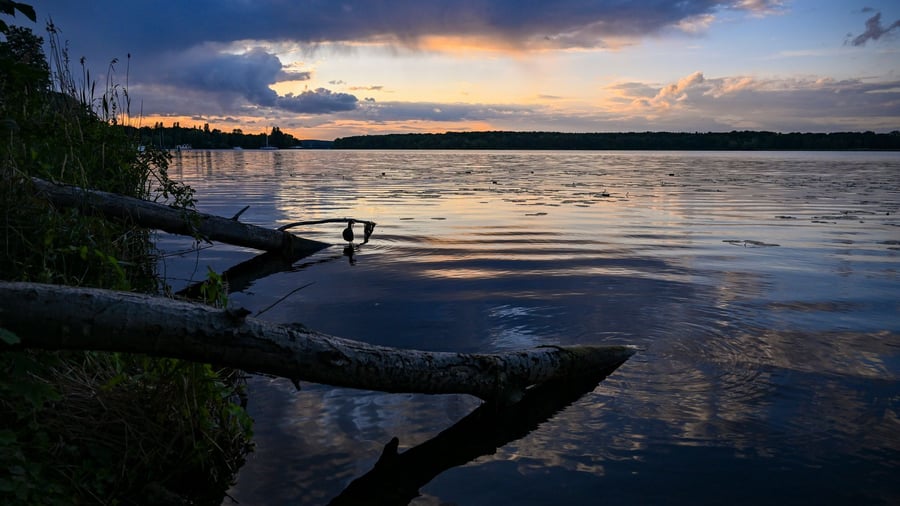
The current annual consumption of 13 billion liters is equal to the total water volume of the Berlin Wannsee. Particularly worrying are planned large projects: a single 100-megawatt data center could require 200 to 930 million liters of water annually, equivalent to the water consumption of a small town with up to 20,000 people.
In already arid regions, these facilities could cause acute groundwater stress, water distribution conflicts, and damage to local ecosystems. The study also contradicts the industry's argument that lower electricity consumption necessarily leads to higher water usage. In practice, no statistical correlation between electricity and water efficiency can be demonstrated.
High energy efficiency can be achieved entirely without water cooling. By strategically employing modern dry or compressed cooling, direct water consumption of data centers could even be reduced to zero. Greenpeace criticizes the lack of transparency, noting that less than half of the approximately 1,200 reporting operators have provided data to authorities, with only 139 usable submissions.
The organization calls for mandatory water assessments before licensing, a ban on water-intensive facilities in arid regions, and strict penalties for non-compliance with reporting requirements.
Written by urgent.news from Handelsblatt's reporting — not their text. Machine-written — may contain errors; check the original before relying on it.