Fleetworthy launches RADAR, new AI fleet management technology
Fleetworthy's new RADAR technology is designed to help fleet managers identify toll discrepancies, monitor spending and make operational decisions without manually searching through reports. The post Fleetworthy launches RADAR, new AI fleet management technology appeared first on FreightWaves .
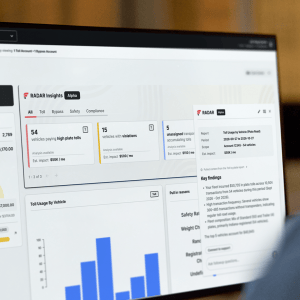
Fleetworthy, a fleet management platform provider, has introduced RADAR, a new AI-powered technology designed to assist customers in monitoring toll activity, spotting spending trends, and receiving actionable recommendations. This technology is seamlessly integrated into the company's existing software, eliminating the need for customers to manually review reports.
Initially launched exclusively within Fleetworthy’s Toll Management product, RADAR (Real-time AI, Decisioning and Automated Resolution) is expected to be available to all Toll Management customers in the first quarter of 2027. Plans to introduce RADAR capabilities in safety and compliance and weigh station bypass products are also in the works, with beta versions anticipated in the same timeframe.
RADAR's primary objective is to help fleet managers identify operational issues, such as toll leakage and potential problems that could keep vehicles or drivers off the road. Toll leakage encompasses discrepancies between the expected toll payments and the actual charges incurred, such as higher plate-based toll costs. The introduction of RADAR is timely, as trucking companies are grappling with increasing operating expenses.
The average cost of operating a truck rose to $2.336 per mile in 2025, marking a 3.4% increase from the previous year, while toll expenses surged by 13.2%, according to the American Transportation Research Institute.
RADAR functions by allowing fleet managers to pose questions about their toll activity, including the reasons behind specific charges or the performance of transponders. Leveraging a commercial large language model, RADAR explains results in plain language, but it does not generate the underlying figures, which are derived from customer-specific queries against their Fleetworthy data.
These calculations are auditable. The platform also displays fleet-specific insights on its dashboard, highlighting toll anomalies, spending trends, and cost-saving opportunities. It can provide next-step recommendations based on these findings, while ensuring fleet managers maintain control over operational decisions.
Fleetworthy has tested RADAR with several customers, incorporating their feedback to refine the product. Users have successfully leveraged RADAR to identify toll leakage, locate trucks without transponders, and retrieve transponder information without delving into reports. The specific companies that have tested the technology remain undisclosed. In cases where responses are inaccurate or contradict fleet records, the company advises contacting its customer support team for assistance.
Although RADAR represents a significant advancement in Fleetworthy's integration of AI into its systems, the company emphasizes that AI is meant to support human decision-making rather than replace it. Chief Product Officer Shay Demmons reaffirmed this perspective, stating that AI should be human-centered, avoiding a "black box" approach.
Fleetworthy's broader AI strategy encompasses the incorporation of AI across its fleet management platform, with plans to expand RADAR beyond mere insights and recommendations to include guided workflows. This would enable customers to investigate problems, assess their potential impact, and receive guidance on addressing them. While fleets can expect basic functionality, such as asking questions, to be included in the core product, more advanced workflows may incur additional costs.
Written by urgent.news from FreightWaves's reporting — not their text. Machine-written — may contain errors; check the original before relying on it.