FLAWED ARGUMENTS: The case against fencing Simon’s Town’s baboons just doesn’t hold up
With most of the Waterfall troop already living naturally on the mountain, fencing Simon’s Town could reduce conflict without sacrificing the baboons’ freedom.
The case against fencing Simon’s Town’s baboons is not as strong as it may initially appear. Justin O’Riain and Joselyn Mormile assert that freedom is essential for baboons, enabling them to move, forage, explore, reproduce, and interact with their environment in accordance with their evolutionary history. However, the question arises as to how we can protect that freedom while addressing the dangers baboons face in residential areas.
To evaluate the situation, let's examine the current scenario based on the Cape Baboon Partnership (CBP) report. On October 12th, the Waterfall troop was observed on the mountain, spending the day in Baviaanskloof and Klawer Valley, exhibiting behaviors typical of wild baboons. This is the type of life we must consider when weighing their welfare.
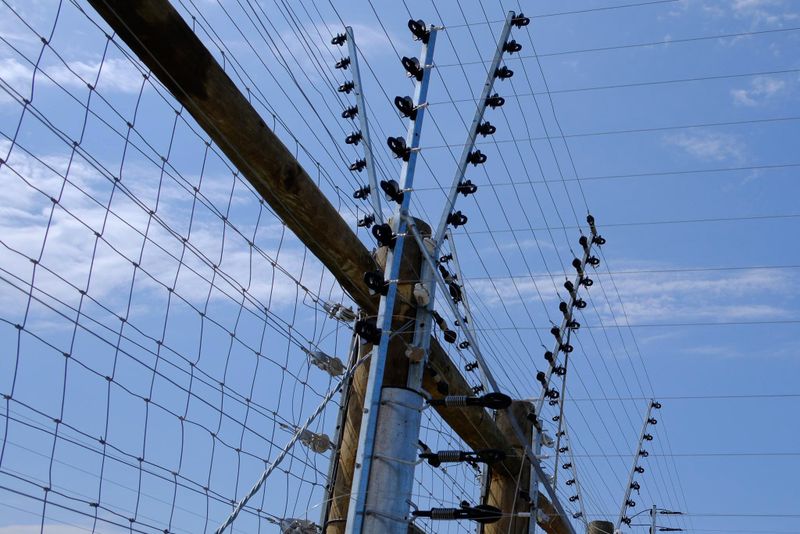
Now, let's explore how we can preserve this natural lifestyle: by keeping baboons in their wild state while preventing them from entering residential areas. There are successful examples of this approach on the Peninsula. The fences at Zwaanswyk have proven effective in keeping baboons away from residential zones. Two electric fence types, one surrounding Steenberg Golf Estate and another along Zwaanswyk Road, have achieved this result.
Thus, we have a troop that continues to spend significant time outside the urban boundary, and baboons that behave naturally on the mountain. Additionally, we have a method to minimize their exposure to areas where their welfare could be compromised.
Fencing, advocated by Justin, Joselyn, and the authorities as being 100% effective in the Zwaanswyk examples, tackles the recognized welfare issue of baboons entering residential areas while maintaining their wild nature and ecological role. This approach seems to offer a more positive welfare outcome compared to confining the baboons to a small camp, as older companions pass away, leaving their young behind. Therefore, can the sanctuary be justified as the best welfare outcome for the Waterfall and Seaforth baboons?
The authorities present ten objections to the proposed fencing along the existing firebreak. These concerns include insufficient natural habitat outside the fence, potential displacement into the next unfenced suburb, perpetuating habituation and urban-ranging behavior, terrain that hinders effective exclusion, further delays potentially causing harm, an unproven fence design at scale, high expenditure for an uncertain outcome, ongoing costs and responsibility despite private funding, unresolved complexities on Navy land, and environmental authorizations, consultations, and opposition.
Let's address each of these objections one by one. First, the argument that there is insufficient suitable natural habitat outside the fence is based on the assumption that higher ground cannot provide an attractive alternative to the productive low-lying areas. However, there is no research to support this claim. In fact, the area in question may offer some of the best baboon habitat on the Peninsula, featuring wooded ravines, permanent water sources, and two dams in the Klawer Valley.
The Normalized Difference Vegetation Index analysis also challenges the notion of uniformly poor habitat.
Furthermore, the Joint Task Team's focus on habitat below 230m raises questions about the consistency of its approach. The northern peninsula has less low-lying natural land than the southern peninsula, yet the Action Plan sets a higher population limit for the northern population (250 baboons) compared to the managed southern population (175 baboons, excluding the Cape Point troops).
If access to land below 230m is crucial, how does the Joint Task Team justify the need for a northern fence to secure natural habitat for 250 baboons, while deeming a fence for Simon’s Town unsuitable due to insufficient habitat? How can they argue that the available habitat cannot support the northern population, while the habitat outside the Simon’s Town fence cannot support the troops in question?
A clear scientific explanation based on food resources and accessible habitat for each troop is necessary before dismissing fencing in Simon’s Town based on habitat suitability.
Secondly, opponents predict that an effective and affordable fence would merely redirect the Waterfall troop towards neighboring settlements. However, this assumes that baboons will simply move to the next unfenced suburb, which may not necessarily be true. The fence along the existing firebreak could effectively keep the baboons within the Simon’s Town area, preserving their wild nature while reducing their exposure to potential harm in residential areas.
Written by urgent.news from Daily Maverick's reporting — not their text. Machine-written — may contain errors; check the original before relying on it.