Financial health must go beyond access to financial services –Queen Máxima of the Netherlands
Her Majesty Queen Máxima of the Netherlands, United Nations Secretary-General’s Special Advocate for Financial Health (UNSGSA), has called for a shift from expanding access to financial services to improving the financial health and long-term security of individuals. She said although Ghana had made remarkable progress in financial inclusion, with about 81.5 per cent of the […] The post Financial…
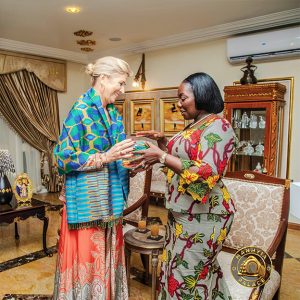
Queen Máxima of the Netherlands, the United Nations Secretary-General’s Special Advocate for Financial Health, has urged a transition from merely increasing access to financial services to enhancing the overall financial well-being and security of individuals. While Ghana has made significant strides in financial inclusion, with approximately 81.5% of the population now having access to financial services, Queen Máxima emphasized that the true focus should be on whether people are experiencing a better financial life.
During a high-level roundtable discussion hosted by the World Bank Group in Accra, Queen Máxima met with representatives from the World Bank and International Finance Corporation (IFC) to explore how Ghana could fortify the financial health and retirement security of informal workers. The discussions centered on mobilizing domestic savings, generating long-term capital for productive investments, and fostering wealth creation and protection against old age, encompassing various stages from savings to financial resilience and connecting informal workers to capital markets.
Queen Máxima, who has been actively involved in financial inclusion since 2009, stressed that access to financial services is merely a stepping stone and must be accompanied by measures such as savings, insurance, pensions, and other strategies that bolster people's financial resilience. She elaborated on effective day-to-day financial management, which includes helping individuals manage their income, create budgets, utilize financial planning tools, and obtain liquidity during periods of cash constraints.
In terms of resilience, Queen Máxima highlighted the need for individuals to be safeguarded against unforeseen events such as health issues, accidents, fires, economic disruptions, and weather-related disasters. She underscored the importance of financial products like weather, health, and life insurance, along with emergency savings, in enabling individuals to withstand such shocks without jeopardizing their financial stability.
Queen Máxima also stressed the significance of long-term savings, urging people to plan for major life goals such as their children's education, housing, and retirement.
For financial service providers, Queen Máxima argued that promoting financial health is beneficial for business as well, as financially healthy clients tend to be more loyal, utilize a wider range of financial products, and maintain stronger portfolios. She further emphasized the importance of emergency savings, arguing that even well-structured pension schemes could pose challenges for individuals when they lack funds to address immediate financial emergencies.
Without adequate savings, people would find it difficult to concentrate on retirement decades ahead while worrying about meeting unexpected financial needs the following day.
Queen Máxima expressed her particular interest in Ghana’s financial health agenda, noting that the country had achieved considerable progress over the past two decades in expanding financial access and fortifying its financial system. She also acknowledged that improvements in the macroeconomic environment, inflation control, and favorable conditions for long-term planning and investment in the real economy were contributing positively.
Addressing the needs of informal sector workers—accounting for about 80% of the Ghanaian population—Queen Máxima emphasized the necessity of developing tailored financial products and strategies to effectively reach this segment. Madam Nathalie Kouassi-Akon, IFC Division Director for West Africa Gulf of Guinea, echoed the call for shifting focus from merely expanding access to financial services to ensuring lasting financial security and resilience for individuals.
She stressed that while Ghana had made significant strides in financial inclusion, with more than eight in 10 adults having access, access alone does not guarantee financial wellbeing.
Kouassi-Akon emphasized the challenge of ensuring that financial inclusion translates into the ability of individuals, especially informal and low-income workers, to withstand financial shocks and secure their future. She called for stronger collaboration among regulators, pension providers, investors, financial institutions, and innovators to identify scalable solutions and commit to enhancing financial outcomes for Ghanaians.
The ongoing discussions, according to Kouassi-Akon, provided an opportunity to build on Ghana’s financial inclusion achievements and promote long-term financial health and economic opportunities.
Written by urgent.news from The Chronicle Ghana's reporting — not their text. Machine-written — may contain errors; check the original before relying on it.