Everything you need to know about the new MacBook Pro’s OLED display
Apple’s recently introduced MacBook Pro with PROLED XDR introduces a tandem OLED display and, for the first time, a touch interface. I discussed the approach Apple took to designing its new pro laptop with Apple’s Vice President of Mac and iPad Product Marketing, Tom Boger, which you can read here . What follows is a little more information on some of the product features people are asking about,…
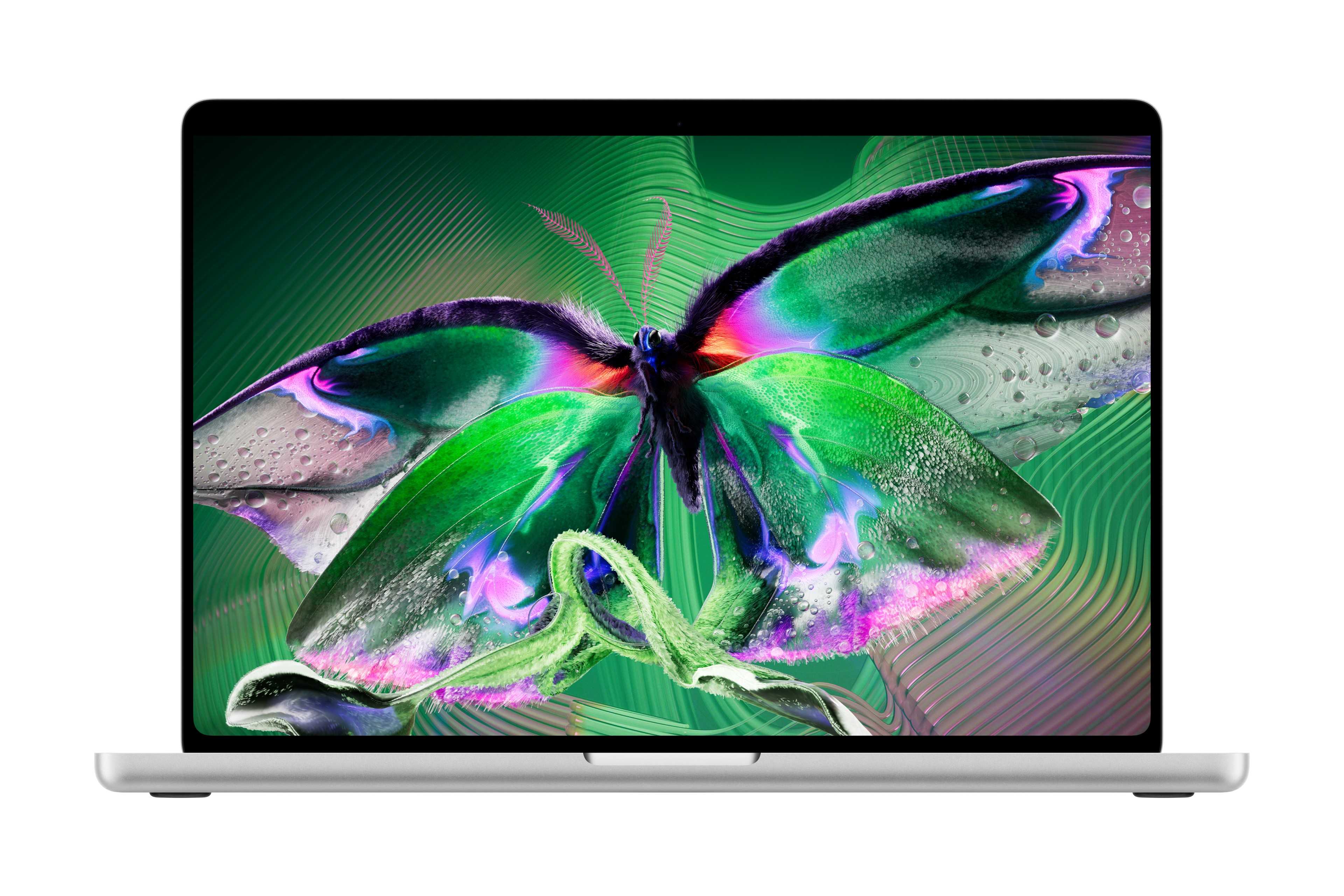
Apple's newest MacBook Pro features an OLED XDR display, marking its first step into touch interface territory. The display, constructed from 50 layers less than a millimeter thick, boasts over 100 million thin film transistors arranged in 15 layers. Two OLED stacks, each composed of 30 layers, rest atop the base layer, minimizing thickness for improved performance.
Apple meticulously built the display, using simulated OLED molecule deposition processes and tracking each layer's thickness. The final layers include mechanical, electrical, and thermal enhancements, with optical adhesive and anti-reflective coatings.
The display offers an impressive up to 2,000 nits brightness, a contrast ratio of 10,000,000:1, and supports P3, Adobe RGB, DICOM, and more, delivering colors at reference quality. The M5 Pro and M5 Max chips in the MacBook Pro control color and luminance of every pixel in real time, ensuring precise color accuracy with sub-millisecond speed and adaptively refreshing from 10Hz to 120Hz. An optional nanotexture glass coating is available.
Touch functionality is built directly into the display, providing zero latency and a feature called "ring down" that describes the time a screen takes to settle after being touched. Apple reduced this wobble by redesigning the hinge. The display's touch sensors allow for high peak brightness, better shadow and highlight detail, and less color shift at off-angles compared to other OLED touch-enabled laptops.
To support touch, macOS automatically converts it into clicks, expands small controls when touched, and offers full-screen zoom, stylus support (though not Apple Pencil), and the option to turn touch off entirely. Pro apps benefit from touch functionality, and the M5 Pro and M5 Max chips boast significantly faster local language model processing than previous generations.
The MacBook Pro with PROLED XDR hits US shelves starting at $2,899 for the 14-inch M5 Pro and $4,799 for the 16-inch M5 Max. Pre-orders began on October 28, with deliveries starting November 6.
Written by urgent.news from Computerworld's reporting — not their text. Machine-written — may contain errors; check the original before relying on it.
This story
This is one outlet's version. Read the fullest account.