Versorgung: Pflegereform im Bundestag - was soll kommen?
Die Pflegeversicherung steckt in Finanznöten. Jetzt wird es bei einem Gesetzespaket konkret, das sie im neuen Jahr absichern soll - mit Änderungen für Pflegebedürftige und manche Beitragszahler.
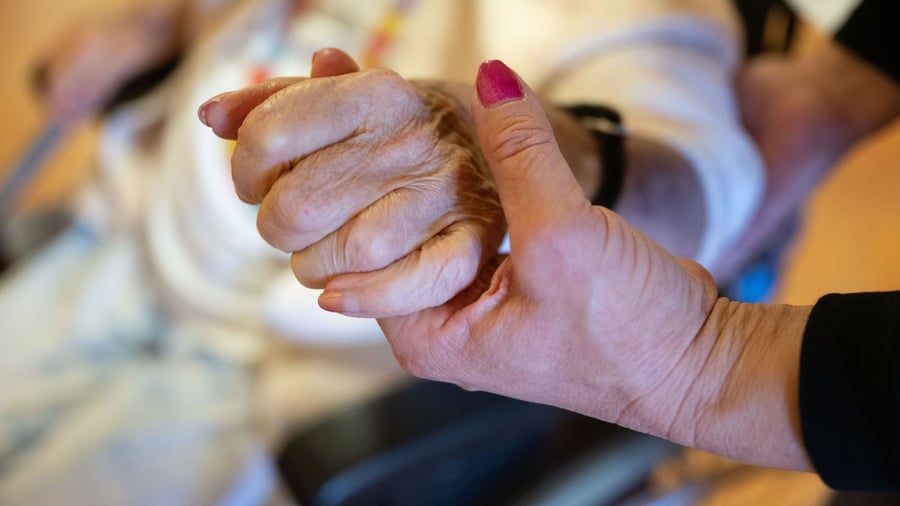
The Bundestag is holding its first debate on the policies of the black-red coalition aimed at financially stabilizing the care insurance. Health Minister Carsten Linnemann's draft proposes spending cuts and additional revenue to avoid general contribution increases starting next year. Time is running out for discussions as several changes are set to take effect on January 1, 2027.
The German Trade Union Confederation (DGB) called for improvements, stating that care beneficiaries and insured individuals need tangible enhancements instead of further savings. While some restrictions have been removed, such as planned cuts to pension contributions for caregivers, this will not eliminate the poverty risk associated with care.
The government's care representative, Katrin Staffler (CSU), cautioned against further strain on caregivers who often have a 24-hour job and require flexibility. The law aims to address acute financial needs initially, with a comprehensive reform proposal from a future expert commission. Rising costs of 74 billion euros per year are the backdrop, with the care insurance only contributing a portion of the expenses and requiring individuals to pay out-of-pocket for additional items like accommodation.
The cabinet introduced the draft in late September after a last-minute crisis. Now, the coalition factions are taking the lead, with additional modifications already anticipated. The goal is for 2027 measures to have a financial impact of 6.25 billion euros, although an expected computational deficit of 7.6 billion euros is anticipated.
Contributions show that the latest general contribution increase occurred in early 2025, increasing by 0.2 points, bringing the total to 3.6 percent of gross wages. For non-parents, an additional 0.6 points are added, raising the contribution for childless individuals to 4.5 percent. Starting January 1, 2027, non-parents' contribution will be 4.5 percent.
Employers must start paying care contributions for mini-jobbers from 2028. For monthly earners below a certain threshold, care contributions will remain in place. Starting from 2028, the free joint insurance for spouses will be limited to certain groups, including children, parents of children under 12, children with disabilities, and individuals with care-dependent relatives.
A 0.52 percent surcharge will be levied on others, who will require their family member to contribute an additional 0.52 percent. Care benefits will no longer be adjusted periodically by law, with annual increases aligned to inflation starting from 2029. This change aims to provide long-term security for care beneficiaries and mitigate the rise in out-of-pocket expenses.
The 2017 reform that led to a rapid increase in care beneficiaries from six million is being revisited, with stricter criteria for re-evaluating care needs. Comprehensive protection of existing care grades is emphasized to prevent newly established thresholds from invalidating recognized care levels. Support services for home care will be bundled under new budgets, with monthly allowances ranging from 175 to 300 euros based on the care grade.
The previously existing "preventive care" service will no longer be an independent benefit. Efforts will be made to prevent the need for care, including providing professional assistance in home care to detect health deteriorations early. The age-specific preventive check-ups for those over 60 will start from 2029. A federal subsidy of one billion euros per year for the care insurance, introduced in 2024, will be suspended and not provided in 2028, with 500 million euros allocated in 2029 and returning to a billion euros annually beginning in 2030.
Written by urgent.news from Handelsblatt's reporting — not their text. Machine-written — may contain errors; check the original before relying on it.