UN panel hails Pakistan’s marriage-age law, flags bonded labour
• Experts seek details on child brides, rehabilitation of flood victims and reconstruction efforts • Pakistani delegation says 600,000 destroyed homes rebuilt ISLAMABAD: The United Nations Committee on Economic, Social and Cultural Rights on Wednesday concluded its review of Pakistan’s second periodic report under the International Covenant on Economic, Social and Cultural Rights, welcoming the…
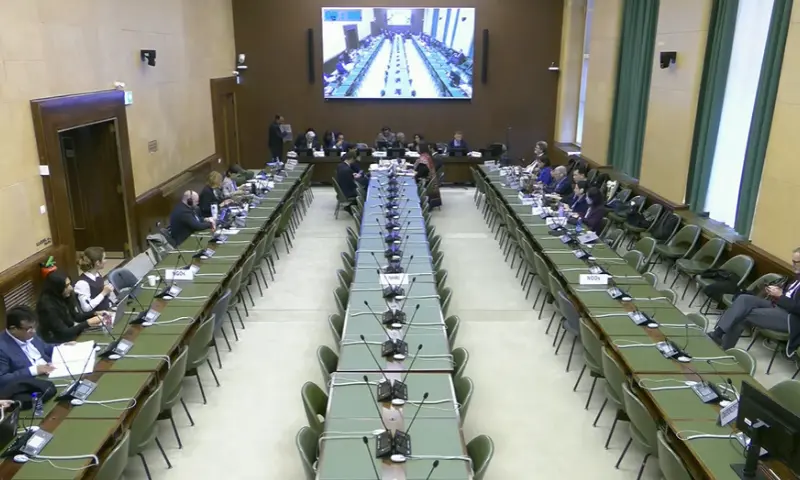
The United Nations Committee on Economic, Social and Cultural Rights recently completed its assessment of Pakistan's second periodic report under the International Covenant on Economic, Social and Cultural Rights. While the committee praised Pakistan for raising the minimum marriage age to 18 in 2025, they expressed concerns about bonded labor and the aftermath of the 2022 and 2025 floods.
Michael Windfuhr, a committee expert and member of the task force for Pakistan, welcomed the amendment to the Child Marriage Restraint Act 1929 but noted the committee's ongoing concern over the prevalence of child marriage. He inquired about the effectiveness of measures taken to prevent child marriage.
Lazhari Bouzid, another committee expert, highlighted that bonded labor persisted in agriculture and the informal sector, particularly in brick making. He questioned how Pakistan had addressed reports of this issue, as well as the impact of the severe floods. Windfuhr asked about the rebuilding of homes for affected individuals and their access to land or resources, and the number of people still displaced.
Pakistani delegation head Barrister Aqeel Malik acknowledged that the country had implemented various legislative, policy, and institutional measures since 2017 to progressively realize covenant rights. He emphasized that the Constitution prohibits slavery and all forms of forced labor, and the Bonded Labour System (Abolition) Act 1992 abolished the practice. Malik also mentioned Punjab's documentation of over 210,000 kiln workers and the establishment of district vigilance committees to combat forced labor.
Regarding flood recovery, the delegation stated that the government had set up a national emergency operations center, launched a national flood protection program, and implemented flood protection measures in each province. Of the 2.1 million homes destroyed in the 2022 floods, 600,000 had been rebuilt, with the remaining houses under reconstruction.
Committee expert and task force leader Julieta Rossi summarized the delegation's efforts to implement economic, social, and cultural rights, along with the significant challenges and gaps between legislative progress and implementation. She expressed hope that Pakistan would implement the committee's recommendations in good faith.
Pakistani delegation member Malik concluded by outlining the country's efforts to bridge the gap between constitutional guarantees and their realization. He stated that Pakistan was on a trajectory towards the progressive realization of covenant rights, despite constraints and challenges, and hoped the committee's analysis would help achieve full realization of economic, social, and cultural rights for all.
Written by urgent.news from Dawn - Pakistan's reporting — not their text. Machine-written — may contain errors; check the original before relying on it.