South Africa faces AGOA trade-benefit loss as thousands of jobs come under threat
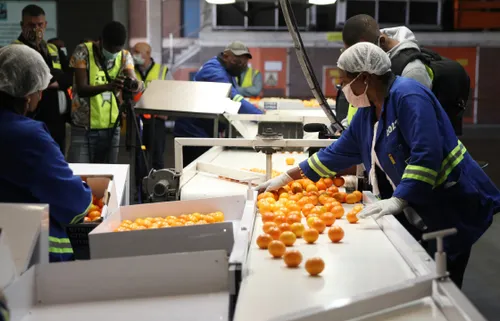
The US plans to end South Africa’s AGOA trade benefits from 1 January 2027, prompting Cosatu to warn that up to 10,000 jobs could be at risk and citrus growers to fear losses in export-dependent communities.
South Africa's democratic state requires capability now, not merely more promises. While the nation inherited formidable yet unjust apartheid machinery, it has since constructed a constitutional democracy that provides services to millions. However, the democratic promise is diminishing due to broken infrastructure and bureaucratic indifference, exemplified by the water system failure. This is not an argument for nostalgia, but for renewal.
Thomas Hobbes argued that the state's primary responsibility is order, protecting people from insecurity without a powerful and legitimate authority. Apartheid South Africa wielded coercive power, punishing the innocent, while also building major infrastructure and developing administrative excellence. Yet, this order was enforced through domination and racial dispossession. Competence without justice is unsustainable.
John Stuart Mill emphasized that the state must protect liberty against arbitrary power. In 1994, South Africa achieved government founded on equal citizenship and democratic consent. Although the constitutional order remains world-class, rights on paper cannot compensate indefinitely for insecurity, failure, and lack of economic opportunity. Democracy must deliver means and ends of a better life, not merely the right to complain.
Beatrice Webb expanded the state's purpose to social welfare, and South African democracy has delivered housing, basic services, and social protection to those neglected under apartheid. However, inherited inequalities and the social disbursement model's unsustainability remain. Simply extending the state's social obligation does not fulfill its purpose.
Social grants soften poverty but do not create dignified livelihoods. A water connection is useless if the tap sporadically runs dry, and a school building cannot replace actual learning.
Milton Friedman warned that the expanding state can become a self-serving bureaucracy, costly and unresponsive. While market-friendly, South Africa faces a chasm between public commitments and lived experience. Private provision increasingly steps in where public institutions should secure collective goods like electricity, water, education, and protection.
When the state becomes an obstacle rather than a shared platform for flourishing, social cohesion deteriorates, leading to violence and scapegoating. The dominant narratives of apartheid's capacity versus democratic legitimacy or markets replacing a wasteful state are flawed. The reality is more complex and hopeful. Apartheid's capacity was selective and morally compromised, while democratic government expanded rights and services but also weakened, neglected, or politicized essential institutions.
Markets depend on public goods: security, infrastructure, predictable regulation, and the rule of law. Therefore, South Africa's next stage in state evolution should be a democratic revolution in capability, focusing on professional administration insulated from party patronage and municipalities maintaining essential infrastructure before announcing projects.
Written by urgent.news from Daily Maverick's reporting — not their text. Machine-written — may contain errors; check the original before relying on it.
This story
This is one outlet's version. Read the fullest account.
- South Africa’s democratic state needs capability now, not more promises dailymaverick.co.za
- ASR Africa donates N250 million admin block to the College of Health Sciences Sokoto State dailypost.ng
- Teboho Mokoena leads South Africa’s charge for 2026 CAF awards iol.co.za
- Vote counting underway in critical South Africa elections aljazeera.com