No Intel, no Qualcomm: Huawei unveils desktop built entirely with China-made components
Huawei Technologies has launched its first desktop computer powered by its proprietary operating system, HarmonyOS, touting the device as “100 per cent domestically made” in its latest push for technological self-reliance. The Shenzhen-based company on Thursday unveiled its Qinyun HM650 series desktop computers for enterprise and government users, powered by the self-developed Kirin X90…
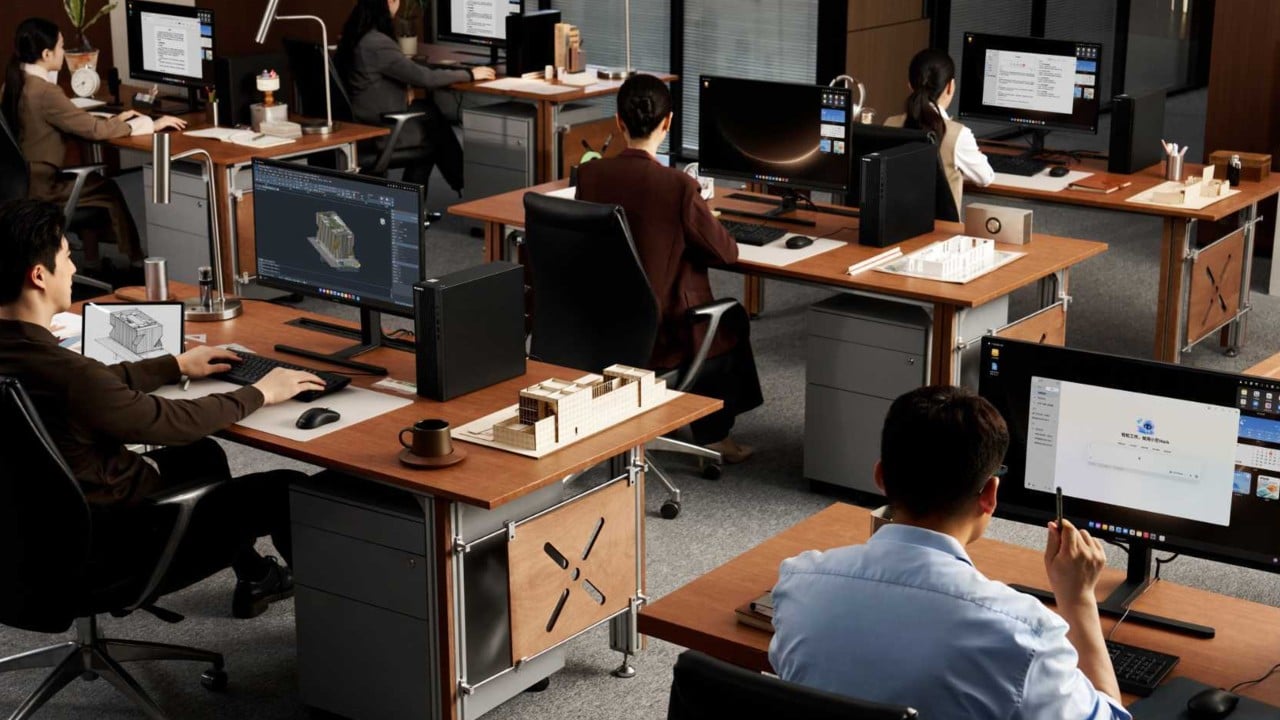
Huawei Technologies introduced its inaugural desktop computer, entirely constructed with domestically sourced components, as part of its ongoing commitment to self-reliance in technology. The Shenzhen-based firm unveiled the Qinyun HM650 series of desktop computers, tailored for business and governmental users, running on HarmonyOS V1.0, an enterprise edition of Huawei’s in-house operating system. The Qinyun HM650 series marked the first time Huawei utilized its proprietary operating system on desktop products.
The company's latest desktop line-up utilized components manufactured entirely within China, from the Kirin X90 processor to memory modules. According to Zhu Dongdong, an executive at Huawei's tablet and personal computer unit, the achievement of a fully domestic component rate resulted from a mix of in-house technology development, joint ventures for key parts, and mass production of general-purpose hardware. The certification as "100 per cent domestic" is yet to be fully disclosed.
Huawei's launch in Wuhan underscored the company's dedication to achieving greater technological self-reliance amidst US sanctions that have limited its access to advanced foreign technology. HarmonyOS, initially conceived as an Android alternative, has since expanded its reach beyond smartphones into the PC market. As of October, Huawei had sold more than 1 million HarmonyOS PCs, with projections for the figure to reach 1.2 million by year-end.
In response to Washington revoking special licenses in 2024 that enabled foreign chip suppliers Qualcomm and Intel to sell older-generation semiconductors to Huawei's laptops and smartphones, the company accelerated its efforts to substitute American technology in its PC business. The Kirin X90 chip, developed by Huawei's HiSilicon chip-design arm, attained a Level 2 national security and reliability certification last year, facilitating its adoption by government agencies and enterprise customers.
Prior to the sanctions, most Huawei consumer laptops utilized Intel's Core processors, while some incorporated Qualcomm's Snapdragon chips.
Written by urgent.news from SCMP Business's reporting — not their text. Machine-written — may contain errors; check the original before relying on it.