NATIONAL GEOGRAPHIC: It’s only natural — why Africa’s conservation stories need both science and storytelling
Science matters, but so do the people behind the data. National Geographic Explorers make the case for conservation stories that connect research with lived experiences.
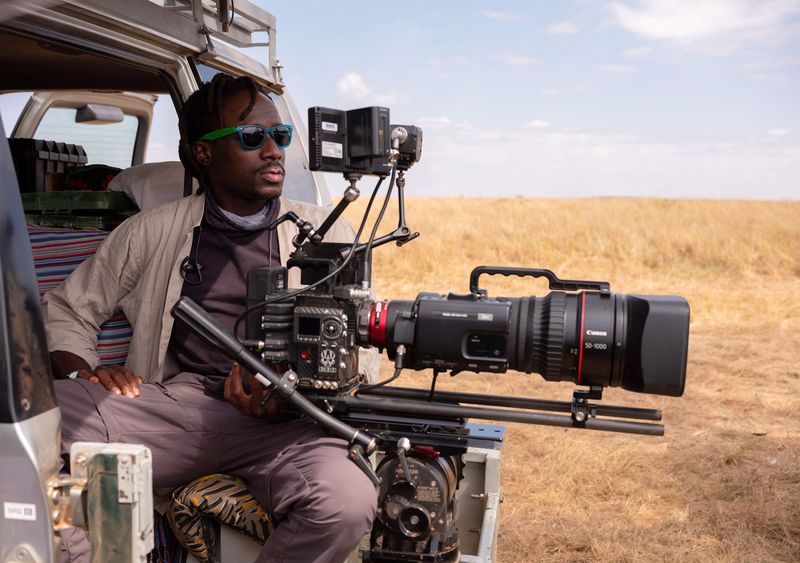
At the 15th Oppenheimer Research Conference in Midrand, National Geographic Explorers discussed the importance of combining science and storytelling in conservation efforts across Africa. Manu Akatsa, a filmmaker, shared an experience where he witnessed a group of elephants and only later realized what he had captured through reviewing footage with a scientist. This illustrates the crucial role of scientific understanding in interpreting natural behaviors.
The panel, titled "Beyond the Lens: Reclaiming Africa’s Conservation Narrative," highlighted how collaboration between scientists and storytellers can bring conservation stories to wider audiences and challenge stereotypes often associated with Africans in conservation films. Noel Kok, executive director of Nature, Environment & Wildlife Filmmakers (NEWF), explained that Africans were frequently portrayed in African films as poachers or rangers, but he emphasized the diversity of Africans in roles beyond these stereotypical positions.
Kok also stressed the need for African nature, environment, and wildlife filmmakers to tell their own stories. Since its founding, NEWF has grown to include 400 fellows across 37 African countries, many of whom are divers. However, changing the storyteller is just one aspect; scientists must also find ways to communicate their findings in a way that resonates with people beyond their professional circles. As Kok put it, "Science gives us knowledge, but storytelling gives that science a human journey."
Beninese marine biologist Gérard Zinzindohoué's experience exemplified this collaboration. Zinzindohoué joined a NEWF dive lab to explore deep-water coral reefs in Benin, where initial French research had been abandoned over 60 years prior. Unlike collaborating with a remotely operated vehicle, Zinzindohoué wished to personally dive down 70 meters to retrieve samples, which he carbon-dated with the help of a university in Germany. The filmmakers followed him on this journey, capturing images of the reefs for the first time.
This partnership between Zinzindohoué and the filmmakers allowed them to explore a conservation story that would not have been accessible otherwise. NEWF's support, including a National Geographic grant, was instrumental in making this possible. Nancy Iraba, another NEWF fellow, shared her experience of how scientific work, when framed in a relatable context, can resonate with a broader audience.
Her research on Tanzania's southern coast extended beyond fish and coral reefs to include the livelihoods of local communities, garnering international attention and resources.
However, building relationships between scientists and storytellers requires trust and time. Iraba noted that scientists sometimes react negatively to journalists taking liberties with their work. To foster collaboration, scientists must learn to engage with journalists, writers, and artists, while storytellers must develop the skills to make scientific findings accessible and engaging.
This mutual understanding is crucial for advancing conservation narratives and ensuring that science reaches beyond the research community.
Written by urgent.news from Daily Maverick's reporting — not their text. Machine-written — may contain errors; check the original before relying on it.