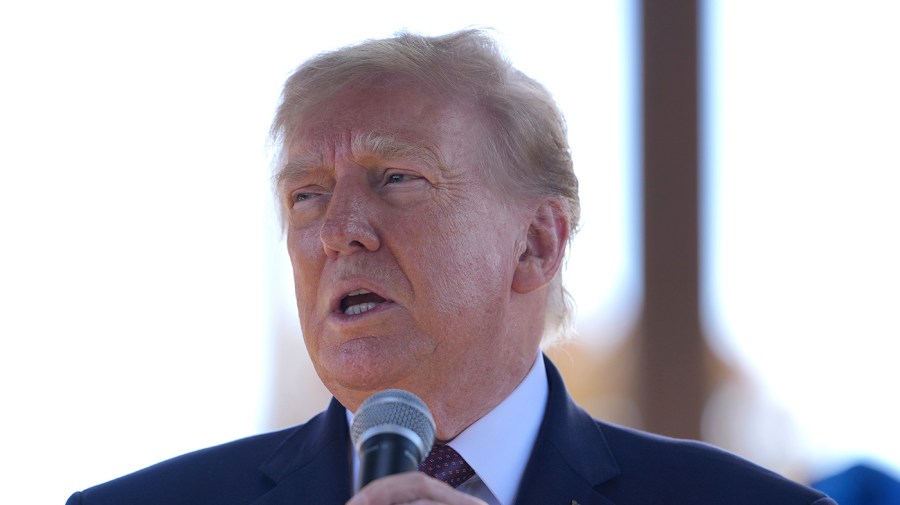
Democrats take back Congress: What it means for Donald Trump
The 2026 U.S. midterm elections have dramatically reshaped Washington, with Democrats projected to regain control of both the House of Representatives and the Senate. The results are being viewed as a major setback for President Donald Trump, limiting his ability to advance his legislative agenda during the final two years of his presidency. Democrats made gains in several traditionally…

Democrats vowed to use their mid-term election victory to rein in President Donald Trump, setting up two years of potential political deadlock in Washington. Trump, who held the office from 2017 to 2021, made his first appearance post-election to showcase his under-construction White House ballroom. His focus was on relaxing and ensuring the White House was pristine, reflecting his pride in the symbol of America.
The wave of anger over Trump's policies, particularly the US-Iran war's impact on the cost of living, contributed significantly to Democrats' success in gaining control of the Senate. The party flipped seats in Republican-dominated states, securing a majority of at least 54-44, while also gaining at least 30 seats in the House of Representatives. This would be the first time Trump faced Democrats controlling both chambers of Congress.
House Democratic Leader Hakeem Jeffries emphasized that the incoming majority would prioritize issues like affordability and accountability, stating that they would no longer function as Trump's political arm. Trump, despite his initial comments about working with Democrats, maintained the power of the veto if they appeared destructive.
Trump had used the mid-term elections as a referendum on his first half of his second term in office, urging his base to believe he was on the ballot. Voters in conservative strongholds swung dramatically toward Democrats due to frustration over Iran's war, high living costs, and dissatisfaction with Trump's administration. Notably, Democrats made significant gains in Texas, Kansas, and South Carolina, states that had previously been Republican strongholds.
The outcome left several Senate races, including Alaska and Mississippi, uncertain, with the possibility of Democrats gaining two more seats, bringing their majority to 56-44. Once seated, Democrats plan to investigate Trump's administration, family, and allies and demand concessions on major legislation. They can block Trump's nominees, such as potential Supreme Court justices, and demand changes to legislation.
Republicans, now in a weaker position, face at least one must-pass piece of legislation – funding the federal government up to December. This could enable them to push conservative priorities during the lame-duck period. The loss also raised questions about the future of the Supreme Court's conservative majority, particularly the longevity of justices Clarence Thomas and Samuel Alito.
Written by urgent.news from Daily Maverick's reporting — not their text. Machine-written — may contain errors; check the original before relying on it.
This story
This is one outlet's version. Read the fullest account.
- Democrats flex congressional majorities as Trump accepts electoral losses dawn.com
- Democrats vow to rein in Trump as he shows off White House ballroom dailymaverick.co.za
- Young men and Latino voters helped drive the Democrats’ blue wave. Why did they abandon Trump? theconversation.com
- Democrats vow to rein in Trump as he shows off White House ballroom sabcnews.com
- What happens now? Democrats and Republicans are beginning to map out their strategies in the wake of the electoral upheaval english.elpais.com
- Democrats signal oversight blitz as Trump officials lawyer up thehill.com
- US midterms: Democrats vow to probe Trump administration punchng.com
- White House rejects defeat, vows Trump will never quit english.nv.ua