Delhi air pollution: Govt conducts two-cloud seeding trials — what happened to experiments worth over ₹1 cr in 2025?
Delhi pollution news: Average AQI reached 369 on Thursday, with 18 of 59 monitoring stations recording severe pollution. Forecasts warn conditions could turn severe from Friday. Authorities reportedly conducted two cloud-seeding trials near the airport, but earlier trials failed to produce rain.
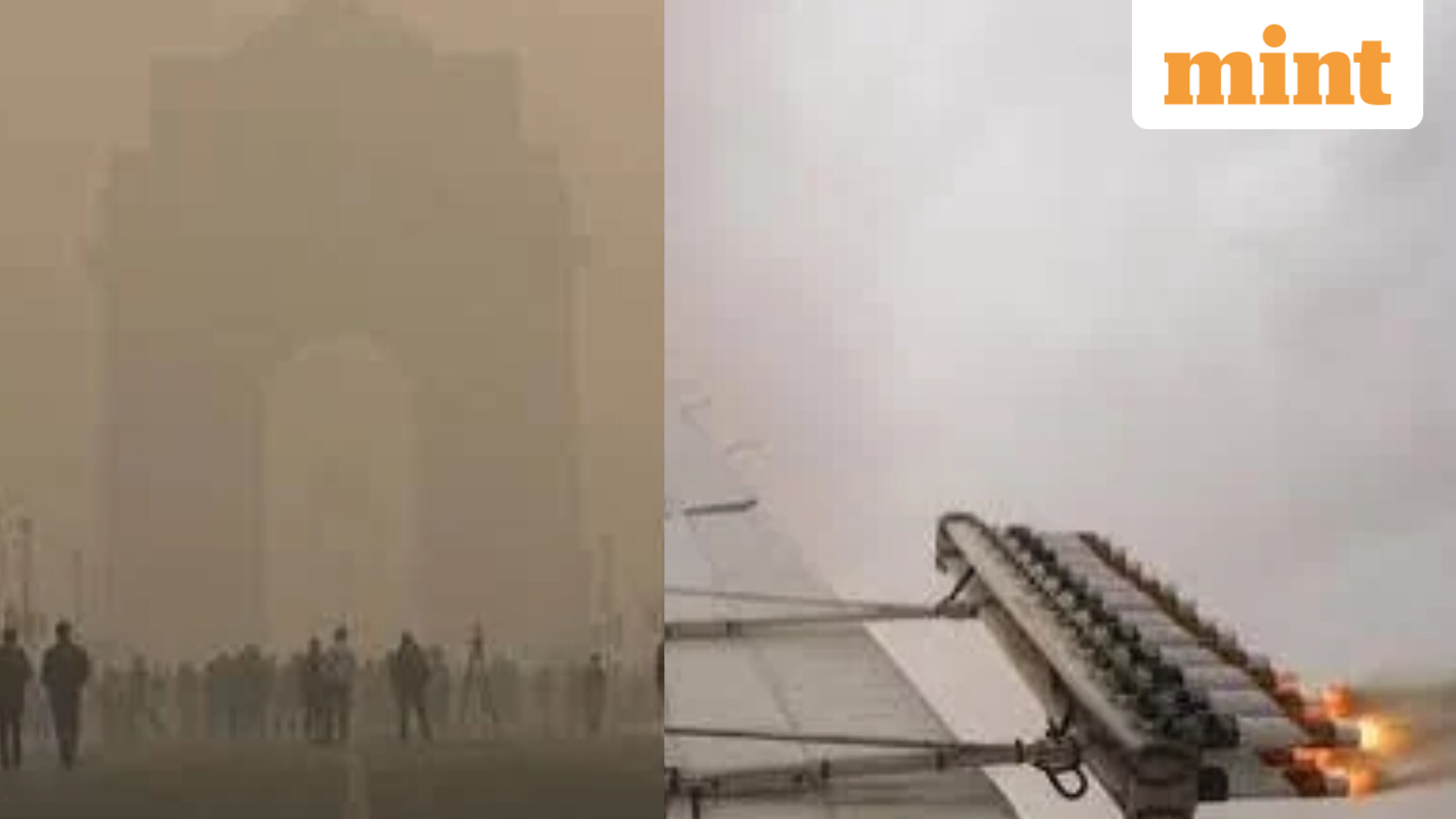
The Delhi government has conducted two cloud-seeding trials near the Indira Gandhi International Airport in the past 15 days, aiming to assess whether artificial rainfall could aid in reducing air pollution in the capital, according to PTI citing sources. The trials followed a previous project with IIT Kanpur in 2025, which failed to generate rainfall despite exceeding a budget of ₹1 crore.
Government sources stated that the recent operations were conducted at an altitude of approximately 30,000 metres, compared to nearly 10,000 metres during the 2025 trials. Further attempts are expected after Diwali and Chhath, with no official announcement planned before the festival. The Delhi Environment Department signed a Memorandum of Understanding with IIT Kanpur on September 25, 2024, to investigate artificial rainfall as a potential pollution mitigation measure.
The project involved two rounds of trials in October, releasing eight chemical flares containing silver iodide and sodium chloride during each operation to induce precipitation. However, neither trial produced rainfall. A subsequent government report cited inadequate atmospheric moisture, estimated at just 10-15%, as the primary reason for the failure, as reported by Hindustan Times.
The government claimed that particulate matter levels had decreased in some targeted areas, but the main goal of inducing rainfall was not achieved. Cloud seeding involves introducing substances like silver iodide and sodium chloride into existing clouds to encourage water droplet or ice crystal formation, which may fall as precipitation under favorable atmospheric conditions.
The effectiveness of the technique relies on factors such as cloud composition, moisture content, temperature, and weather conditions. Delhi's air quality remained in the "very poor" category for the fourth consecutive day on Thursday, with forecasts predicting it could reach the "severe" zone by Friday, just days before Diwali, according to PTI.
The national capital's average Air Quality Index (AQI) was 369 at 4 pm on Thursday, slightly lower than the previous day's reading of 377. By Tuesday, the AQI had dropped to 350, and on Monday, it was 324. Of Delhi's 59 operational monitoring stations, 18 reported "severe" air quality, with Jahangirpuri recording the highest level at 454.
The Air Quality Early Warning System (AQEWS) projects pollution levels will remain "very poor" on Thursday before worsening to "severe" from Friday to Sunday. The Decision Support System (DSS) for Air Quality Management in Delhi suggests that stubble burning's contribution to pollution could decline to 19.201% on Friday before falling to 1.575% on Saturday, while vehicle emissions' share is expected to rise from 17.913% on Thursday to 18.291% on Friday and 21.108% on Saturday.
The DSS forecasts for the upcoming days are based on climatological data on fire counts and emissions, not real-time farm fire information.
Written by urgent.news from Live Mint's reporting — not their text. Machine-written — may contain errors; check the original before relying on it.