China buys 96% of Vietnam’s durian exports
China accounted for nearly 96% of Vietnam’s durian exports in the first nine months of the year, leaving the industry with virtually no alternative market.
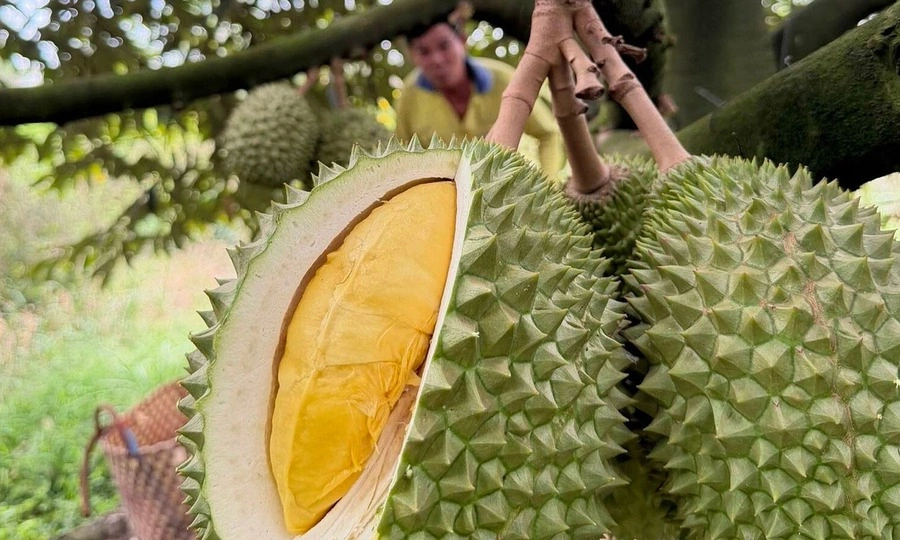
In the latest customs figures, China secured nearly 96% of Vietnam's durian exports, fetching over $3.45 billion, marking a 25% increase year-on-year. Mainland China's share of the market surged to $3.3 billion, up from 93.6% the previous year. Papua New Guinea and Hong Kong followed, with $37.7 million and $36.7 million respectively. The United States was the smallest buyer at nearly $20.5 million.
Durian specialist Dang Phuc Nguyen explained that China's preference for fresh durian is a crucial factor. However, this dependence on China leaves Vietnam's export market vulnerable if China raises quality standards or cuts imports. Durian's short shelf life and difficulty in long-term storage without deep freezing create challenges when shipments face customs delays at the Mekong Delta and Central Highlands, putting sellers under pressure to offload at discounted prices.
The risks extend to growers' bargaining power during peak harvest seasons. With high supply and sales largely dependent on China's customs clearance, Vietnamese farmers can find themselves in a weak position. If exports stagnate, traders may decrease purchases or lower prices, while growers struggle with limited cold storage facilities to store their produce until market conditions improve.
To mitigate these risks, the industry must prioritize maintaining stable access to China by regulating quality, particularly cadmium and pesticide residues, and ensuring traceability. Authorities must expand testing capacity and enforce oversight of growing areas and packing facilities to reduce shipments failing to meet standards.
In the long term, businesses should invest in cold storage, freezing, and processing to extend shelf life and enable transport to distant markets. This includes frozen durian flesh, ice cream, cakes, and durian powder, as well as expanding presence in trade agreement markets like the Regional Comprehensive Economic Partnership and the EU-Vietnam Free Trade Agreement, targeting premium segments and supermarket chains.
Written by urgent.news from VnExpress Business's reporting — not their text. Machine-written — may contain errors; check the original before relying on it.