Beyond Conventional CRISPR
Genome editing is not designed to replace neurons or retinal cells that have already been lost. In this article, experts from four companies—eGenesis, Epicrispr, KOMO Biosciences, and Sumitomo Pharma America—discuss how they are moving beyond conventional CRISPR to develop novel approaches for treating disease. The post Beyond Conventional CRISPR appeared first on GEN - Genetic Engineering and…
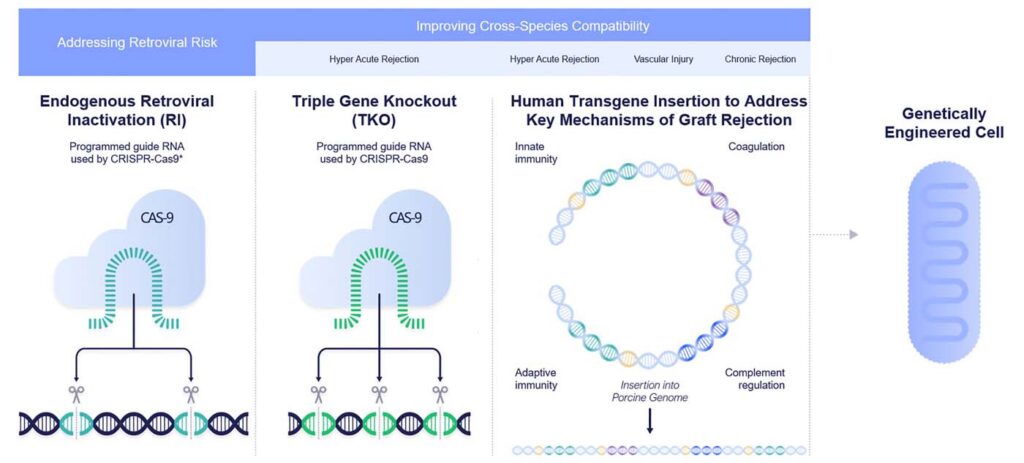
Beyond conventional CRISPR techniques, several biotech companies are pioneering innovative methods to treat diseases. Mike Curtis, CEO of eGenesis, discusses how xenotransplantation, the transfer of organs from animals to humans, could alleviate the shortage of human organs. However, challenges remain in ensuring immune compatibility between donor and recipient organs.
Curtis explains that eGenesis has employed CRISPR technology to engineer pig organs by eliminating genes that cause human-incompatible responses and introducing human genes to improve compatibility. They have also deactivated endogenous retroviruses in the pig genome to prevent potential cross-species infections. Their most advanced project is for kidney transplants, with recent success in human trials.
Another company, Epicrispr, led by CEO Amber Salzman, focuses on epigenetic editing rather than direct DNA changes. While traditional CRISPR cuts DNA to remove faulty genes, Epicrispr's platform uses a smaller molecule called CasONYX that binds to DNA and modifies it without cutting. This allows for precise control over gene expression, turning genes on or off as needed.
Epicrispr is particularly targeting facioscapulohumeral muscular dystrophy (FSHD), a genetic disease characterized by reduced methylation. Their therapy, CasMINI, utilizes CRISPR-Cas technology to methylate specific DNA regions, suppressing the expression of the toxic DUX4 protein responsible for muscle cell death. The therapy is delivered via adeno-associated viruses (AAVs) to the affected muscles.
Both companies emphasize the importance of iterative improvements in their approaches, aiming for long-term compatibility and better outcomes for patients. While they utilize CRISPR in different capacities, their ultimate goal remains the same: to revolutionize organ and disease treatment through cutting-edge biotechnological solutions.
Written by urgent.news from GEN Biotechnology's reporting — not their text. Machine-written — may contain errors; check the original before relying on it.