1,600-year-old burial holds remains of man infected with a 'very rare' strain of leprosy in Germany
A high-status burial surprised archaeologists when they discovered leprosy in a man's bones from the fifth century.
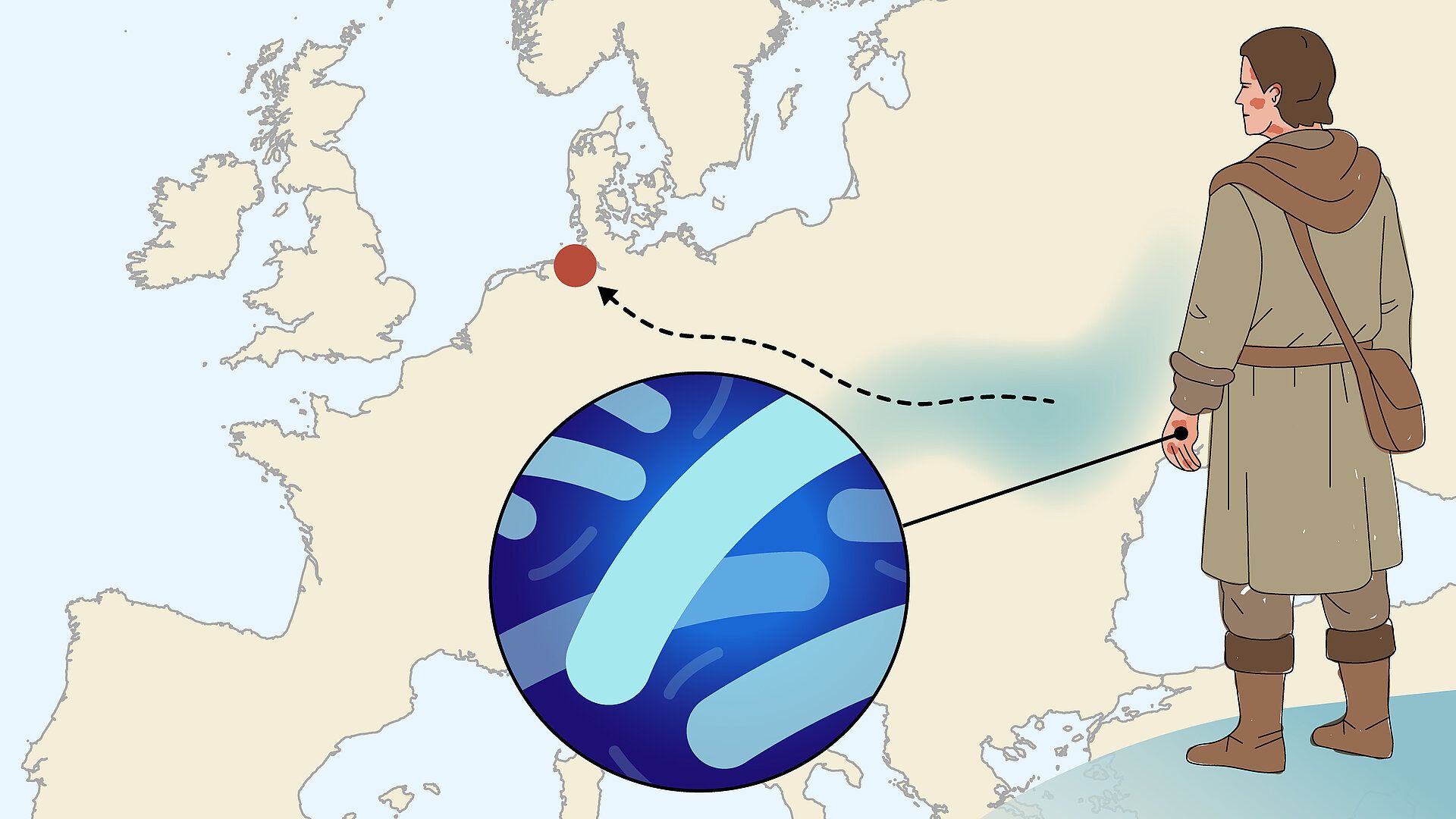
A 1,600-year-old burial site in northwestern Germany has revealed the remains of a man infected with a rare strain of leprosy, a condition not previously found in this part of Europe. The man, who lived between A.D. 425 and 450, was buried in a wooden boat and surrounded by unusual grave goods, indicating his high social status.
Genetic analysis of his DNA confirmed his origins in the Danube region and identified the presence of a very rare leprosy pathogen. This strain of leprosy, believed to have evolved in Egypt around the fourth to second centuries B.C., has never been found in Central or Northern Europe before. The man showed no signs of leprosy lesions in his skeleton, suggesting he either had an asymptomatic form of the disease or the disease only affected his soft tissues.
The discovery hints at the man's possible travels and interactions with people from across the Roman world, as well as the long-distance connections that persisted in Europe even after the fall of the Roman Empire.
Written by urgent.news from Live Science's reporting — not their text. Machine-written — may contain errors; check the original before relying on it.