Trump seeks to shift blame but has 'nowhere to hide' after midterms defeat
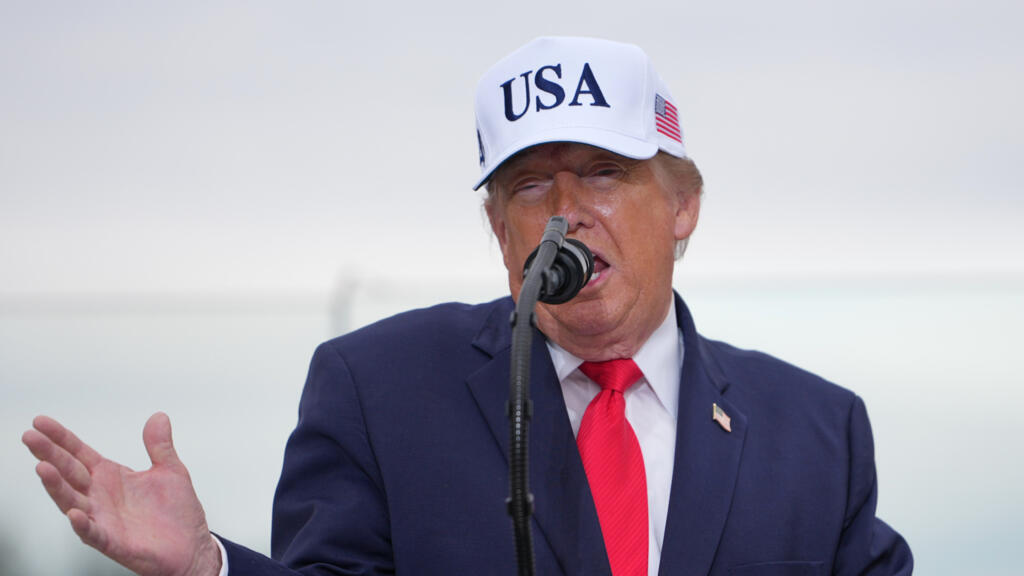
Donald Trump has sought to shift the blame for the Republicans' defeat at the midterms by claiming that if he had been on the ballot the party would have won. But the "blue wave" that saw Democrats win control of Congress can be traced directly back to Trump's decisions, says France 24's Washington correspondent Fraser Jackson.
For millions of Americans who voted in the US midterm elections, the economy dominated their decision-making process. Democrats' sweeping wins, capturing both the US Senate and House of Representatives, could have significant implications for economic policy and the broader US economy. Despite President Donald Trump's remaining two years in office, the shift in power dynamics in Congress could lead to gridlock, given Trump's propensity to wield his veto power.
Stephen Brown, Capital Economics' chief North America economist, noted that the Democrats' gains do not drastically alter the near-term policy outlook, as the party still lacks a filibuster-proof majority in the Senate and Trump's veto power remains a barrier.
However, some investors are concerned that Democrats could push through AI regulation, particularly if they secure the White House in 2028. The opposition to data centers, central to AI infrastructure, helped secure victories for Democrats, potentially impacting the valuation of big tech firms that have benefited from the AI boom.
If Democrats win the presidency in 2028, they may address concerns over AI by implementing tax hikes on corporations and high-income individuals, as well as regulatory measures that could slow the AI rollout.
Polls indicated that a majority of Americans believe Trump's tariff policies have mostly negative impacts on the country, contributing to Democrats' victories in states where tariffs have negatively affected sectors reliant on exports, such as Texas, Michigan, Iowa, and Illinois. However, barring a significant change from Trump, it is unclear how Democrats can force substantial changes to his trade policies.
While Congress cannot unilaterally end existing Trump tariffs, it can pursue legal action to prevent further escalation.
The defeat of Republicans may compel Trump to adopt a more moderate approach to policymaking, particularly in areas like escalating trade disputes with Canada and Iran. With soaring energy prices as a key election issue, a potential deal with Iran could alleviate concerns, benefiting voters. Despite the Democrats' broad victory, Trump's continued presence in the Oval Office complicates efforts to alter signature economic policies.
However, Congress could exert pressure through legal investigations and impeachment proceedings, potentially forcing negotiations on economic issues to secure Trump's political survival.
Written by urgent.news from DW News's reporting — not their text. Machine-written — may contain errors; check the original before relying on it.
Also reported by 8 other outlets
- The collapse of MAGA: Cost of living and war weariness defeat Trump — Phar Kim Beng malaymail.com
- What the Democrats' midterms win means for the US economy and Trump dw.com
- Will lame duck Trump cause a flap after the midterms? nst.com.my
- Democrats’ blue wave and a bad night for Trump: key US midterms takeaways theguardian.com
- US Midterms: 'It is now going to be pretty chaotic for Donald Trump' france24.com
- Lame duck or mad dog? Why Trump's defeat could spell trouble for Europe euronews.com
- Expert: After US midterms, Trump may pursue even more disruptive foreign policy news.err.ee
- China to UK and Russia: How world leaders reacted to Donald Trump’s US midterms defeat hindustantimes.com