NASA Navigation Experiment Shows Promise for Planetary Landings
NASA successfully demonstrated technology designed to help spacecraft autonomously navigate to safe landing sites on the Moon and on other planets. An Alta-X drone equipped with the agency’s Safe and Precise Landing – Integrated Capabilities Evolution (SPLICE) guidance, navigation, and control payload completed simulated lunar descent and landing maneuvers Aug. 27. The flight took place […]
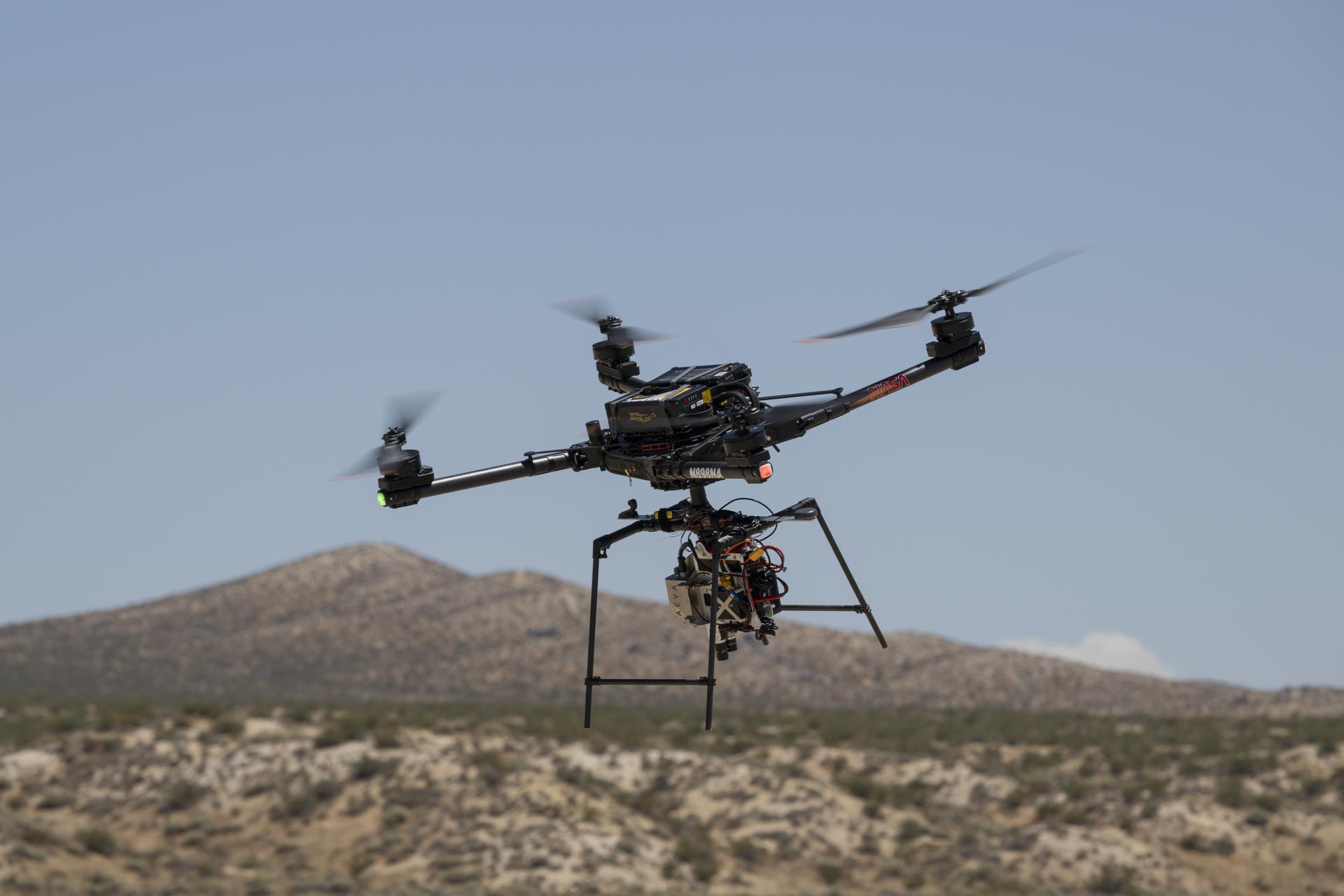
NASA has demonstrated a promising technology designed to assist spacecraft in autonomously navigating to secure landing sites on the Moon and other celestial bodies. The agency's Safe and Precise Landing – Integrated Capabilities Evolution (SPLICE) experiment, developed by researchers at NASA's Johnson Space Center in Houston, was successfully tested on an Alta-X drone at the Edwards, California facility on July 15, 2026.
The SPLICE payload utilizes an advanced guidance system that maps terrain and evaluates potential landing zones. If the system determines a landing area to be unsafe, it will reroute the drone to a safer location. The system generates high-resolution digital elevation maps using light-detection and ranging data. During the test flight, SPLICE communicated with the remotely piloted aircraft during hover maneuvers, successfully demonstrating its capability to navigate and avoid hazards.
The development of SPLICE has taken nearly a decade, and the agency is now preparing to integrate this technology into future robotic and crewed lunar missions. The successful test raises the technology readiness level, making it primed for incorporation into upcoming lunar landers. NASA has been collaborating with commercial lunar lander providers to incorporate iterations of SPLICE into their platforms, ensuring safe soft touchdowns on the lunar surface.
The successful demonstration of SPLICE represents a significant step forward in space exploration, as it paves the way for more precise and hazard-free landings on the Moon and other planets, including Mars.
Written by urgent.news from NASA's reporting — not their text. Machine-written — may contain errors; check the original before relying on it.
This story
This is one outlet's version. Read the fullest account.