NASA Navigation Experiment Shows Promise for Planetary Landings
NASA successfully demonstrated technology designed to help spacecraft autonomously navigate to safe landing sites on the Moon and on other planets. An Alta-X drone equipped with the agency’s Safe and Precise Landing – Integrated Capabilities Evolution (SPLICE) guidance, navigation, and control payload completed simulated lunar descent and landing maneuvers Aug. 27. The flight took place […] The…
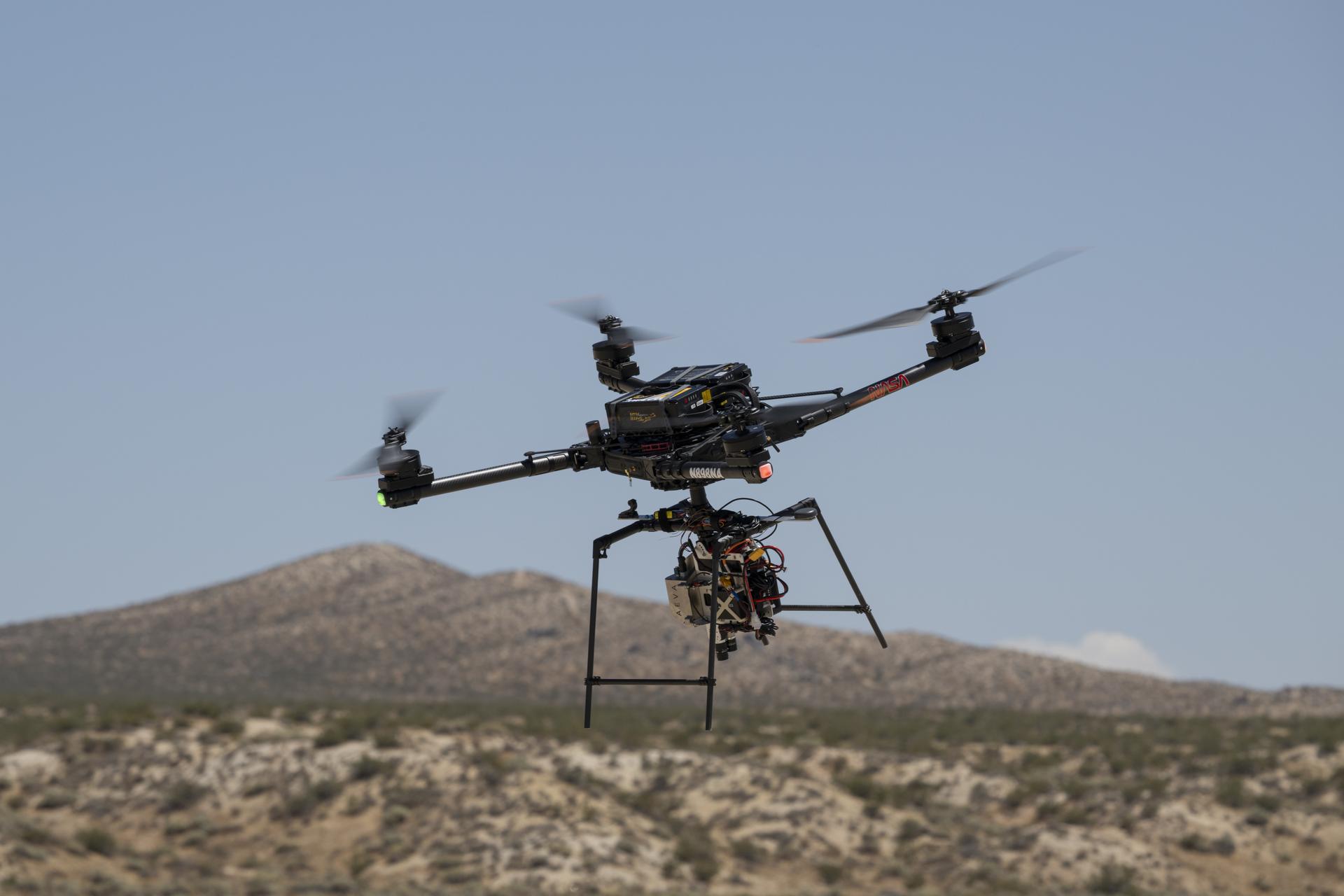
NASA's Safe and Precise Landing – Integrated Capabilities Evolution (SPLICE) experiment successfully demonstrated its advanced guidance and navigation system on an Alta-X drone near NASA's Armstrong Flight Research Center in Edwards, California. The technology aims to help spacecraft land precisely and detect potential hazards during missions to the Moon and Mars.
Developed by researchers at NASA's Johnson Space Center in Houston, SPLICE communicates with the drone during hover maneuvers and can safely divert the aircraft to an alternate landing site if necessary. The system creates high-resolution digital elevation maps using light-detection and ranging data. SPLICE has been integrated into various commercial lunar lander platforms for soft touchdowns on the lunar surface.
The recent test flight marks a significant milestone in NASA's ongoing efforts to refine robotic and crewed lunar missions.
Written by urgent.news from NASA Science's reporting — not their text. Machine-written — may contain errors; check the original before relying on it.