Hackers target iPhone, Android users through compromised websites
Dubai: Hackers have targeted iPhone and Android users through compromised websites and convincing copies of legitimate sites, exploiting security flaws to steal personal information without requiring victims to download files or click additional links. Cybersecurity researchers at French firm Sekoia uncovered the campaign in mid-October and published their findings on November 4. Get updated…
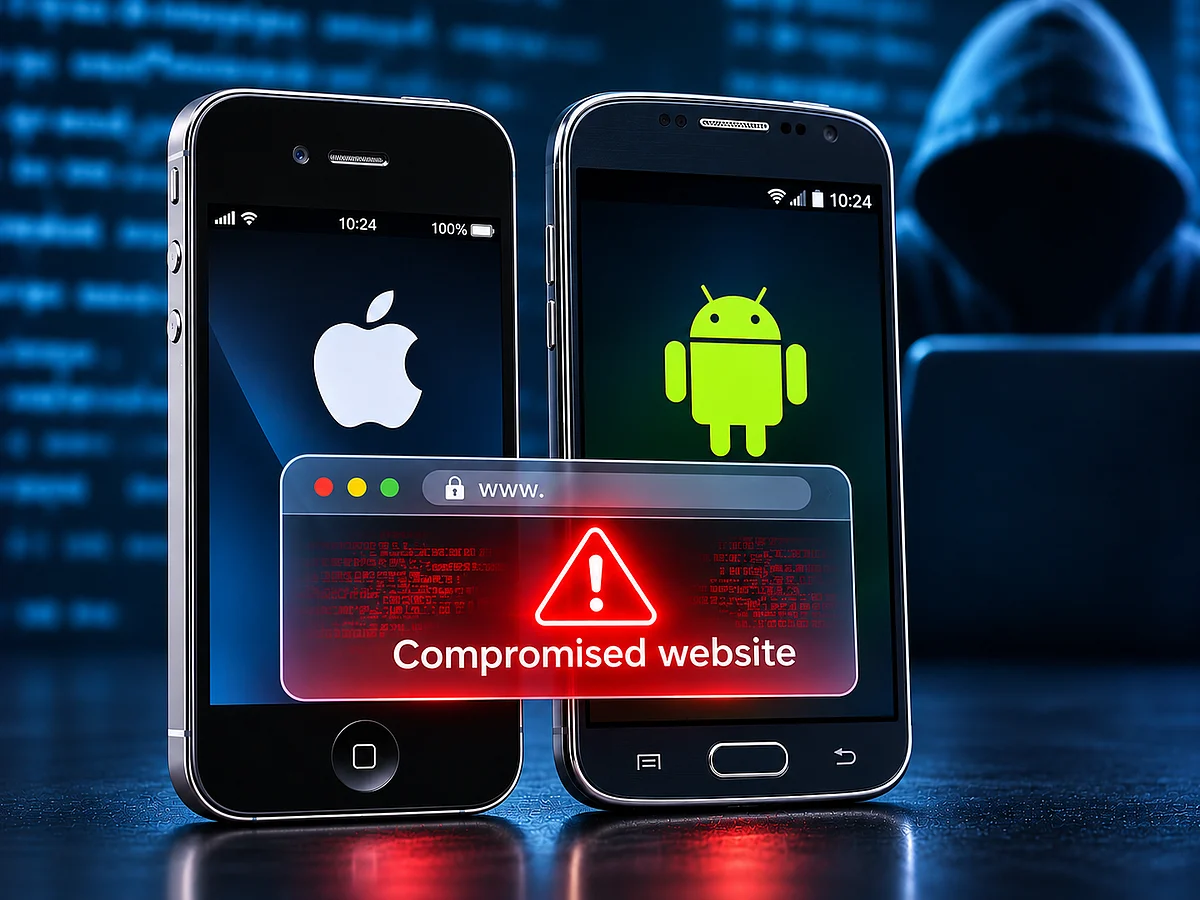
Cybersecurity experts at French firm Sekoia discovered a hacking campaign that targeted iPhone and Android users via compromised websites. The researchers published their findings on November 4, after initially uncovering the scheme in mid-October. The hackers exploited security flaws in older versions of Apple's iOS and Google's Chrome browser for Android.
The attack method, known as a watering-hole attack, involved compromising websites popular among the targeted users, then using malicious code to identify vulnerable devices and deliver attacks without further user interaction. Three types of attacks were identified: compromised legitimate websites, fake domains mimicking well-known organizations, and a hijacked website analytics service.
The malicious software targeted Safari cookies on iPhones running iOS 16.7, as well as WhatsApp and Telegram databases, saved credentials, location information, and photos on iOS 18.5 devices. On Android devices, the attackers focused on certain versions of Chrome to collect browsing history, login information, cookies, and saved Wi-Fi passwords.
Researchers emphasized that devices running the latest security updates were protected against the exploit chains, but stressed the importance of promptly installing the latest operating-system and browser security updates.
Written by urgent.news from Gulf News's reporting — not their text. Machine-written — may contain errors; check the original before relying on it.