Apabila agama jadi ‘bank undi’, agama itu sendiri yang paling terancam
Kita mesti melindungi dan memisahkan agama daripada kancah politik kepartian yang menghakis.
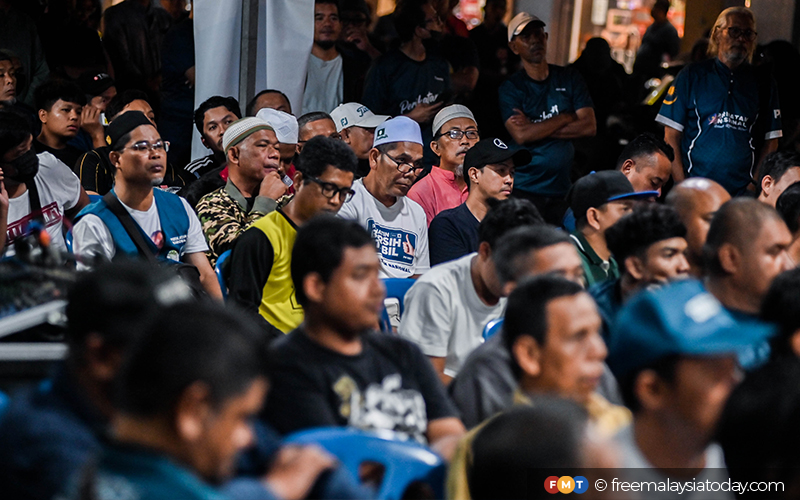
When religion becomes a "vote bank", the religion itself becomes the most endangered. Global and domestic trends have transformed religion from an absolute moral guide into a crude tool for seizing worldly power. As the boundary between places of worship and polling stations erodes, public perception of religion begins to change.
Ultimately, religion becomes entangled with opportunistic political behavior and governance failures that cannot be avoided. To protect the sanctity of religion, we must separate it from partisan politics. Politicians who exploit religion to mobilize voters are actually drowning in the deep complexities of theology and morality.
Religion is no longer seen as a path to spiritual growth, universal love, or righteous governance. Instead, it is reduced to a rigid political boundary that divides. Such exploitation breeds a mentality that pits us against each other, while highlighting religion's role in promoting exclusivity and tribal loyalty. A dangerous paradox arises when political parties adopt specific doctrines as their guiding principles.
If a theocratically-backed government is found guilty of corruption, incompetence, or deceit, the public will not blame the politicians alone—they will blame the religion itself. By reducing religion to a symbol of government failure, we undermine its sacred status. To prevent moral decay, some advanced nations deliberately ensure their political parties are free of any religious label.
Turkey remains an historical test case, deliberately separating national affairs from religious identity through its secular constitutional framework to protect both national governance and the sanctity of personal belief. In contrast, regions where religion and politics are aggressively intertwined offer tragic stories of deep societal disappointment.
In some countries, the corruption and economic mismanagement of theocratic governments (religious rule) have tarnished the moral authority of religion, sparking massive domestic secularization among the populace. In the United States, close ties between the Christian Right and partisan politics have diluted the scope of religion to controversial issues used as litmus tests (political tests).
This pushes millions of simple believers away and drives a rapid surge in the unchurched population. In India, the aggressive rise of majoritarian religious nationalism has systematically transformed the broad philosophical tradition of the country into a mere checklist of political loyalty, ultimately fragmenting society into hostile groups.
This global shift reflects the deep political dynamics of Malaysia today. For years, our local landscape has witnessed the politicization of religion, where theological monopolies are often used as a shortcut to electoral legitimacy. Politicians increasingly downplay the rich theological tradition in favor of sensational, divisive rhetoric and identity control.
This trajectory manifests in three damaging ways. First, it drains public morality. Politicians win elections by trivializing broad spiritual traditions in favor of sensational controversy to grab media attention. This allows unqualified figures to determine what is deemed moral, solely to meet their campaign agendas. We see this clearly in today's bitter debate over historic university quota reforms, where critical socio-economic solutions for addressing doctor shortages are exploited and portrayed as a zero-sum threat to ethnic identity.
Second, it leads to the deep distortion of religious texts through bureaucratic overreach. Authoritarian and populist politics often use religious scriptures to legitimize state-sponsored discrimination or encroach on fundamental freedoms. Rather than uplifting public morality through social justice, religion is too often weaponized by national elites as a cheap political prop.
This exploitation is further fueled by public anger over the Malaysia Selangor state government's recent decision to ban non-Islamic places of worship from operating in commercial mall areas—a decision born from bureaucratic overreach. Finally, political psychology confirms that extreme polarized politics actively drives people away from religious institutions.
When ordinary, simple religious observers see religion reduced to a dark business or a hypocritical political tool, they begin distancing themselves from it. By turning religion into a worldly enterprise, politicians ultimately fracture the community they aim to protect. Safeguarding religious sanctity Religion can and should be a motivational force.
Written by urgent.news from Free Malaysia Today's reporting — not their text. Machine-written — may contain errors; check the original before relying on it.
This story
This is one outlet's version. Read the fullest account.
- Apabila agama jadi ‘bank undi’, agama itu sendiri yang paling terancam freemalaysiatoday.com