The Vera Rubin Has Found Two More of the Milky Way's Dim Satellites
The Vera Rubin Observatory has detected two more of the Milky Ways' dim, hard to see satellites. One is an ultra-faint dwarf galaxy, and one is a globular cluster. Each one is a missing piece of the puzzle in the Milky Way's merger history. By finding more of these satellites, our understanding of galaxy growth, and the role dark matter plays in it, will improve.
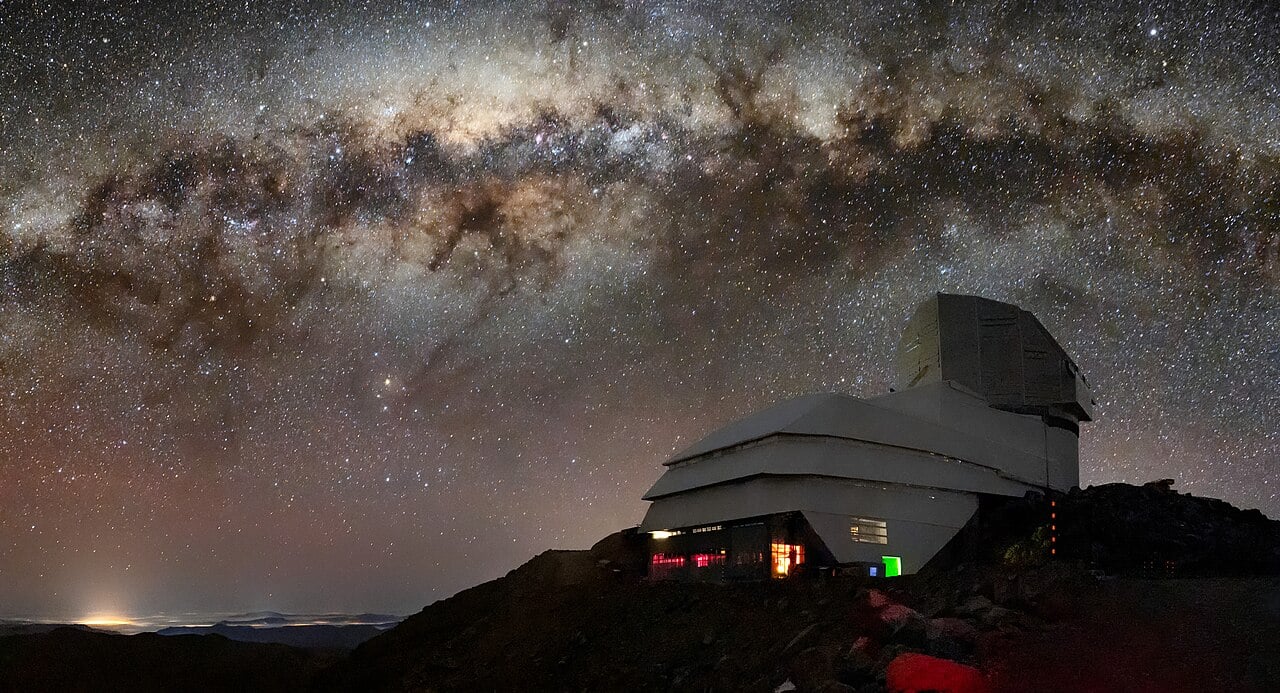
The Vera C. Rubin Observatory has unearthed two additional small galaxies orbiting the Milky Way, the first ultra-faint satellite named Aquarius IV and a globular cluster called Rubin-GC1. These discoveries, revealed in the Early Data Preview 2 (EDP2) released in July 2026, are anticipated to be the beginning of many more detections by the observatory.
The ultra-faint dwarf galaxy Aquarius IV, likely consisting of only a few hundred stars, was identified by analyzing images from the Dark Energy Camera. Meanwhile, the globular cluster Rubin-GC1, with an intermediate age of around 9.2 billion years, was found in the thick dust and high stellar density region near the Milky Way's bulge.
These two new satellites mark the beginning of a promising era for the Rubin Observatory, which is expected to discover many more Milky Way satellites, providing valuable insights into galaxy formation, the assembly history of the Milky Way, and the nature of dark matter.
Written by urgent.news from Universe Today's reporting — not their text. Machine-written — may contain errors; check the original before relying on it.