Robot cube explores the International Space Station | Space photo of the day for Nov. 3, 2026
An Astrobee, a tiny robot cube, is zipping around the International Space Station helping out the astronauts on board.
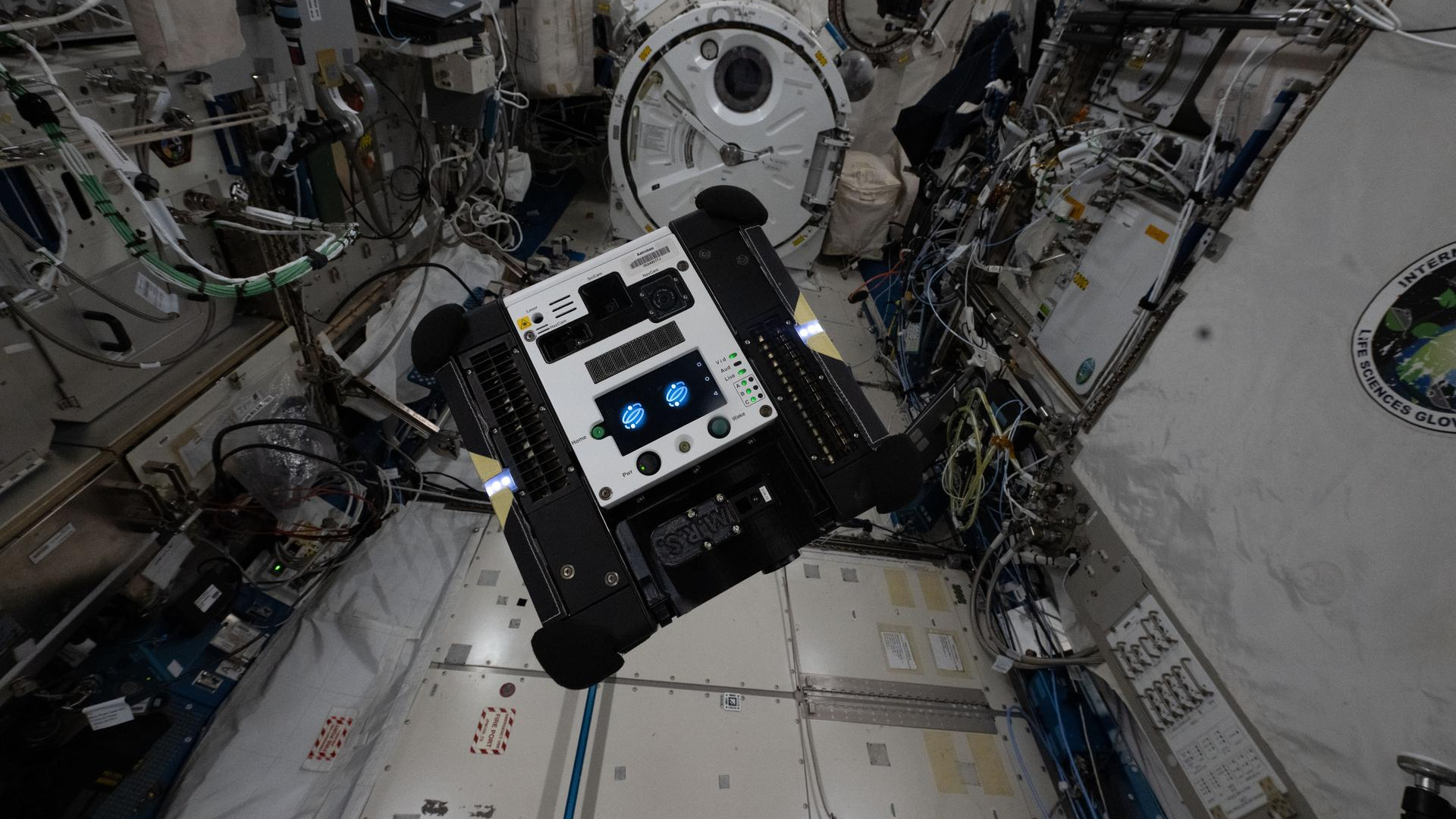
An Astrobee, a diminutive robot cube, roams the International Space Station, assisting astronauts with the myriad demanding tasks aboard the orbiting laboratory. Resembling Rocky as he navigated Dr. Ryland Grace through the challenges of Project Hail Mary, the Astrobee is a valuable ally for the space station's crew. A compact metal cube, similar in size to a toaster, the Astrobees are autonomous robotic assistants developed by NASA to aid astronauts.
The first two Astrobee robots, named Bumble and Honey, were delivered to the station in 2019. Later that year, the third Astrobee robot, dubbed Queen, arrived, and despite seven years passing since then, the program remains robust. So, what can this free-floating cube contribute to the mission? Designed to support astronauts, the robots focus on testing new technologies in microgravity and enabling mission team members on Earth to observe the station more effectively.
The diminutive robot cubes can even lend a hand with mundane chores onboard the space station. As captured in a photograph by NASA astronaut and Crew-13 commander Jessica Watkins, one of the Astrobee robots is seen working in the Kibo laboratory. This image showcases the incredible potential of an assistant robot helping out with both chores and technological advancements in space. It's hard to deny the science fiction allure of a robot embedded in the fabric of the space station, offering its services to the crew.
While Astrobee is not the first robot in space or aboard the space station, its compact design and autonomous flying capabilities set it apart. The robot truly appears as a companion to the astronauts living and working in the unique environment of space. As the success of the Astrobee program illustrates, the question arises: what will robotic companions aboard the moon look like when astronauts venture there in the future?
Will they be as cute and compact as today's Astrobees, or will they evolve into something entirely different?
Written by urgent.news from Space.com's reporting — not their text. Machine-written — may contain errors; check the original before relying on it.