Mapping Kīlauea’s Magma Reservoirs
Researchers used a dense seismometer network to monitor a combination of natural and truck-generated seismic signals and identify two regions of subsurface magma storage.
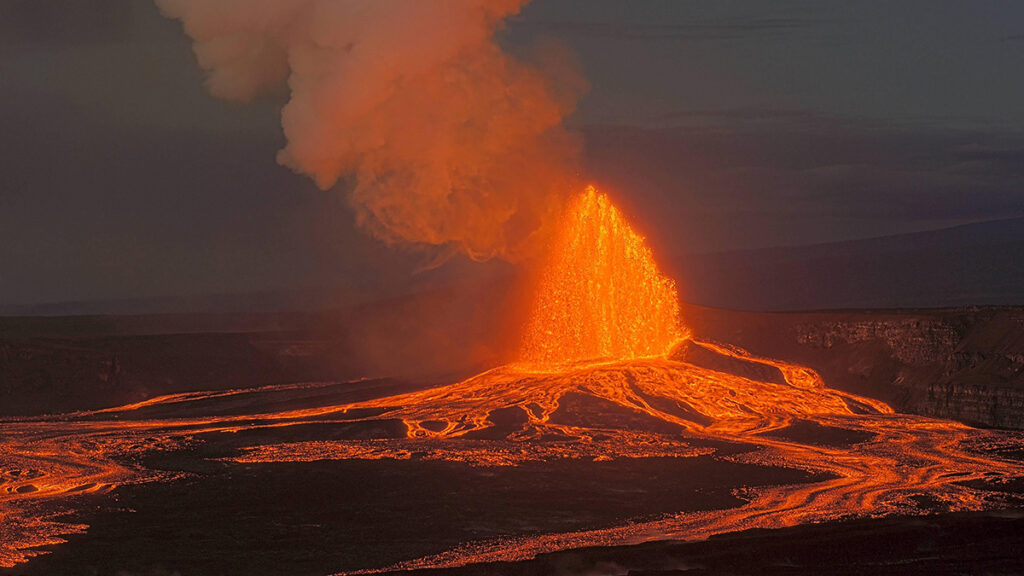
The Hawaiian volcano Kīlauea, known for its near-continuous eruptions from 1983 to 2018 and ongoing activity since late 2024, has allowed scientists to gather extensive data about its subsurface structure. However, limited sensor coverage had previously prevented them from obtaining sharp seismic images of how magma is stored beneath the summit.
In a new study published in the Journal of Geophysical Research: Solid Earth, Lin et al. utilized a dense network of seismometers to map the magma storage beneath Kīlauea's summit with high resolution. By employing a seismic array that simultaneously tracked both natural seismic activity and controlled artificial vibrations, the researchers identified two distinct magma reservoirs.
One reservoir lies beneath the Halemaʻumaʻu crater in the main Kīlauea caldera, while the other is situated beneath the south caldera. The dense seismic array, consisting of 1,815 small seismometers arranged in a mesh roughly 12 kilometers on each side, captured both natural seismic signals and artificially generated waves from a giant T-Rex vibroseis truck.
This combination of natural and generated seismic waves, along with the extensive sensor configuration, provided sufficient data to pinpoint the two distinct magma reservoirs. The two reservoirs are near the surface but may connect at greater depths, representing significant progress in understanding the precise underground plumbing of Kīlauea.
The authors suggest that this hybrid methodology, which combines natural and artificial seismic waves, has the potential to be applied at other active volcanoes or seismically interesting sites around the world.
Written by urgent.news from Eos's reporting — not their text. Machine-written — may contain errors; check the original before relying on it.