Elephants Engineer Their Ecosystems in Life—and in Death
Elephant carcasses leave a lasting legacy on the savanna, reshaping microbial communities and plant life.
African savanna elephants hold a unique role in their ecosystems, both during their lives and after death. These massive creatures, weighing up to 5.4 metric tons, actively shape their surroundings by knocking down trees, spreading seeds, and influencing plant life and soil nutrients. Researchers from Princeton University and the University of California, Santa Barbara, studied 40 elephant carcasses in South Africa’s Kruger National Park over a two-year period to understand the long-lasting effects of an elephant's death on the ecosystem.
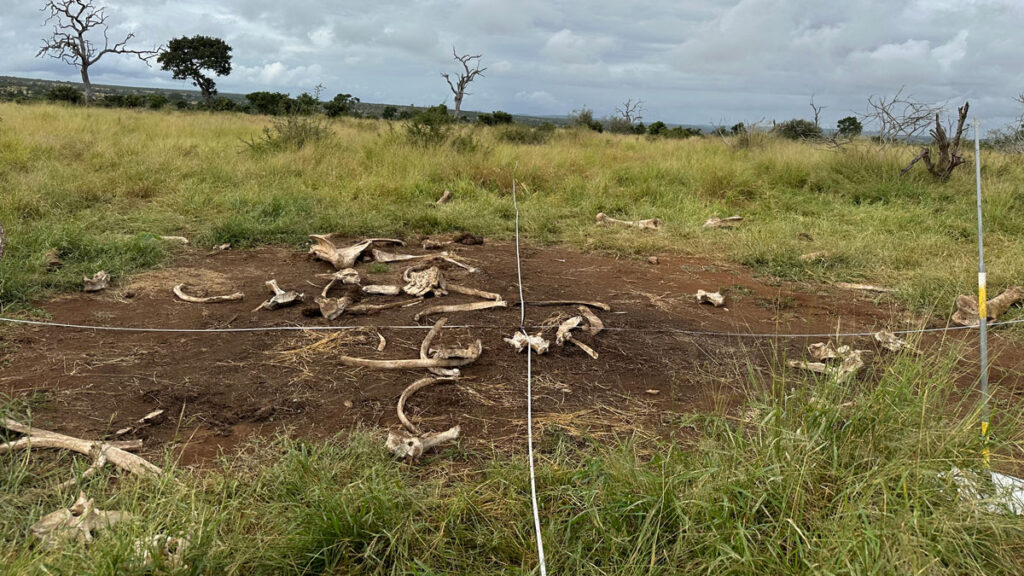
When an elephant dies, its carcass creates a distinct impact zone, around 80 square meters in size. The flattened vegetation, as scavengers tear up the surrounding landscape, leaves a "moonscape" of bare dirt. The meat and bones left behind then release nutrients like ammonium, nitrate, and phosphorus into the soil, transforming the surrounding environment.
These elevated nutrient levels remain high for over seven years after the elephant's death, making the area an ideal environment for fast-growing, nitrogen-rich grasses.
The nutrient-rich grasses attract grazing herbivores like zebras, impalas, and African buffalo, which ultimately limit plant diversity and keep biomass low. This creates a second layer of biodiversity suppression, as the surviving plant, fungal, and bacterial species are unable to thrive in such extreme conditions. Despite the drop in microbial diversity, soil microbial activity remains higher than in surrounding areas, leading to reduced plant diversity at the carcass sites.
Elephants' influence on their environment extends far beyond their lifetimes. Kruger National Park, home to around 30,000 elephants, provides a glimpse into the long-lasting impact of large herbivores on their ecosystems. As these giants continue to shape their surroundings, understanding their role in the ecosystem after death becomes increasingly crucial, especially in light of declining elephant populations and climate change.
Written by urgent.news from Eos's reporting — not their text. Machine-written — may contain errors; check the original before relying on it.