Faces from the past: Ancient Egyptian portraits offers lifelike glimpse across 2,000 years
ROME, Nov 4 — An elegant woman gazes out from her portrait with expressive eyes, a gilded wreath w...
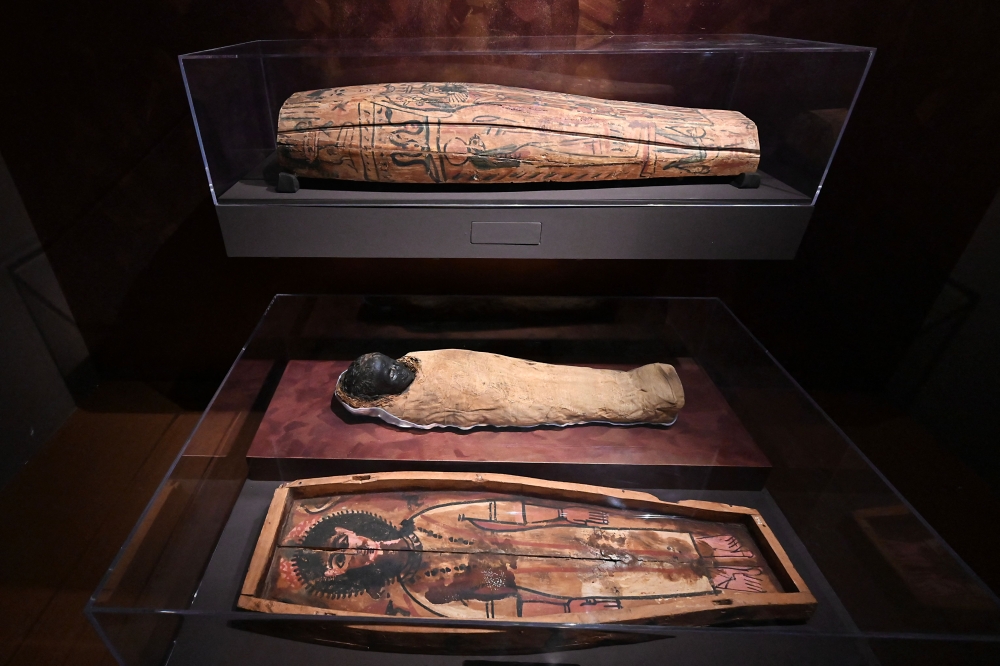
In Rome, a striking collection of 2,000-year-old Fayum portraits offers a lifelike glimpse into ancient Egyptian and Roman life. The delicate funerary portraits, painted on thin wooden panels, depict individuals buried during the first to third centuries AD, a period after Egypt became part of the Roman empire. The exhibition, titled "Egypt and Rome, the Faces of Fayum," opens at Rome's Ara Pacis museum and includes mummies, masks, shrouds, jewellery, marble busts, and statuary.
The portraits, many of which feature expressive eyes and naturalistic details, showcase the fusion of Egyptian and Roman cultures. They often depict men, women, and children with Egyptian features but wearing Roman dress. The faces are vivid and haunting, ranging from grey hair and wrinkles to long eyelashes and chubby cheeks. One notable portrait, the "Tondo of the Two Brothers," features curly-haired young men who may have been brothers, wearing soulful expressions.
Claudio Parisi Presicce, Rome's top official for cultural heritage, described one portrait as "an absolute masterpiece, perhaps the most important pictorial work to have survived from antiquity." The Fayum portraits, rooted in Hellenistic painting traditions, provide a rare glimpse into the lives of individuals buried in ancient Egypt.
Some women are adorned in sumptuous jewellery, while a nearly pristine linen shroud from the Louvre depicts a man standing between life and death, accompanied by Anubis, the jackal-headed god of the afterlife.
While many questions remain about the portraits' creation and purpose, such as whether they were painted before or after death, the exhibit offers an uncanny power to move viewers through their uncanny realism and ability to connect the past with the present. The exhibition runs until May 2.
Written by urgent.news from Malay Mail's reporting — not their text. Machine-written — may contain errors; check the original before relying on it.