Will Chinese AI build a global advantage?
Developing countries, however, are not necessarily choosing sides. They seek competitive prices, technology transfer, jobs and data sovereignty.
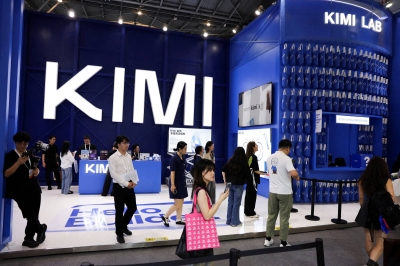
Artificial intelligence has emerged as the primary battleground of the U.S.-China rivalry, encompassing semiconductors, energy, communications, and manufacturing. For China, AI represents a "strategic technology that drives scientific and technological revolution and industrial transformation." In April 2025, President Xi Jinping emphasized the need for technological self-reliance and application-oriented development.
China's strategy goes beyond domestic model development; it seeks to refine them through implementation in manufacturing and government operations. Conversely, the United States maintains strengths in frontier models, advanced semiconductors, private capital, cloud infrastructure, and developer ecosystems. Capital investments by major U.S. tech firms surpassed $400 billion in 2025, while China's expenditure amounted to $63 billion.
With this subscription level, readers cannot contribute comments. To comment, users must first create a display name in their subscriber account's Profile section. Detailed information can be found in our FAQ.
Written by urgent.news from Japan Times's reporting — not their text. Machine-written — may contain errors; check the original before relying on it.