Why Crypto-Backed Lending Is Becoming Financial Infrastructure
Discover how crypto-backed lending is evolving through institutional custody, real-time collateral monitoring, stablecoin settlement, and risk management.
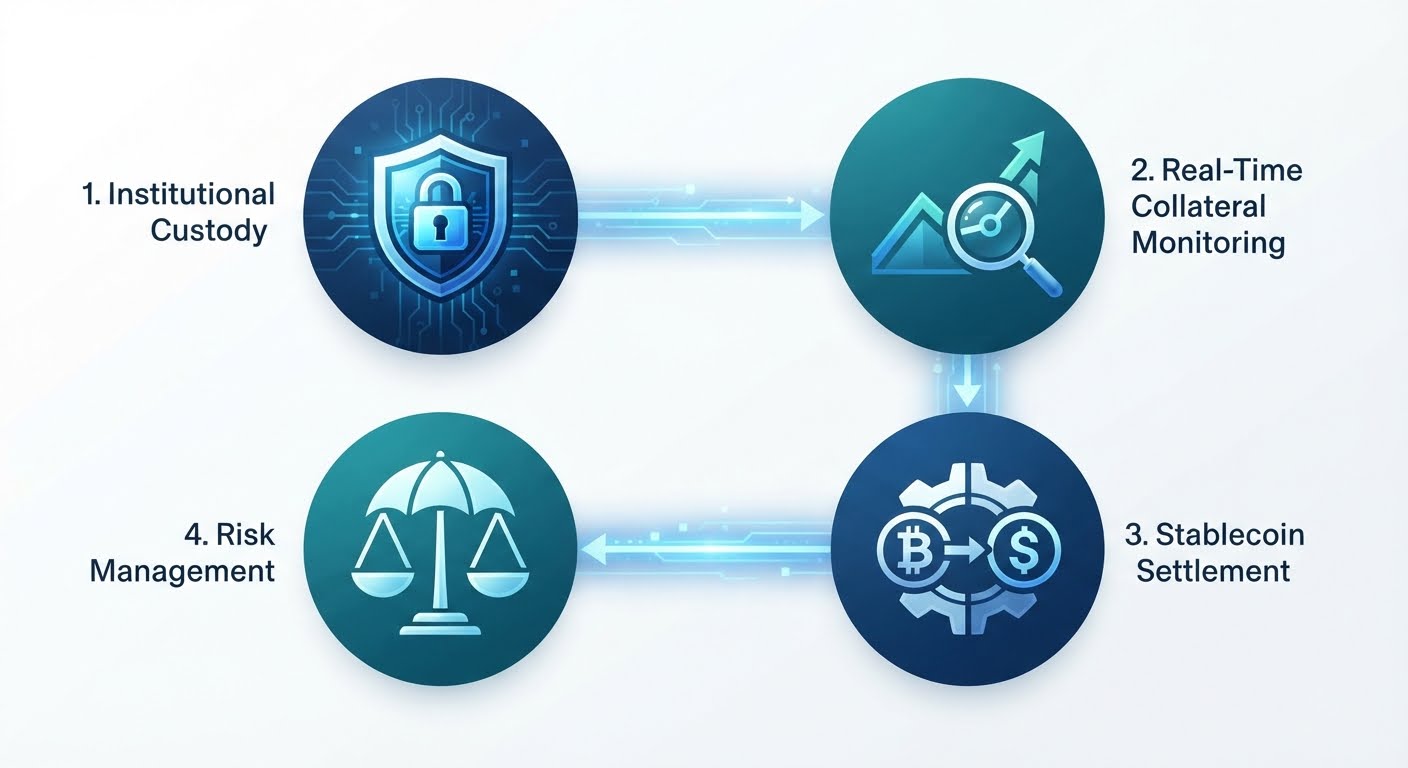
Over the past few years, cryptocurrency has evolved from being primarily viewed as an investment to being incorporated into traditional financial services. Bitcoin and other digital currencies are finding their way into financial products that mirror conventional banking infrastructure. One notable example is crypto-backed lending.
Borrowers provide digital assets as collateral and receive liquidity representing a fraction of their worth. While this concept is not entirely new, the underlying infrastructure differs significantly due to the unique characteristics of cryptocurrencies. Digital assets are traded around the clock, can experience rapid price fluctuations, can be transferred swiftly, and require a distinct approach to securing and managing them.
To create a functional lending market around these assets, traditional credit principles must be blended with technology capable of handling collateral in real time. This combination is transforming crypto-backed lending from a niche product into essential financial infrastructure. One of the primary challenges for long-term cryptocurrency holders is the lack of liquid assets.
Many individuals possess substantial value in cryptocurrencies but do not have readily available cash. Traditional finance has long addressed this issue by offering lending products. Crypto holders now encounter the same predicament. Someone who has held Bitcoin for years might need liquidity for a business venture, real estate purchase, tax bill, or diversification.
While selling cryptocurrency provides cash, it also diminishes exposure to the asset. Crypto-backed lending offers an alternative. Borrowers can pledge their assets as collateral and borrow a portion of their value without selling. This approach preserves their exposure to the asset while providing immediate funds. The key risk in crypto-backed lending is the loan-to-value (LTV) ratio.
Traditional consumer loans often assess a borrower's credit history, income, and repayment capacity. In crypto lending, the security of the loan takes precedence. The LTV ratio measures the loan amount relative to the collateral's value. For instance, if a borrower pledges $200,000 worth of cryptocurrency and receives a $100,000 loan, the LTV is 50%.
As cryptocurrency prices fluctuate, the LTV ratio changes. If the asset's value increases, the loan becomes overcollateralized. Conversely, if the value declines, the LTV rises. When the LTV reaches a set threshold, the borrower must provide additional collateral, repay part of the loan, or bring the position back within acceptable limits.
Real-time monitoring and management systems are crucial for handling the volatile nature of cryptocurrency markets. These systems rely on accurate pricing data, automated alerts for predefined risk levels, and swift communication with borrowers. The lending product and technology monitoring it are intertwined. Critics argue that cryptocurrency's volatility makes it unsuitable as collateral.
However, volatility doesn't necessarily hinder an asset's use as collateral; it merely alters the approach to risk management. Lower initial LTVs, greater collateral buffers, and robust monitoring procedures are necessary to mitigate the risks associated with price volatility. This is a risk-engineering issue rather than a reason to dismiss crypto-backed lending entirely.
Another challenge in crypto lending is custody. Traditional collateral can be documented through titles, liens, or legal agreements. In contrast, cryptocurrency relies on private keys, giving the key holder control over the assets. This complexity necessitates more institutional custody structures. Many platforms now offer third-party digital asset custody services instead of treating collateral solely as part of the lender's balance sheet.
For example, Arch Lending provides crypto-backed loans against assets like Bitcoin, Ethereum, Solana, and Ripple, ensuring secure storage and management of the assets. As investment in cryptocurrency increases, so does the importance of robust infrastructure. The integration of digital assets into financial systems signifies a broader shift in the crypto landscape, where infrastructure plays as crucial a role as the assets themselves.
Written by urgent.news from HackerNoon's reporting — not their text. Machine-written — may contain errors; check the original before relying on it.